AI in Machinery Automation Explained: Technologies, Applications, Benefits and Industrial Uses
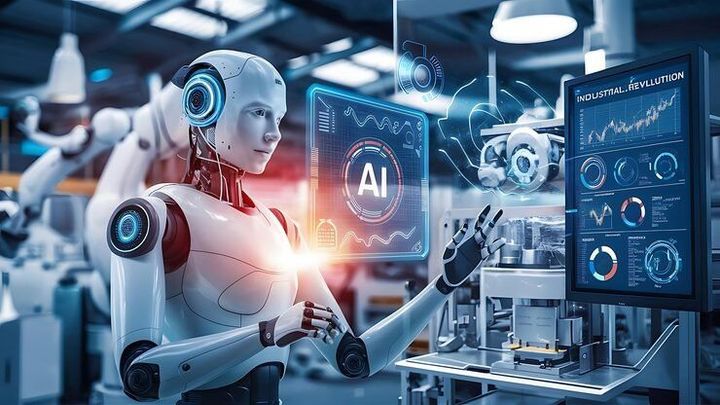
AI in machinery automation refers to the use of artificial intelligence to help industrial machines analyze information, recognize patterns, make predictions, and support automated operations. It combines technologies such as machine learning, computer vision, sensors, robotics, and industrial control systems. The purpose is to help machines respond to changing conditions rather than relying entirely on fixed instructions.
Context
AI in machinery automation refers to the use of artificial intelligence to help industrial machines analyze information, recognize patterns, make predictions, and support automated operations. It combines technologies such as machine learning, computer vision, sensors, robotics, and industrial control systems. The purpose is to help machines respond to changing conditions rather than relying entirely on fixed instructions.
Industrial automation developed through mechanical equipment, electrical controls, programmable logic controllers (PLCs), and computer-based monitoring systems. Traditional automation follows predefined rules for activities such as moving materials, controlling temperature, or operating production lines. AI adds capabilities that can help systems interpret complex data, identify unusual conditions, and adjust selected operations within defined limits.
Today, AI in machinery automation appears in manufacturing plants, warehouses, processing facilities, and equipment maintenance programs. Its role varies according to the machine, the available data, the operating environment, and the level of human supervision.
Core Technologies Used in AI Machinery Automation
Several technologies work together to support intelligent industrial equipment.
Machine learning: Uses historical and current data to identify patterns, classify conditions, or estimate future outcomes.
Computer vision: Processes camera images to identify objects, inspect components, and detect visible defects.
Industrial sensors: Measure variables such as vibration, temperature, pressure, speed, and electrical current.
Robotics: Uses programmable mechanical systems to perform tasks such as assembly, material handling, and component placement.
Edge computing: Processes information near the machine, which can reduce dependence on sending every measurement to a remote system.
Industrial analytics: Combines machine data with production information to identify patterns and support operational decisions.
These technologies do not always operate independently. For example, sensors may collect vibration measurements, machine-learning software may identify an unusual pattern, and a monitoring system may alert an operator to inspect the equipment.
Importance
AI in machinery automation matters because industrial operations often involve repeated tasks, complex equipment, changing production conditions, and large amounts of operational data. Human operators cannot continuously examine every measurement from every machine, particularly in facilities with many production lines.
AI-supported systems can help identify patterns that might otherwise be difficult to notice. Their use can support maintenance planning, product inspection, equipment monitoring, and production scheduling. However, results depend on data quality, system design, operating conditions, and how the technology is integrated into existing machinery.
Common Industrial Problems Addressed
AI machinery automation can support several practical activities:
Equipment monitoring: Identifies unusual temperature, vibration, pressure, or current patterns.
Quality inspection: Examines products for visible defects, dimensional differences, or assembly errors.
Production planning: Uses operational data to estimate processing times and identify potential bottlenecks.
Material handling: Helps automated equipment recognize objects and determine suitable movement paths.
Energy monitoring: Examines equipment usage and operating patterns to identify possible inefficiencies.
Process control: Supports adjustments to selected machine settings within established operating limits.
For example, a production facility may use vibration sensors to monitor an industrial motor. If the measurements differ from established operating patterns, the system can notify maintenance staff, who then determine whether inspection or repair is necessary.
Comparing Traditional and AI-Supported Automation
| Feature | Traditional automation | AI-supported automation |
|---|---|---|
| Main operating method | Predefined instructions | Rules combined with data-based models |
| Data interpretation | Usually follows configured thresholds | Can identify complex patterns |
| Quality inspection | Sensors and fixed inspection rules | May analyze images and variable patterns |
| Maintenance | Scheduled or threshold-based | Can support condition-based predictions |
| Response to variation | Depends on programmed logic | May classify changing conditions |
| Human involvement | Setup, monitoring, and intervention | Oversight, validation, and intervention |
The distinction is not absolute. Traditional control systems can be highly adaptive, and AI systems still require defined rules, engineering controls, and suitable operating limits. Many industrial installations combine both approaches rather than replacing existing automation entirely.
Recent Updates
From 2024 through 2026, industrial AI has continued to develop through improved machine-vision models, more capable edge computing, industrial data platforms, and the use of AI with digital twins. Adoption varies considerably across industries, and not every development is suitable for every machine or production environment.
AI, Robotics, and Digital Twins
AI-enabled robots can use cameras and other sensors to recognize objects, identify their positions, and adapt selected movements. These capabilities can be useful when products vary in shape or location, although reliable operation requires suitable lighting, calibration, safety controls, and testing.
A digital twin is a digital representation of a physical machine, production line, or industrial process. When connected to operational data, it can help engineers examine performance, test scenarios, or investigate possible changes before applying them to physical equipment. AI may be added to analyze patterns or estimate outcomes within the digital model.
Predictive Maintenance and Edge AI
Predictive maintenance uses equipment data to estimate when a fault may develop or when inspection may be appropriate. Machine-learning models can analyze vibration, temperature, lubrication measurements, and other indicators to identify patterns associated with equipment deterioration.
Edge AI allows certain analyses to run close to the machine instead of depending entirely on remote computing. This can help reduce communication delays and support operation when network connectivity is limited. Nevertheless, model accuracy, processing capacity, cybersecurity, and the consequences of incorrect predictions remain important considerations.
Industrial Data and Human Oversight
Manufacturers are also exploring AI assistants that help staff search technical documents, interpret machine alarms, and summarize production information. These tools can support troubleshooting, but their outputs require verification against equipment manuals, approved procedures, and actual machine conditions.
AI implementation is therefore increasingly discussed alongside workforce training, data governance, cybersecurity, and operational safety. Human oversight remains important, particularly when decisions affect moving machinery, high temperatures, pressure systems, or other hazardous processes.
Laws or Policies
AI machinery automation is shaped by industrial safety rules, electrical and machinery standards, environmental requirements, data protection obligations, and cybersecurity practices. Applicable requirements depend on the country, industry, machine type, and intended use of the system.
Machinery Safety and Industrial Standards in India
In India, industrial machinery may be subject to applicable provisions of the Factories Act, 1948, relevant state factory rules, occupational safety requirements, and other legislation in force. India's Occupational Safety, Health and Working Conditions Code, 2020, is also part of the country's labour-law framework, with applicability depending on its commencement and relevant implementing provisions.
Manufacturers and facility operators may need to consider applicable requirements for machine guarding, emergency stops, electrical safety, maintenance, worker training, and risk assessment. Standards published by the Bureau of Indian Standards (BIS), along with relevant international standards such as ISO 12100 for machinery risk assessment and risk reduction, can help inform engineering practices. The applicable legal or contractual requirements should be established for each installation.
AI Governance and Cybersecurity
India's national AI initiatives, including the IndiaAI Mission, support development and adoption of AI capabilities. Such initiatives do not automatically establish a single safety approval for every AI-controlled industrial machine. Equipment operators must still address relevant machinery, workplace, and sector-specific requirements.
Industrial AI systems also create cybersecurity considerations. Connected controllers, sensors, maintenance platforms, and remote monitoring systems can introduce additional pathways for unauthorized access or disruption. Guidance such as the National Institute of Standards and Technology (NIST) Cybersecurity Framework and NIST guidance for operational technology can help organizations structure security planning.
Before deploying AI in machinery, organizations generally need to identify applicable regulations, assess operational risks, document system behaviour, and establish procedures for human intervention and recovery.
Tools and Resources
Several software platforms and reference resources help engineers understand, develop, test, and monitor AI-based machinery automation. The appropriate choice depends on the machine, available data, technical expertise, and existing industrial infrastructure.
Industrial Automation and AI Platforms
Examples of relevant technologies include:
Programmable logic controllers: Coordinate machine sequences, interlocks, and control functions.
Supervisory control and data acquisition (SCADA): Collects operational information and supports monitoring of industrial processes.
Manufacturing execution systems (MES): Track production activities, work orders, and manufacturing records.
Machine-vision software: Analyzes camera images for inspection, identification, and object positioning.
Predictive maintenance platforms: Examine equipment measurements and historical records to identify potential faults.
Digital twin tools: Model physical equipment and industrial processes for analysis and simulation.
Industrial automation providers and software developers publish technical documentation describing supported equipment, integration methods, and system requirements. Engineers should confirm compatibility before combining components from different platforms.
Learning and Technical Reference Resources
The International Organization for Standardization (ISO) publishes standards relevant to machinery safety and industrial automation. The Bureau of Indian Standards provides information about Indian standards, while NIST publishes technical guidance on cybersecurity and AI risk management.
Technical manuals, equipment maintenance records, sensor datasets, and controlled test environments are also important resources. A documented testing process helps establish whether an AI model performs reliably under the conditions expected in actual production.
FAQs
What is AI in machinery automation?
AI in machinery automation uses data-driven technologies to help industrial equipment recognize patterns, inspect products, monitor operating conditions, and support selected decisions. It often works alongside conventional control systems.
How is AI used in industrial machinery automation?
Applications include predictive maintenance, automated visual inspection, robotic material handling, production monitoring, and process optimization. Specific capabilities depend on the equipment, sensors, software, and operating requirements.
What are the benefits of AI in machinery automation?
Potential benefits include earlier identification of equipment problems, more consistent inspection, improved visibility into production conditions, and better use of operational data. Actual results depend on implementation quality and the industrial environment.
Is AI replacing traditional industrial automation systems?
Not generally. Many facilities combine AI with PLCs, SCADA systems, and established control methods. Traditional controls remain important for predictable operation, interlocks, and safety-related functions.
What challenges affect AI machinery automation?
Common challenges include inconsistent data, integration with older equipment, cybersecurity risks, model errors, staff training, and system maintenance. Safety assessment and human oversight are important when AI influences physical operations.
Conclusion
AI in machinery automation combines machine learning, sensors, computer vision, robotics, and industrial control technologies to support manufacturing and equipment monitoring. Applications include predictive maintenance, quality inspection, material handling, and production analysis. Successful implementation depends on reliable data, appropriate engineering, cybersecurity, applicable regulations, and human oversight. AI generally complements established automation systems rather than eliminating the need for conventional controls.