3D Printed Medical Implants Guide: Designs, Materials, Uses, Benefits and Manufacturing Methods
3D printed medical implants are devices created with additive manufacturing, a process that builds an object layer by layer from a digital design. Instead of shaping an implant from a larger block of material, a computer-controlled printer creates its structure according to a prepared three-dimensional model. This approach can produce shapes, openings, and internal structures that may be difficult to manufacture through conventional methods.
The development of 3D printing in medicine grew alongside advances in computer-aided design, medical imaging, biomaterials, and manufacturing technology. CT and other imaging methods can provide detailed information about a person's anatomy, which can then be converted into a digital model for planning or designing certain patient-specific implants.
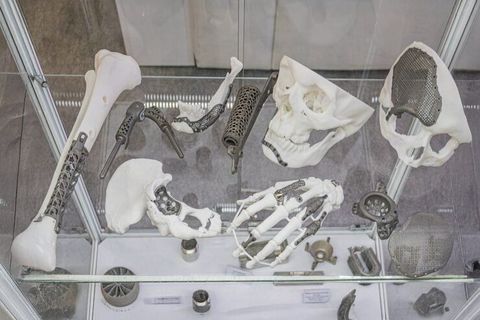
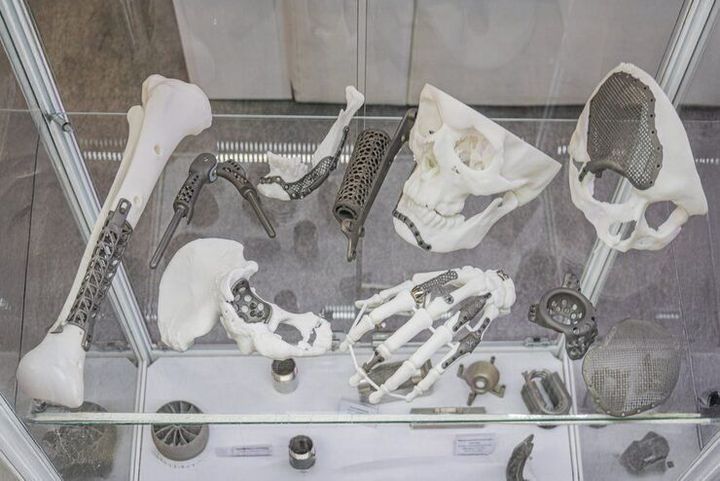
3D printed medical implants are particularly associated with orthopaedic and cranial applications. Examples include bone implants, spinal components, joint-related structures, and cranial implants. Research has also explored applications in tissue engineering and other areas of regenerative medicine.
The term "3D printed implant" describes the manufacturing approach rather than one particular type of device. Different implants require different materials, designs, printing technologies, testing procedures, and regulatory controls.
Importance
3D printed medical implants matter because human anatomy varies considerably from one person to another. A conventional implant may be produced in standard shapes and sizes, while additive manufacturing can support designs based on an individual's anatomical information when the applicable manufacturing and regulatory requirements are met.
Addressing complex anatomical needs
Some medical situations involve irregular bone structures, previous surgical changes, trauma, or areas where standard implant shapes may not closely match the required anatomy. Digital design and additive manufacturing can make complex geometries possible, including porous or lattice-like structures.
Porous structures are particularly important in some orthopaedic applications because their architecture can allow bone tissue to grow into parts of the implant. This process, known as osseointegration, is an important area of research and clinical development in implant technology.
Main uses of 3D printed implants
The applications vary according to the medical need and regulatory status of a device. Common areas include:
- Orthopaedic implants for reconstruction and bone-related procedures
- Cranial implants designed for particular skull defects
- Spinal implants and components
- Patient-specific structures for complex reconstruction
- Dental and maxillofacial applications
- Research into tissue-engineering scaffolds and biofabrication
A 3D printed implant is not automatically suitable for implantation simply because it matches a digital model. Its material properties, manufacturing process, dimensions, surface characteristics, sterilization, and intended clinical use all require appropriate evaluation.
Designs and customization
3D printed implant designs can contain curved surfaces, channels, internal lattice structures, and controlled porosity. Computer-aided design software allows these features to be modeled before manufacturing.
Patient-specific design generally begins with medical imaging or other anatomical information. The information is converted into a digital representation, reviewed, and used to develop an implant design when appropriate. The design then goes through manufacturing, inspection, and testing procedures.
| Design factor | Why it matters |
|---|---|
| Shape and dimensions | Helps match the intended anatomical area |
| Porosity | Can influence mechanical behavior and tissue interaction |
| Surface structure | Can affect the interface between the implant and surrounding tissue |
| Material selection | Determines important physical and biological properties |
| Internal geometry | Can influence strength, weight, and bone interaction |
| Manufacturing orientation | Can affect printed structure and surface characteristics |
Recent Updates
Between 2024 and 2026, research into 3D printed medical implants has continued to focus on personalization, advanced materials, porous structures, digital workflows, and improved manufacturing control. Recent reviews describe increasing clinical interest in patient-specific implants, highly porous titanium structures, biodegradable materials, and digitally assisted implant design.
Advanced materials
Titanium and titanium alloys remain important materials for many orthopaedic applications because of their mechanical characteristics and established use in implant technology. Research is also examining magnesium, calcium, zinc, and other biodegradable materials that may gradually change or resorb under appropriate conditions.
Ceramics, polymers, composites, and other biomaterials are also being investigated for different applications. Material selection depends on the intended location, mechanical requirements, biological environment, manufacturing process, and applicable regulatory requirements.
More complex structures
Recent research has placed considerable attention on porous and lattice structures. These designs can be digitally controlled and produced using additive manufacturing methods. Researchers are studying how pore size, geometry, surface characteristics, and mechanical properties interact with bone growth and implant performance.
AI-assisted design is another developing area. Researchers are examining how computational methods can help analyze anatomical data and generate or refine complex implant structures. Such technologies remain subject to validation and appropriate clinical and regulatory assessment.
Manufacturing development
Modern workflows increasingly connect medical imaging, computer-aided design, additive manufacturing, post-processing, inspection, and testing. Regulatory guidance emphasizes that the entire manufacturing process matters, including material controls, process validation, device testing, and consistency between production stages.
Laws or Policies
In India, medical devices are regulated under the Drugs and Cosmetics Act, 1940 and the Medical Devices Rules, 2017. The Central Drugs Standard Control Organisation, or CDSCO, is the national regulatory authority involved in medical-device regulation. The regulatory framework covers devices including implants and addresses their safety, quality, and performance.
Medical device requirements
The regulatory classification of a medical device depends on factors such as its intended purpose and associated risk. Manufacturers and importers may need appropriate licences and must follow applicable requirements under the Medical Devices Rules.
A 3D printed implant is still a medical device when it falls within the relevant regulatory definition. The fact that additive manufacturing is used does not remove the need for applicable regulatory controls.
A CDSCO circular published in 2025 reiterated that medical devices in India are regulated under the Medical Devices Rules, 2017 and that applicable licensing requirements apply to their import, manufacturing, sale, and distribution.
Quality and manufacturing controls
Manufacturing controls are important because small differences in printing parameters, raw materials, post-processing, or inspection can influence the final device. Depending on the device, manufacturers may need to demonstrate appropriate material characteristics, mechanical performance, dimensional accuracy, biological safety, sterilization, and other relevant properties.
Regulatory requirements can change as technology develops, so manufacturers and healthcare institutions generally need to consult current CDSCO requirements and applicable standards for the specific device.
Tools and Resources
Several digital and technical resources help explain or support work related to 3D printed medical implants.
Medical imaging and design tools
CT and other medical imaging technologies can provide anatomical information for digital reconstruction. Computer-aided design and medical-modeling software can then be used to create or analyze three-dimensional structures.
Regulatory resources
The CDSCO website provides information about India's medical-device framework, including the Medical Devices Rules and related regulatory documents. For international reference, the U.S. Food and Drug Administration provides educational material covering 3D printed medical devices, additive manufacturing, device testing, and manufacturing considerations.
Research and learning resources
PubMed and PubMed Central contain research literature on additive manufacturing, orthopaedic implants, biomaterials, tissue engineering, and related subjects. These databases can help readers understand how research findings develop over time.
Technical standards organizations also publish documents concerning additive manufacturing terminology, testing, material characterization, and manufacturing processes. The appropriate standard depends on the device and manufacturing method.
FAQs
What are 3D printed medical implants?
3D printed medical implants are implantable medical devices manufactured using additive manufacturing. They are produced layer by layer from a digital design and may be created from metals, polymers, ceramics, or other materials suitable for the intended application.
What materials are used in 3D printed medical implants?
Materials can include titanium and titanium alloys, certain polymers, ceramics, and experimental biodegradable metals. The appropriate material depends on the implant's location, mechanical requirements, biological environment, manufacturing method, and regulatory requirements.
How are 3D printed medical implants manufactured?
The manufacturing process commonly involves medical imaging or design information, digital modeling, preparation of a printable file, additive manufacturing, post-processing, inspection, and testing. Each stage can require specific controls to maintain the intended characteristics of the device.
Are 3D printed implants regulated in India?
Yes. Medical devices in India are regulated under the Drugs and Cosmetics Act, 1940 and the Medical Devices Rules, 2017. Applicable requirements depend on the type and classification of the device, its intended purpose, and other regulatory factors.
What are the benefits of 3D printed medical implants?
Potential advantages include the ability to create complex geometries, support patient-specific designs, and produce controlled porous structures. However, the suitability and clinical performance of an implant depend on its design, materials, manufacturing controls, testing, and intended medical use.
Conclusion
3D printed medical implants combine digital design, medical imaging, materials science, and additive manufacturing to create implant structures for specific medical applications. Their uses include orthopaedic, cranial, spinal, dental, and reconstructive applications, while research continues into new materials and tissue-engineering approaches. Recent developments have focused on patient-specific designs, porous structures, biodegradable materials, and digitally assisted manufacturing. In India, applicable medical-device requirements are governed by the established regulatory framework under the Drugs and Cosmetics Act and Medical Devices Rules.