Wire Crimping Machines Information With Precision Assembly and Manufacturing Technology
Wire crimping machines are industrial machines designed to join electrical wires with terminals, contacts, or connectors through controlled mechanical pressure. Instead of using solder or other joining methods, crimping forms a secure connection by compressing the terminal around the conductor and, in many applications, the wire insulation.
Wire crimping has become an important part of electrical assembly because modern products contain large numbers of cables and connectors. Automotive systems, electrical equipment, appliances, communication devices, industrial controls, and electronic assemblies can all use crimped wire connections.
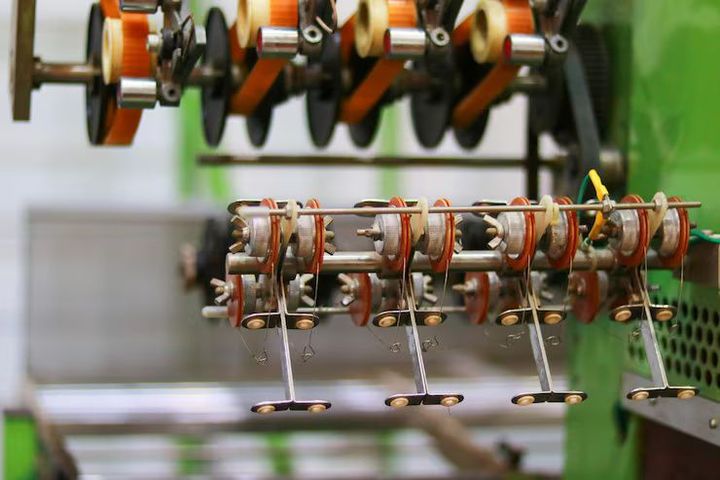
A wire crimping machine combines several mechanical and electrical components to create repeatable connections. Depending on the design, the machine may include a crimping press, applicator, wire positioning mechanism, terminal feeding system, sensors, control panel, and safety enclosure.
Manual crimping tools are suitable for small quantities and simple assembly tasks. Industrial wire crimping machines are designed for more consistent production environments where connection dimensions, force, positioning, and repeatability need to remain within defined limits.
How Wire Crimping Works
The basic crimping process involves placing a prepared wire and terminal into a correctly positioned crimping area. A die and terminal applicator then apply controlled mechanical pressure to form the connection.
A typical process can include:
- Wire preparation involves cutting the conductor to a specified length and removing insulation from the required area.
- Terminal positioning places the electrical terminal in the correct location.
- Wire insertion positions the conductor inside the terminal barrel.
- Crimp formation applies pressure through a crimping die.
- Inspection checks dimensions, position, and connection quality.
- Finished assembly moves to the next production stage.
The exact process varies according to terminal design, conductor size, material, and machine configuration.
Main Types of Wire Crimping Machines
Different production environments use different machine arrangements. Hand-operated or semi-automatic equipment may be used where production volumes are limited or where operators perform several assembly steps.
Automatic wire crimping machines can integrate several processes, such as wire cutting, stripping, terminal feeding, crimping, and wire marking. Some systems are designed for a single terminal type, while programmable systems can handle multiple wire configurations.
| Machine Type | Typical Function | Automation Level | Common Application |
|---|---|---|---|
| Manual Crimping Tool | Basic terminal crimping | Manual | Small assemblies |
| Bench Crimping Machine | Controlled terminal crimping | Semi-automatic | Assembly workstations |
| Automatic Crimping Machine | Wire preparation and crimping | Automatic | High-volume production |
| Wire Cutting and Crimping System | Cutting, stripping, and terminal attachment | Automatic | Cable assemblies |
| Multi-Station Crimping System | Several connected processes | High automation | Complex manufacturing |
Machine selection generally depends on wire dimensions, terminal design, required production volume, available workspace, and inspection requirements.
Importance
Wire crimping machines matter because electrical connections need consistent mechanical and electrical characteristics. A poorly formed crimp can create problems such as increased electrical resistance, weak mechanical retention, conductor damage, or intermittent electrical contact.
These issues can become particularly important in products containing large numbers of electrical connections. Consistent assembly helps manufacturers control variations between individual connections and maintain defined production specifications.
Industries Using Wire Crimping Technology
Wire crimping equipment is used across many manufacturing sectors. Automotive and transportation products can contain extensive wiring systems, while industrial control panels and electrical equipment may require numerous terminal connections.
Other applications include:
- Consumer and household electrical products
- Industrial automation equipment
- Telecommunications equipment
- Battery and energy systems
- Electronic assemblies
- Lighting equipment
- Control systems
- Appliance wiring
- Cable harness production
- Electrical testing equipment
The requirements differ between applications. A small electronic assembly may require delicate terminals and thin conductors, while an industrial cable assembly may use larger conductors and heavier terminals.
Precision in Electrical Assembly
Precision is important because a crimp must achieve an appropriate relationship between the terminal and conductor. Too little compression may result in weak retention, while excessive compression can deform the terminal or damage the conductor.
Manufacturers therefore establish process parameters for each terminal and wire combination. These can include crimp height, crimp width, conductor position, insulation position, insertion depth, and applied force.
Crimp force monitoring is increasingly used to identify changes during production. If the measured force pattern differs from an established process range, the system can flag the connection for inspection.
Recent Updates
Wire crimping technology has increasingly moved toward automation, digital monitoring, flexible production, and integrated inspection. Modern manufacturing environments often connect crimping equipment with broader production systems to collect process information and identify variations.
One notable development is the wider use of sensors. Force, position, wire presence, terminal presence, and machine-cycle information can be monitored during operation.
Automation and Digital Monitoring
Current wire crimping machines increasingly combine mechanical equipment with programmable controls and sensor-based inspection. Digital interfaces can allow operators to configure production parameters and monitor machine status.
Some systems can record production information such as:
- Production quantity
- Machine cycle information
- Crimp force measurements
- Error conditions
- Tool-change information
- Inspection results
- Maintenance indicators
This information can help production teams identify recurring process variations and understand equipment performance.
Flexible Manufacturing
Another trend is greater flexibility. Manufacturers may need to process different wire sizes, terminal designs, or cable configurations without completely changing the production arrangement.
Modular applicators, adjustable tooling, programmable controls, and quick-change components can support these requirements. Automated wire processing systems can also combine cutting, stripping, marking, twisting, crimping, and testing in a connected workflow.
Machine vision is another developing area. Cameras and optical systems can inspect wire position, terminal orientation, insulation placement, and other visible characteristics. Vision inspection does not replace all mechanical or electrical testing, but it can provide another layer of process verification.
Energy Efficiency and Workplace Design
Modern equipment development also considers electrical consumption, machine footprint, noise, operator access, and maintenance requirements. Compact equipment can be useful where production space is limited.
Ergonomic design is also relevant for semi-automatic equipment because operators may repeatedly load wires or terminals. Controls, guarding, access points, and workstation positioning can influence how safely and comfortably equipment is used.
Laws or Policies
Wire crimping machines are influenced by workplace safety requirements, electrical product standards, machinery regulations, and manufacturing quality systems. The exact requirements vary by jurisdiction, industry, machine type, and intended application.
Machinery used in industrial environments generally needs appropriate safeguards around moving components. Emergency stopping functions, protective guarding, electrical safety provisions, warning information, and operator instructions may be required depending on the equipment and jurisdiction.
Product and Electrical Requirements
The finished wire assembly may also need to meet technical requirements established for its intended application. Electrical connectors, terminals, cables, and harnesses can be subject to industry-specific specifications.
Manufacturers commonly maintain documentation covering:
- Wire and terminal specifications
- Crimp dimensions
- Approved tooling
- Inspection procedures
- Test requirements
- Machine settings
- Maintenance procedures
- Traceability information
Quality management systems can also influence how crimping processes are documented and controlled. Industries with strict reliability requirements may use additional testing, sample inspection, and process monitoring.
Safety Considerations
Operators should follow the machine manufacturer's instructions and applicable workplace rules. Moving presses, feeding mechanisms, cutting systems, and automated tooling can create mechanical hazards if protective measures are bypassed.
Electrical isolation procedures may also be relevant during maintenance. Training, machine guarding, routine inspection, and appropriate personal protective equipment should be considered according to the equipment and workplace environment.
Tools and Resources
Several tools and resources support wire crimping operations and process evaluation. The appropriate tools depend on the wire, terminal, connector, production volume, and required inspection method.
Crimping and Inspection Tools
Common resources include:
- Crimp height micrometers for dimensional inspection
- Pull-force testers for mechanical retention testing
- Crimp force monitors for process monitoring
- Wire stripping equipment for controlled insulation removal
- Terminal applicators for accurate terminal positioning
- Digital calipers for dimensional checks
- Microscopes or optical inspection systems for visual examination
- Wire processing software for production configuration
- Maintenance checklists for tooling and equipment
- Production records for traceability
Crimp height measurement is commonly used to verify the formed connection against a defined specification. Pull-force testing can provide information about mechanical retention, while visual inspection can identify obvious issues such as incorrect wire position or terminal deformation.
Technical Documentation
Equipment manuals, terminal specifications, wire-processing guides, machine setup sheets, maintenance schedules, and inspection templates can help standardize production activities.
Digital manufacturing platforms may also connect machine information with production management systems. This can support traceability and provide a clearer record of machine cycles, faults, inspection results, and production parameters.
FAQs
What is a wire crimping machine?
A wire crimping machine is equipment that mechanically compresses a terminal around a wire to create an electrical and mechanical connection. Industrial models can perform the process with controlled tooling and repeatable machine settings.
How does an automatic wire crimping machine work?
An automatic wire crimping machine can feed, cut, strip, position, and crimp wires depending on its configuration. Sensors and programmable controls may monitor different stages of the process.
Why is crimp force monitoring important?
Crimp force monitoring measures the force pattern produced during a crimping cycle. Changes from an established process range can indicate issues involving wire placement, terminals, tooling, or machine conditions.
What industries use wire crimping machines?
Wire crimping machines are used in automotive manufacturing, electronics, appliances, industrial equipment, telecommunications, energy systems, lighting, and cable harness production.
What should be checked during wire crimping inspection?
Inspection may include crimp height, wire position, terminal deformation, insulation placement, mechanical retention, and electrical performance. The specific checks depend on the terminal and application requirements.
Conclusion
Wire crimping machines provide controlled methods for connecting wires with terminals and connectors across many manufacturing applications. Automation, sensors, digital monitoring, flexible tooling, and inspection technologies are increasingly becoming part of modern crimping systems. Proper machine setup, tooling selection, process monitoring, documentation, and safety practices are important factors in maintaining consistent electrical assemblies. Requirements for equipment and finished connections vary according to the application, industry, and applicable technical standards.