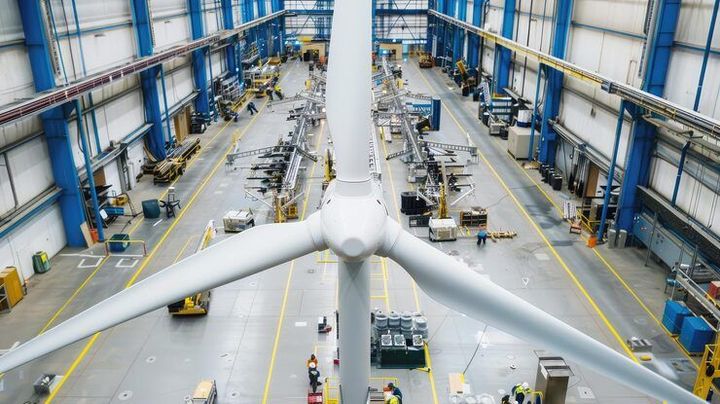
Wind Turbine Manufacturing Equipment Guide With Production and Engineering Insights
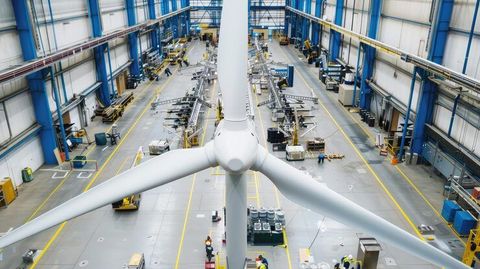
Wind turbine manufacturing equipment plays an important role in producing the large mechanical, electrical, and structural components used in modern wind energy systems. A wind turbine may look simple from a distance, but its production involves precision machining, composite processing, metal fabrication, electrical assembly, testing, and quality inspection.
Wind turbine manufacturing equipment helps manufacturers transform raw materials into blades, hubs, nacelles, towers, generators, gearboxes, and other components. Understanding this equipment provides useful insight into how wind turbines are produced and why manufacturing accuracy matters for renewable energy infrastructure.
Context
What Wind Turbine Manufacturing Involves
Wind turbines convert the movement of air into mechanical rotation and then electrical power. Manufacturing them requires several production stages because different components use different materials and engineering methods.
The main turbine components include:
- Rotor blades made primarily from composite materials
- Hub assemblies that connect the blades to the main shaft
- Nacelles containing major mechanical and electrical equipment
- Towers manufactured from large steel sections
- Generators that convert rotational movement into electricity
- Gearboxes used in many turbine designs to adjust rotational speed
- Control systems that monitor and regulate turbine operation
Wind turbine manufacturing equipment is therefore not one individual machine. It is a collection of equipment used throughout component fabrication, assembly, finishing, inspection, and testing.
Main Production Equipment
Blade production can involve composite layup equipment, resin systems, vacuum-processing equipment, trimming machines, drilling systems, curing equipment, and dimensional inspection tools. Large molds are also used to create consistent blade shapes.
For metal components, manufacturers can use CNC machining centers, large turning machines, milling machines, welding systems, plasma or laser cutting equipment, heat-treatment systems, and grinding equipment. These machines help produce accurately shaped components with controlled dimensions.
Tower production uses equipment for plate rolling, longitudinal and circumferential welding, flange machining, surface preparation, coating, and inspection. Because towers are large structures, manufacturing equipment must accommodate substantial component dimensions.
How the Manufacturing Process Works
A typical production sequence begins with material preparation. Steel, composite materials, copper, electrical components, and other inputs are processed according to engineering specifications.
The next stages generally include forming, machining, joining, assembly, inspection, and functional testing. Production planning determines how individual components move between workstations while maintaining dimensional and quality controls.
Importance
Why Manufacturing Equipment Matters
Wind turbine manufacturing equipment affects dimensional accuracy, production consistency, material utilization, and inspection capability. Small dimensional differences can influence how components fit together, particularly when large assemblies contain multiple interfaces.
Manufacturing equipment also helps standardize repetitive operations. Automated cutting, drilling, welding, and inspection systems can reduce variation between components while allowing production teams to monitor process information.
Who Uses This Equipment
Several groups depend on wind turbine manufacturing equipment, including:
- Wind turbine manufacturers
- Component manufacturers
- Metal fabrication facilities
- Composite manufacturing plants
- Engineering and testing laboratories
- Industrial automation teams
- Quality inspection departments
- Renewable energy project developers
The equipment also matters indirectly to communities and energy systems because manufacturing capacity supports the physical infrastructure required for wind power generation.
Engineering Challenges
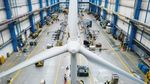
Large wind turbine components create unusual manufacturing challenges. Blades can extend many meters and require accurate aerodynamic surfaces. Tower sections are heavy and large, while nacelle components may contain numerous interconnected mechanical and electrical systems.
Material behavior is another consideration. Composite materials require controlled resin distribution and curing, while steel components require appropriate welding procedures and dimensional inspection. Temperature, humidity, vibration, and material handling can also influence production processes.
Recent Updates
Larger Turbine Components
Recent wind turbine development has generally moved toward larger machines, longer blades, taller towers, and higher generating capacities. This trend has increased the need for manufacturing equipment capable of handling larger components.
Larger components can require expanded production floors, stronger material-handling systems, larger machining capacity, and improved dimensional measurement systems. Manufacturing plants must also coordinate production logistics because individual components can become difficult to move as their dimensions increase.
Greater Use of Automation
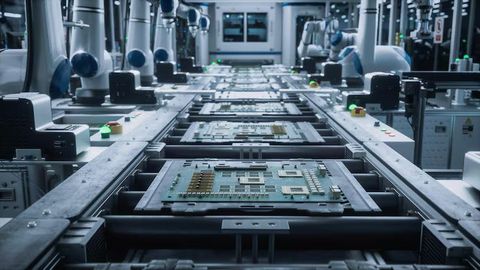
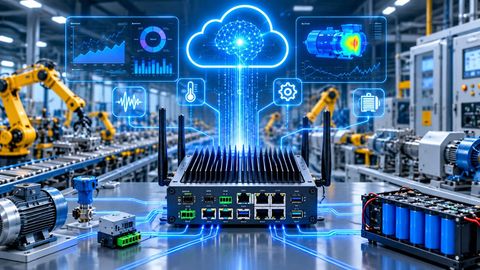
Automation is becoming more common across wind turbine production. Robotic welding, automated composite processing, machine vision, digital measurement, and computer-controlled machining can support repeatable manufacturing processes.
Digital production systems can also collect information from machines and inspection equipment. This creates opportunities for manufacturers to identify process variation earlier and improve production planning.
Developments in India
India's Ministry of New and Renewable Energy has continued updating its wind manufacturing framework. Recent developments include changes related to the Approved List of Models and Manufacturers for Wind and the Approved List of Models and Manufacturers for Wind Turbine Components. Updated procedures and component-related documentation have appeared during 2025 and 2026.
The Indian manufacturing base has also developed substantial domestic production capability. MNRE states that significant levels of indigenisation have been achieved and identifies manufacturing facilities for wind turbine systems and components as part of the national wind sector framework.
Digital Quality Control
Another important development is the growing use of digital inspection. Coordinate measuring systems, laser measurement, machine vision, sensor-based monitoring, and digital production records can help manufacturers compare actual components with engineering specifications.
These technologies are particularly useful when component dimensions become larger and manual inspection becomes more difficult.
Laws or Policies
Indian Wind Manufacturing Framework
In India, wind turbine manufacturing is influenced by policies and procedures administered by the Ministry of New and Renewable Energy. The Revised List of Models and Manufacturers and newer ALMM-Wind procedures are used to establish requirements concerning eligible wind turbine models and manufacturers.
MNRE's current wind manufacturing information identifies type and quality certification as important requirements for wind turbine models and manufacturers. It also describes requirements involving manufacturing facilities and certification arrangements.
ALMM-Wind and ALMM-WTC
The Approved List of Models and Manufacturers for Wind, known as ALMM-Wind, relates to approved wind turbine models and manufacturers. The corresponding ALMM-WTC framework covers wind turbine components.
MNRE published an SOP for ALMM-Wind and ALMM-WTC and subsequently issued amendments. These documents are relevant when understanding the administrative and technical framework surrounding wind turbine and component manufacturing in India.
Prototype and Certification Requirements
Prototype wind turbine development is also subject to specific guidelines. MNRE has published revised guidelines and subsequent clarifications concerning installation of prototype wind turbine models during 2025 and 2026.
Manufacturers must also consider applicable product standards, testing procedures, workplace requirements, environmental rules, electrical requirements, and quality-control procedures. The exact requirements depend on the component and manufacturing activity.
Standards and Quality Control
The Bureau of Indian Standards provides procedures for identifying applicable Indian Standards and assessing manufacturing infrastructure, process controls, quality control, and testing capabilities for products covered by its certification framework.
The practical implication is that wind turbine manufacturing equipment must be selected and operated within the applicable engineering, quality, safety, and conformity requirements.
Tools and Resources
Manufacturing Equipment
A wind turbine manufacturing facility can involve a wide range of equipment. The following table provides a simplified overview.
| Equipment | Primary Application | Typical Production Stage |
|---|---|---|
| CNC Machining Center | Precision component machining | Component fabrication |
| Large Turning Machine | Shafts and cylindrical parts | Machining |
| Plate Rolling Machine | Tower section forming | Tower production |
| Robotic Welding System | Controlled metal joining | Fabrication |
| Composite Layup Equipment | Blade construction | Blade production |
| Vacuum Infusion Equipment | Composite resin processing | Blade production |
| Industrial Crane Systems | Heavy component movement | Material handling |
| Laser Measurement System | Dimensional inspection | Quality control |
| Coordinate Measuring Machine | Precision measurement | Inspection |
| Electrical Test Equipment | Generator and control testing | Final testing |
Engineering Software
Computer-aided design software is widely used to create component models and manufacturing drawings. Computer-aided manufacturing systems can then translate engineering information into machining instructions.
Simulation software can help engineers examine structural loads, airflow behavior, vibration, thermal conditions, and manufacturing processes before physical production begins.
Measurement and Inspection Tools
Digital calipers, laser trackers, coordinate measuring machines, ultrasonic testing equipment, magnetic-particle inspection systems, and machine vision equipment can support different inspection requirements.
Inspection methods depend on the material and component. Composite blades, welded tower sections, forged components, shafts, and electrical assemblies may each require different examination methods.
Production Planning Resources
Manufacturers may also use enterprise resource planning platforms, manufacturing execution systems, maintenance records, quality-management software, digital work instructions, and production dashboards.
These resources can connect engineering information with manufacturing activities and help production teams track materials, processes, inspections, and equipment performance.
FAQs
What equipment is used in wind turbine manufacturing?
Wind turbine manufacturing equipment can include CNC machines, welding systems, composite processing equipment, large forming machines, cranes, inspection systems, electrical testing equipment, and automated production technologies. The exact equipment depends on whether the facility produces blades, towers, generators, nacelles, or other components.
How are wind turbine blades manufactured?
Wind turbine blades are commonly produced using composite materials and large molds. Manufacturing can involve material layup, resin processing, vacuum systems, curing, trimming, drilling, bonding, surface finishing, and dimensional inspection.
What is ALMM-Wind in wind turbine manufacturing?
ALMM-Wind refers to the Approved List of Models and Manufacturers for Wind in India's renewable energy framework. It is part of the administrative system used for approved wind turbine models and manufacturers.
What machines are used for wind turbine tower production?
Tower production can use plate rolling machines, welding systems, flange machining equipment, drilling machines, surface preparation equipment, coating systems, cranes, and dimensional inspection tools.
Why is automation important in wind turbine manufacturing equipment?
Automation can improve process repeatability and help manufacturers monitor production operations. Robotic welding, automated composite processing, machine vision, CNC machining, and digital inspection are examples of technologies used to support controlled manufacturing processes.
Conclusion
Wind turbine manufacturing equipment combines machining, composite processing, metal fabrication, automation, material handling, inspection, and testing technologies. Modern production is increasingly influenced by larger turbine components, digital manufacturing, automation, and stricter quality-control requirements. In India, the wind manufacturing framework continues to evolve through ALMM-Wind, ALMM-WTC, prototype guidelines, and certification procedures. Understanding these technologies provides a clearer view of how complex wind turbine components move from engineering designs to completed assemblies.