Lifting Equipment Guide With Material Handling and Safety Insights
Lifting equipment is an important part of modern material handling, construction, manufacturing, warehousing, logistics, maintenance, and infrastructure activities. It includes equipment such as cranes, hoists, lifting tables, winches, jacks, slings, shackles, spreader beams, and other lifting accessories used to raise, lower, position, or move loads.
A lifting equipment guide helps readers understand how these systems work, where they are used, and why correct load assessment and safe operating practices matter. As workplaces increasingly handle heavier and more specialized materials, understanding lifting capacity, equipment selection, inspection, and operator awareness has become an important part of workplace planning.
Context
What Is Lifting Equipment?
Lifting equipment refers to mechanical systems and accessories designed to move loads vertically, horizontally, or through a combination of movements. The equipment selected depends on the weight, dimensions, shape, location, movement distance, and characteristics of the material.
Common categories include:
- Cranes for lifting and positioning heavy loads across defined work areas.
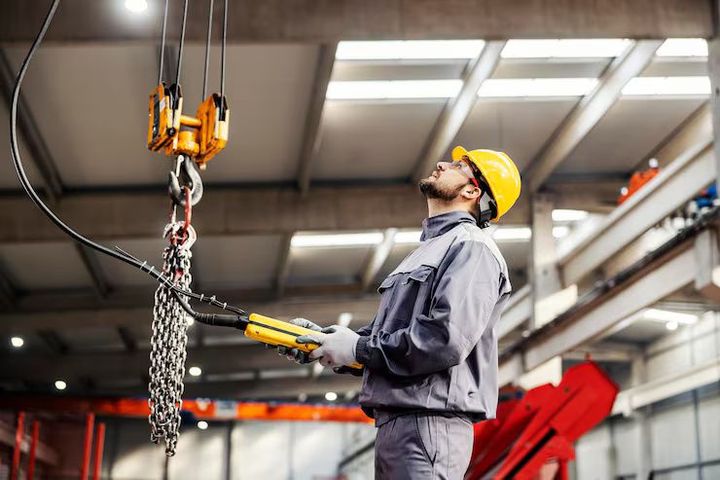
- Hoists for raising and lowering materials using chains, wire ropes, or other mechanisms.
- Lifting tables for raising materials to a convenient working height.
- Winches for pulling or lifting loads using a drum and rope or cable.
- Jacks for raising equipment or structures over relatively short distances.
- Slings, shackles, hooks, clamps, and spreader beams for connecting loads to lifting machinery.
Material handling systems may combine several of these components. For example, an overhead crane can use a hoist together with hooks, slings, and other lifting accessories to move a load from one location to another.
How Lifting Systems Developed
Early lifting methods relied heavily on human effort, simple ropes, levers, pulleys, and mechanical advantage. As construction and industrial activities expanded, mechanical lifting systems developed to handle heavier materials with greater control.
Modern lifting equipment can incorporate electric motors, hydraulic systems, sensors, electronic controls, load indicators, braking mechanisms, and automated movement functions. These developments allow lifting operations to be planned around specific load characteristics and workplace conditions.
Importance
Why Material Handling Matters
Material handling affects many types of workplaces because materials often need to move between production areas, storage locations, loading zones, construction areas, and maintenance facilities. Manual movement may become difficult when materials are heavy, bulky, unstable, or positioned at significant heights.
Lifting equipment can help organize these movements through controlled mechanical action. However, the equipment itself must be appropriate for the intended load and operating environment.
Key Safety Considerations
Safe lifting depends on more than the rated capacity of a crane or hoist. The complete lifting arrangement can include hooks, ropes, chains, slings, attachment points, lifting beams, and supporting structures.
Important considerations include:
- Load weight and dimensions.
- Center of gravity and load stability.
- Safe working load of the equipment.
- Condition of ropes, chains, hooks, and slings.
- Ground or structural support.
- Weather and environmental conditions where relevant.
- Visibility and communication during movement.
- Clearance from people, structures, electrical equipment, and other obstacles.
- Inspection and maintenance records.
A load that appears suitable for a particular machine may still present risks if it is poorly attached, unevenly balanced, or moved through an unsuitable route.
Common Equipment and Applications
| Equipment | Typical application | Main consideration |
|---|---|---|
| Overhead crane | Factory and warehouse movement | Load capacity and travel path |
| Mobile crane | Construction and infrastructure | Ground conditions and lifting radius |
| Chain hoist | Workshops and maintenance areas | Rated load and chain condition |
| Wire rope hoist | Industrial lifting | Rope condition and braking |
| Hydraulic jack | Machinery positioning | Stability and lifting point |
| Lifting table | Work-height adjustment | Platform capacity and stability |
| Winch | Pulling or controlled lifting | Cable condition and anchoring |
| Slings and shackles | Load attachment | Rated capacity and inspection |
Recent Updates
Technology Trends
Recent developments in lifting equipment have increasingly focused on monitoring, automation, energy efficiency, and operator information. Digital load monitoring can help provide information about the weight being handled and may support better operational control.
Sensors and electronic systems are also being integrated into some cranes and hoists. Depending on the equipment design, these systems can monitor load conditions, movement, operating cycles, or equipment status.
Automation and Remote Monitoring
Automation is becoming more relevant in warehouses and industrial facilities where repetitive material movement is required. Automated cranes and guided lifting systems can coordinate movement using sensors, control software, and predefined operating areas.
Remote monitoring is another developing area. Equipment data can help organizations understand operating patterns and identify conditions requiring inspection or maintenance. These technologies do not replace proper procedures, competent operation, or physical inspection.
Updated Standards and Technical Guidance
Indian standards relating to cranes and lifting equipment continue to be reviewed and maintained. BIS records show recent review activity for standards including IS 807 and IS 3938, while IS 3177 covers electric overhead travelling and gantry cranes. BIS also provides a standards search system for identifying applicable Indian Standards.
The broader trend is toward clearer technical requirements, documented inspection, equipment traceability, and stronger attention to safe lifting practices.
Laws or Policies
Indian Workplace Requirements
In India, lifting equipment used in covered workplaces is shaped by occupational safety requirements and applicable state and central rules. The Factories Act, 1948 includes requirements for lifting machines, chains, ropes, and lifting tackles. It states that relevant equipment should have adequate strength, be properly maintained, and undergo thorough examination by a competent person at prescribed intervals.
The same framework addresses safe working loads. Equipment and lifting accessories should not be loaded beyond their specified safe working load, and the applicable capacity should be clearly identified or documented.
Occupational Safety Framework
The Occupational Safety, Health and Working Conditions Code, 2020 contains provisions concerning the erection, installation, use, and maintenance of hoists, lifting appliances, and lifting gear. It also addresses periodic testing and examination, precautions during load movement, and restrictions concerning the carriage of people on lifting equipment.
For construction activities, related rules can include requirements covering lifting appliances, ropes, chains, accessories, competent personnel, and safe material handling. The Ministry of Labour and Employment also published draft rules related to the Occupational Safety, Health and Working Conditions Code for building and construction activities during the recent regulatory transition.
Indian Standards
BIS standards provide technical guidance for particular categories of equipment. For example, IS 3177 addresses electric overhead travelling and gantry cranes, while IS 807 covers design, erection, and testing aspects of cranes and hoists. BIS maintains a searchable standards system that allows users to identify standards by product or Indian Standard number.
The exact regulatory requirements can depend on the workplace, equipment category, application, and applicable rules. Organizations should therefore refer to the current requirements that apply to their specific operation.
Tools and Resources
Load Assessment Tools
Load charts, capacity tables, manufacturer documentation, and engineering calculations are commonly used when planning lifting operations. A load assessment normally considers the weight of the material, lifting configuration, attachment arrangement, movement distance, and equipment capacity.
For complex lifts, additional calculations may be necessary to understand load distribution, sling angles, structural loading, and equipment stability.
Inspection Records
Inspection templates can help organize information about lifting equipment and accessories. A useful record may contain:
- Equipment identification number.
- Rated or safe working load.
- Inspection date.
- Inspection findings.
- Defects identified.
- Corrective measures.
- Examiner details.
- Next examination requirement.
Keeping organized records can make it easier to track equipment condition and inspection history.
Standards and Technical Resources
The BIS standards portal can be used to search Indian Standards by equipment category or standard number. Technical manuals, equipment documentation, load charts, inspection records, and workplace procedures can also provide useful information for understanding specific lifting systems.
Training materials can also help operators understand signals, load stability, equipment controls, inspection procedures, and workplace hazards. The appropriate training level depends on the equipment and the responsibilities assigned to the individual.
FAQs
What is lifting equipment used for?
Lifting equipment is used to raise, lower, position, pull, or move materials and equipment. Common examples include cranes, hoists, jacks, winches, lifting tables, slings, hooks, and shackles.
What should be checked before using lifting equipment?
Operators and responsible personnel should check the equipment condition, rated capacity, identification markings, lifting accessories, attachment points, load stability, surrounding area, and applicable operating procedures.
How does material handling equipment improve workplace operations?
Material handling equipment can reduce reliance on manual movement for heavy or awkward loads and can provide controlled movement between storage, production, construction, and maintenance areas.
What is the safe working load of lifting equipment?
The safe working load is the maximum load specified for a lifting machine or accessory under defined operating conditions. It should not be exceeded, and the applicable capacity should be clearly identified or documented.
Are lifting equipment inspections required in India?
Applicable Indian workplace rules include examination and maintenance requirements for lifting machines, chains, ropes, and lifting tackles. The exact inspection requirements depend on the equipment and workplace regulations that apply.
Conclusion
Lifting equipment forms an important part of modern material handling across industrial, construction, warehouse, maintenance, and infrastructure environments. Understanding equipment categories, load capacity, attachment methods, inspection requirements, and operating conditions helps explain how lifting systems are used safely. Recent developments are adding sensors, digital monitoring, automation, and improved technical controls to many lifting applications. Indian workplace legislation and BIS standards provide an important framework for equipment examination, safe working loads, maintenance, and technical requirements.