Water Purification Units Explained: Types, Components, Filtration Methods, Uses and Maintenance
Water purification units are systems designed to improve water quality by removing or reducing unwanted particles, chemicals, dissolved substances, microorganisms, and other contaminants. A water purification unit can range from a simple household filter to a larger treatment system used in buildings, laboratories, industries, and community facilities. Understanding the types, components, filtration methods, uses, and maintenance of these systems helps explain how different water sources can be treated for particular purposes.
What Is a Water Purification Unit?
A water purification unit is a combination of equipment and filtration or treatment stages used to change the quality of incoming water. The exact design depends on the source of the water and the substances that need to be controlled.
Water may come from municipal supplies, groundwater, wells, surface sources, rainwater collection systems, or other sources. Each source can have different physical, chemical, and biological characteristics, so one purification method may not be suitable for every situation.
Common treatment stages include sediment filtration, activated carbon filtration, membrane filtration, ultraviolet treatment, and disinfection. Some systems combine several methods to address different water-quality concerns.
Why Were These Systems Developed?
Traditional water treatment has existed for centuries, with methods such as settling, sand filtration, boiling, and basic disinfection used to improve water quality. Modern purification systems developed as scientific understanding of microorganisms, dissolved chemicals, and waterborne contamination increased.
Today, water purification units can be designed for specific applications. A household drinking-water system may focus on improving water used for consumption, while an industrial system may treat water for manufacturing, cooling, cleaning, or process applications.
Importance
Why Water Purification Matters
Water quality can influence drinking, food preparation, hygiene, agriculture, manufacturing, and many other activities. Contaminants may enter water through natural geological conditions, damaged infrastructure, agricultural activity, industrial activity, or inadequate treatment.
A purification system can address particular contaminants when its treatment method is appropriate for the incoming water. For example, a sediment filter can reduce suspended particles, while activated carbon can reduce certain organic compounds and improve taste and odour.
However, no single purification method removes every possible contaminant. Water testing and knowledge of the source are therefore important when determining which treatment stages are appropriate.
Common Problems Addressed
Water purification units may be used to address issues such as:
- Suspended particles and sediment
- Unpleasant taste or odour
- Excess dissolved minerals
- Certain chemical contaminants
- Microorganisms
- Turbidity
- Hardness-related minerals
- Specific contaminants identified through water testing
The treatment objective should match the actual water-quality issue. Excessive treatment can also change mineral content or generate wastewater, depending on the technology used.
Recent Updates
Developments in Water Treatment
Water purification technology has continued to develop through improvements in membrane materials, monitoring equipment, energy management, and automated controls. Compact systems increasingly combine several treatment stages within one unit, while larger facilities use sensors and control systems to monitor water quality and equipment performance.
Membrane technologies such as reverse osmosis remain important where dissolved substances need to be reduced. Newer system designs also focus on improving membrane efficiency, reducing fouling, monitoring pressure, and managing reject water.
Changes in Indian Standards
India's water-quality framework has also seen updates. The Bureau of Indian Standards revised the specification for packaged drinking water as IS 14543:2024, replacing the earlier version. The revised standard includes requirements covering physical, chemical, microbiological, sampling, testing, packaging, marking, and hygiene considerations.
BIS also lists standards related to drinking water, reverse-osmosis-based point-of-use treatment systems, portable field testing kits, and packaged water. These developments reflect continued attention to water testing and treatment methods.
Laws or Policies
Drinking Water Standards in India
In India, drinking-water quality is addressed through standards and regulatory frameworks that vary according to the type of water and its intended use. BIS publishes specifications for drinking water and packaged drinking water. IS 10500 covers drinking water intended for human consumption, while IS 14543 applies to packaged drinking water other than packaged natural mineral water.
These standards describe parameters that can be examined through sampling and laboratory testing. Depending on the standard, parameters can include physical characteristics, chemical substances, microbiological requirements, and other water-quality indicators.
Packaged Water Requirements
The revised IS 14543:2024 introduced changes to testing methods and other requirements for packaged drinking water. BIS implementation guidance stated that the revised standard was scheduled to replace the previous version after the specified implementation period.
For household and building-level purification, requirements can differ from those applicable to packaged drinking water. A purification unit should therefore be evaluated according to its intended application, incoming water characteristics, and applicable standards.
Tools and Resources
Water Testing Tools
Water testing can help identify characteristics that influence purification choices. Common measurements include pH, turbidity, total dissolved solids, hardness, conductivity, and microbiological indicators.
Useful tools and resources include:
- Portable water-quality meters for selected measurements
- Laboratory water-analysis reports
- Filter replacement records
- Maintenance checklists
- Water-quality testing kits designed for particular parameters
- BIS standards and technical publications
- Government water-quality information portals
Portable testing equipment can provide useful field information, but laboratory analysis may be necessary for parameters that require more specialized testing. BIS also identifies portable field-testing kits through IS 18283:2023.
Choosing a Purification Method
The selection process generally begins with the source of the water and the intended use. A basic assessment can consider:
| Water characteristic | Common treatment approach | Main purpose |
|---|---|---|
| Sediment | Sediment filtration | Reduce suspended particles |
| Chlorine and some organic compounds | Activated carbon | Improve taste, odour, and selected chemical parameters |
| Microorganisms | UV or suitable disinfection | Microbial control |
| Dissolved salts | Reverse osmosis | Reduce many dissolved substances |
| Hardness minerals | Ion exchange or other treatment | Reduce hardness |
| Fine particles and microorganisms | Membrane filtration | Physical separation |
The table provides general examples rather than a universal treatment plan. Actual performance depends on water chemistry, equipment design, operating conditions, and maintenance.
Types of Water Purification Units
Sediment Filtration Units
Sediment filters are commonly used as an initial treatment stage. They capture particles such as sand, silt, rust, and other suspended material.
These filters can help protect later treatment components from excessive particle loading. Their effectiveness depends on the filter material and pore characteristics.
Activated Carbon Units
Activated carbon filters use porous carbon material to adsorb certain substances. They are commonly used to reduce chlorine and selected organic compounds and can influence taste and odour.
Carbon filters do not address every contaminant, so they are often combined with other treatment stages.
Reverse Osmosis Units
Reverse osmosis uses a semi-permeable membrane and pressure to separate water from many dissolved substances. It is commonly used when dissolved salts and certain other contaminants need to be reduced.
RO systems can produce a separate reject-water stream. Their performance depends on incoming water quality, pressure, membrane condition, and system design.
Ultraviolet Purification Units
Ultraviolet systems expose water to UV light to control microorganisms. They do not generally remove dissolved salts, sediment, or many chemical contaminants.
For this reason, UV treatment is often used alongside filtration rather than as the only treatment stage.
Multi-Stage Purification Units
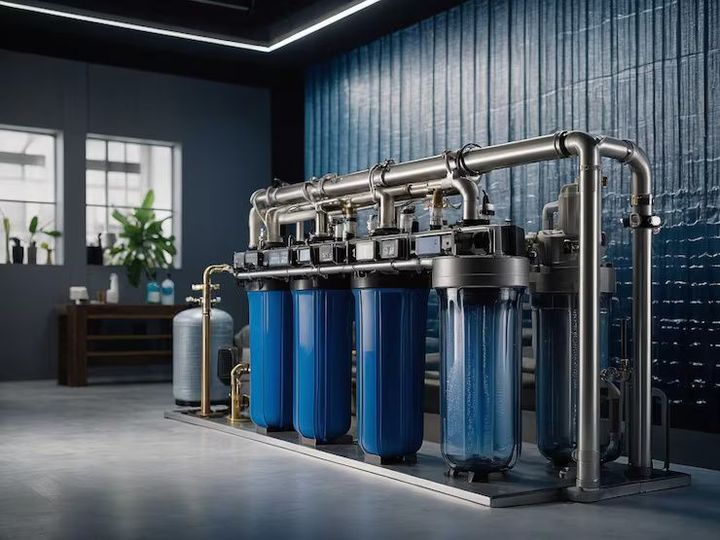
Multi-stage units combine different treatment technologies. A household system, for example, may contain sediment filtration, activated carbon, membrane treatment, and UV or another disinfection stage.
The number of stages does not by itself determine whether a system is appropriate. Each stage should have a specific purpose related to the characteristics of the incoming water.
Components and Filtration Methods
Main Components
A water purification unit may contain several components, including:
- Inlet and outlet connections
- Sediment filters
- Activated carbon media
- Membranes
- UV chambers
- Pumps
- Pressure controls
- Storage tanks
- Flow-control components
- Sensors and monitoring equipment
Larger systems may include chemical dosing equipment, multiple membrane stages, automated controls, and water-quality monitoring instruments.
How Filtration Stages Work Together
A typical treatment sequence may begin with particle removal. Carbon treatment may then address selected chemical and taste-related characteristics, followed by membrane treatment or disinfection when required.
The sequence depends on the water source and treatment objective. Pretreatment is particularly important for membrane-based systems because excessive sediment or other contaminants can reduce membrane performance.
Uses and Maintenance
Common Uses
Water purification units are used in many settings, including:
- Homes and apartments
- Offices and institutions
- Restaurants and food-preparation areas
- Laboratories
- Healthcare facilities
- Manufacturing facilities
- Commercial buildings
- Water-treatment plants
Different applications require different treatment objectives. Water intended for drinking requires attention to health-related quality parameters, while industrial water may require control of hardness, dissolved solids, corrosion-related factors, or other characteristics.
Maintenance Requirements
Maintenance depends on the equipment and operating conditions. Filters and membranes gradually accumulate retained material or lose performance, while UV systems require attention to lamp condition and cleanliness.
A basic maintenance routine may include:
- Checking pressure and flow
- Inspecting connections for leaks
- Replacing filters according to manufacturer specifications or measured condition
- Checking membrane performance
- Cleaning appropriate components
- Monitoring treated-water quality
- Recording maintenance activities
Storage tanks and water-contact surfaces should also be maintained in hygienic conditions. If water quality changes unexpectedly, testing can help determine whether the source, treatment process, or equipment condition has changed.
FAQs
What is a water purification unit?
A water purification unit is equipment designed to treat water by reducing specific physical, chemical, or biological contaminants. Different systems use methods such as sediment filtration, activated carbon, reverse osmosis, membrane filtration, or UV treatment.
How does a water purification unit work?
A purification system passes water through one or more treatment stages. Each stage is designed for a particular purpose, such as removing particles, reducing dissolved substances, adsorbing selected chemicals, or controlling microorganisms.
Which water purification method is used for dissolved salts?
Reverse osmosis is commonly used to reduce many dissolved salts and other dissolved substances. The suitability of RO depends on the incoming water composition and the required treated-water quality.
How often should water purification units be maintained?
Maintenance intervals vary according to the system, water quality, usage, and component specifications. Filters, membranes, UV components, tanks, and other parts may have different inspection or replacement intervals.
Can one water purification unit remove every contaminant?
No single treatment method is designed to remove every possible contaminant. Effective treatment depends on identifying the substances present in the water and matching suitable treatment stages to those characteristics.
Conclusion
Water purification units use different technologies to improve water quality for household, commercial, institutional, and industrial applications. Sediment filters, activated carbon, reverse osmosis, membranes, and UV treatment each address different water-quality characteristics. Recent developments in standards and treatment technology continue to emphasize testing, appropriate treatment selection, and system monitoring. Proper maintenance and periodic water-quality assessment are important parts of understanding how a purification system performs over time.