Vietnam Rice Terrace Villages Guide: Regions, Landscapes, Agriculture, Culture and Travel Details
Vietnam rice terrace villages are landscapes shaped by generations of farming in the mountainous north of Vietnam. Farmers have carved slopes into stepped fields that hold water and soil for rice cultivation, creating a close connection between agriculture, terrain, local traditions, and village life. Areas around Sa Pa, Mu Cang Chai, and Hoang Su Phi are especially associated with these landscapes. The terraces are not simply scenic features; they are working agricultural systems that reflect local knowledge and adaptation to steep land.
How rice terraces developed
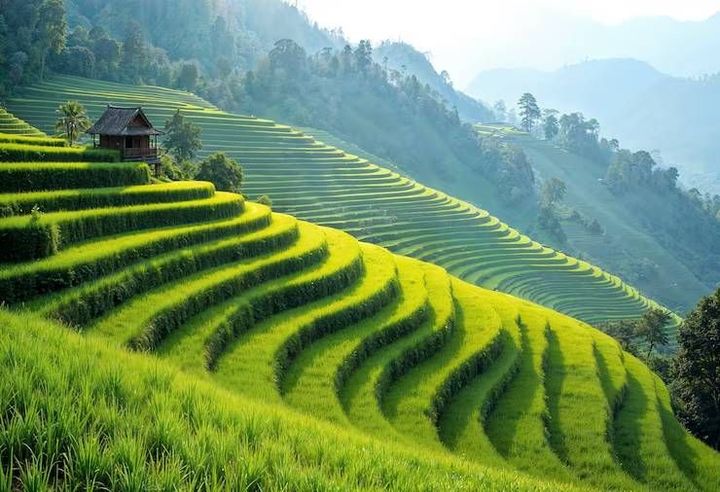
Rice terraces developed as mountain communities adapted wet-rice cultivation to slopes where flat farmland was limited. Instead of planting across a steep hillside, farmers create a sequence of level or gently sloping platforms. Small embankments retain soil and water, while channels and streams help move water between fields.
In northern Vietnam, terrace farming is closely connected with ethnic minority communities, including Hmong, Dao, Tay, and other groups. Farming methods vary between villages and elevations. Rice remains important in many areas, while maize, vegetables, fruit, and other crops may be grown where conditions are less suitable for flooded rice.
Main regions and landscapes
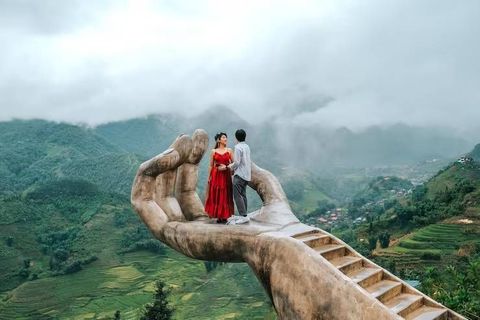
Several regions are commonly associated with Vietnam rice terrace villages. Sa Pa in Lao Cai Province is known for terraced valleys around villages such as Lao Chai and Ta Van. Mu Cang Chai in Yen Bai is associated with extensive terraces shaped into mountain slopes. Hoang Su Phi in Ha Giang also has large terraced landscapes and communities with long agricultural traditions.
| Region | Province | Landscape character | Common cultural connection |
|---|---|---|---|
| Sa Pa | Lao Cai | Valleys, mountain slopes, streams | Hmong, Dao, Tay and other communities |
| Mu Cang Chai | Yen Bai | Large stepped hillsides | Hmong farming communities |
| Hoang Su Phi | Ha Giang | High mountain terraces | Hmong, Dao, Nung and other communities |
The appearance of a terrace changes with the agricultural cycle. Water-filled fields can reflect the sky during the planting period. During crop growth, the slopes become green, while mature rice can turn yellow before harvesting.
Importance
Agriculture and local livelihoods
Rice terraces are agricultural infrastructure as well as landscapes. They allow communities to make productive use of mountainous land and depend on careful management of water, soil, planting, and harvesting. Maintaining terrace walls and channels can require considerable seasonal labor and knowledge.
The fields also connect agriculture with household life and local culture. Farming calendars can influence community activities, food traditions, festivals, and patterns of work. In some areas, visitors can observe planting, harvesting, irrigation, or other agricultural activities when local conditions permit.
Cultural and environmental importance
Vietnam rice terrace villages also show how people have adapted to difficult terrain without completely separating agriculture from the surrounding environment. The terraces can reduce uncontrolled movement of water down steep slopes and help retain cultivated soil, although their environmental effects depend on construction, maintenance, rainfall, and land management.
Tourism has added another layer of importance. Vietnam’s tourism authorities identify terraced fields in places such as Mu Cang Chai, Hoang Su Phi, and Sa Pa as significant landscape resources. Community-based tourism has developed in several villages, creating connections between farming landscapes, cultural activities, and visitor experiences.
Recent Updates
Tourism and landscape trends
From 2024 through 2026, the broader trend has been toward connecting rural tourism with agriculture, cultural heritage, and community participation. Tourism planning has increasingly emphasized sustainable development and the protection of natural and cultural resources rather than treating scenery separately from local communities. Vietnam’s tourism framework defines sustainable tourism around balancing present needs with future tourism resources and recognizes community participation in tourism development.
Terraced-field destinations have also been discussed as resources for a wider range of seasonal experiences. Tourism authorities have noted that the appearance of the terraces changes across the water, green-growth, and ripening periods, creating different landscape conditions during the year.
Cultural preservation
Cultural preservation has remained an important part of rural and ethnic-minority tourism planning. A government decree issued in 2026 established mechanisms and policies for preserving and promoting traditional culture among ethnic minority groups. This is relevant to villages where agricultural landscapes are closely linked with language, clothing, crafts, food traditions, ceremonies, and community knowledge.
The updated cultural heritage legal framework was also consolidated in 2026, reflecting continuing government attention to the protection and management of cultural heritage.
Laws or Policies
Tourism and visitor responsibilities
Vietnam’s tourism framework places emphasis on sustainable development, environmental protection, cultural identity, and reasonable use of tourism resources. Visitors and local communities have responsibilities related to protecting landscapes, cultural identity, public order, and the tourism environment.
For rice terrace villages, this means tourism activities can intersect with agricultural land, community spaces, cultural practices, and natural resources. Local authorities may also apply area-specific rules concerning access, land use, conservation, events, roads, or visitor management.
Cultural heritage protection
Vietnam’s cultural heritage framework provides mechanisms for protecting tangible and intangible heritage. The consolidated heritage framework issued in 2026 reflects the current legal structure for cultural heritage management.
Policies concerning ethnic minority communities also support cultural preservation and tourism development linked with environmental and landscape protection. Government policy has included support for tourism infrastructure and appropriate use of scenic resources in ethnic minority areas.
Travel conditions can vary by locality, so local government notices and current regulations are important when visiting protected landscapes, cultural sites, or community-managed areas.
Tools and Resources
Maps and travel information
Digital maps can help readers understand the relationship between Vietnam rice terrace villages, mountain roads, valleys, and nearby towns. Mapping platforms can be used to identify villages, viewpoints, roads, walking routes, and public facilities. Terrain and satellite layers can also help explain why terraces follow particular slopes.
Vietnam’s national tourism information platforms provide background information about destinations and rural tourism. Government tourism publications can also help readers understand regional landscape and cultural programs.
Seasonal planning resources
Weather forecasts, agricultural calendars, local tourism notices, and transport information can help explain changing conditions. A simple planning table can be useful:
- Water season: Terraces may contain shallow water and reflect surrounding mountains and sky.
- Green season: Growing rice creates broad green patterns across the hillsides.
- Harvest season: Mature rice changes the landscape toward yellow and gold tones.
- Cooler months: Some fields may be less visually dominated by rice, depending on local cropping patterns.
These descriptions are general because planting and harvesting periods vary with elevation, rainfall, local farming practices, and yearly weather.
Cultural information
Books, museum materials, local cultural centers, and official tourism publications can provide context about ethnic communities and agricultural traditions. Reliable sources are particularly useful when learning about ceremonies, traditional clothing, architecture, farming practices, and local history because customs can differ between neighboring communities.
FAQs
Where are the main Vietnam rice terrace villages?
Important rice terrace areas include Sa Pa in Lao Cai, Mu Cang Chai in Yen Bai, and Hoang Su Phi in Ha Giang. Each area has different elevations, village patterns, farming traditions, and landscape characteristics.
What makes Vietnam rice terrace villages important?
They combine agriculture, mountain adaptation, cultural traditions, and landscape management. The terraces allow farming on steep terrain and also form part of the cultural landscape of several northern Vietnamese communities.
When do Vietnam rice terraces turn green or yellow?
The appearance depends on local planting and harvesting cycles. Fields commonly change from water-filled terraces to green growing fields and later to mature rice landscapes, but the timing differs by location and weather.
Which communities are connected with rice terrace farming?
Hmong, Dao, Tay, Nung, and other ethnic communities live in or around northern mountainous areas where terrace farming is practiced. Cultural practices and farming methods vary between communities and villages.
Are rice terraces only agricultural landscapes?
No. They are working agricultural systems, cultural landscapes, and tourism resources. Their significance comes from the interaction between farming, water management, mountain geography, community knowledge, and cultural traditions.
Conclusion
Vietnam rice terrace villages illustrate how mountain communities have adapted agriculture to steep landscapes over generations. Regions such as Sa Pa, Mu Cang Chai, and Hoang Su Phi combine terraced farming with distinctive cultural traditions and changing seasonal scenery. Recent policy developments continue to emphasize sustainable tourism, community participation, and cultural preservation. Understanding the terraces as living agricultural and cultural landscapes provides a more complete view than treating them only as scenic destinations.