Vacuum Homogenizers Explained With Working Principles, Types, and Applications
Vacuum homogenizers are processing machines used to combine, mix, emulsify, and refine materials under reduced air pressure. They are commonly associated with cosmetics, personal care products, food processing, pharmaceutical manufacturing, and other industries where smooth and uniform mixtures are important.
A vacuum homogenizer combines controlled mixing with vacuum processing to reduce trapped air and improve the consistency of the final mixture.
The basic idea comes from the need to produce mixtures that remain uniform instead of separating into different layers. Conventional mixing can sometimes introduce air bubbles, especially when materials have different viscosities or when high-speed agitation is required. Vacuum processing addresses this issue by reducing the amount of air present during production.
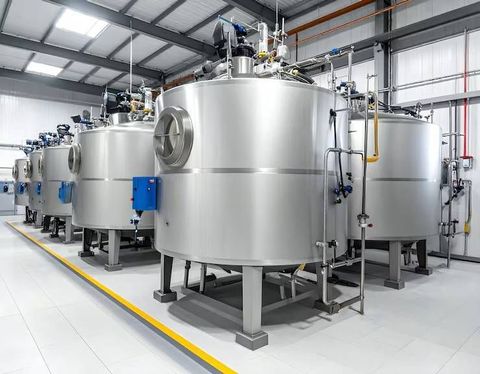
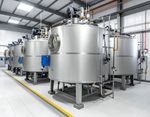
A typical vacuum homogenizer contains a mixing vessel, agitator, homogenizing system, vacuum equipment, heating or cooling components, and controls. Depending on the machine design, ingredients can be introduced in stages and processed under controlled temperature, pressure, and mixing conditions.
What a Vacuum Homogenizer Does
A vacuum homogenizer performs several related processing functions:
- Mixing combines different materials into a consistent blend.
- Homogenization breaks dispersed particles or droplets into smaller sizes.
- Emulsification helps combine materials that naturally resist mixing, such as oil and water.
- Vacuum processing reduces air inclusion and can help remove bubbles from the mixture.
- Temperature control supports heating, cooling, melting, and controlled processing.
These functions can be combined in one processing system, although the exact configuration varies according to the material and application.
Basic Components
The main components of a vacuum homogenizer generally include the following:
- Mixing tank: Holds the materials during processing.
- Agitator: Moves the material through the vessel.
- Homogenizing head: Applies high-shear mechanical action to improve dispersion.
- Vacuum pump: Creates reduced pressure inside the processing vessel.
- Heating and cooling system: Controls material temperature during processing.
- Control system: Regulates variables such as mixing speed, temperature, and vacuum level.
The arrangement of these components determines how the machine handles different materials and production requirements.
Importance
Vacuum homogenizers matter because many modern products depend on consistent mixtures. A product containing uneven particles, excessive air, or separated ingredients can have differences in texture, appearance, stability, or handling characteristics.
The equipment is particularly useful for materials that are thick, sensitive to air, or difficult to combine. Examples include creams, lotions, gels, sauces, emulsions, pastes, and other semi-solid formulations.
Problems Addressed by Vacuum Processing
Ordinary atmospheric mixing may introduce air into a material. Air can appear as visible bubbles or remain dispersed throughout the mixture, which may affect appearance and filling operations.
Vacuum homogenization can address several processing challenges:
- Reduced air entrapment during high-speed mixing.
- More consistent dispersion of ingredients.
- Improved control over emulsification.
- More uniform texture in many semi-solid products.
- Reduced bubble formation during certain processing stages.
- Controlled processing of materials with different viscosities.
Vacuum conditions do not automatically improve every formulation. Processing results depend on the material properties, equipment configuration, operating conditions, and sequence in which ingredients are introduced.
Who Uses Vacuum Homogenizers
Vacuum homogenizers are used across several manufacturing areas. Cosmetic producers may use them for creams, lotions, gels, masks, and similar formulations. Food processors can use comparable systems for sauces, dressings, spreads, and emulsified products.
Other applications include chemical formulations, personal care products, laboratory-scale development, and selected pharmaceutical manufacturing processes. The required machine configuration differs considerably between industries because hygiene, temperature control, material compatibility, and process validation requirements can vary.
Vacuum Homogenizer and Product Consistency
Homogenization is based on mechanical forces that reduce the size of dispersed droplets or particles. A homogenizing head can create high shear as material passes through a narrow working area.
The objective is not simply faster mixing. The process is intended to create a more consistent distribution of components throughout the mixture, which can influence texture and physical appearance.
Recent Updates
From 2024 through 2026, developments in vacuum homogenization have generally followed wider manufacturing trends toward automation, process monitoring, energy management, and more precise control. Equipment manufacturers have increasingly focused on systems that allow operators to monitor important process variables through digital control interfaces.
Automation and Process Monitoring
Modern vacuum homogenizers can incorporate programmable controls for mixing speed, temperature, vacuum conditions, and processing sequences. Automated control can help maintain repeatable operating conditions between batches.
Some systems also integrate sensors that monitor temperature, pressure, motor performance, and other operating parameters. Data collection can support production records and process analysis.
Flexible Equipment Designs
Another trend is greater flexibility in equipment configuration. Processing vessels are available in different sizes and layouts, while mixing and homogenizing systems can be configured for different viscosity ranges.
Manufacturers are also paying attention to easier cleaning, reduced product retention, and equipment designs that support hygienic processing. These considerations are particularly important when the same production environment handles multiple formulations.
Energy and Material Efficiency
Energy use has become a significant engineering consideration. Heating and cooling systems, motor efficiency, insulation, and process duration can all affect overall energy consumption.
Equipment design is also increasingly concerned with reducing unnecessary processing steps and improving material transfer. These developments do not eliminate energy use, but they can support more controlled processing.
Typical Vacuum Homogenizer Types
Different machine configurations are suited to different production requirements.
| Vacuum Homogenizer Type | General Characteristic | Common Application Areas |
|---|---|---|
| Bottom Homogenizer | Homogenizing mechanism positioned beneath the vessel | Creams, emulsions, gels |
| Bottom-Up Vacuum Homogenizer | Combines lower homogenization with vacuum mixing | Semi-solid formulations |
| Inline Homogenizer | Material passes through an external homogenizing unit | Continuous or circulation-based processing |
| High-Shear Homogenizer | Uses intense mechanical shear | Fine dispersion and emulsification |
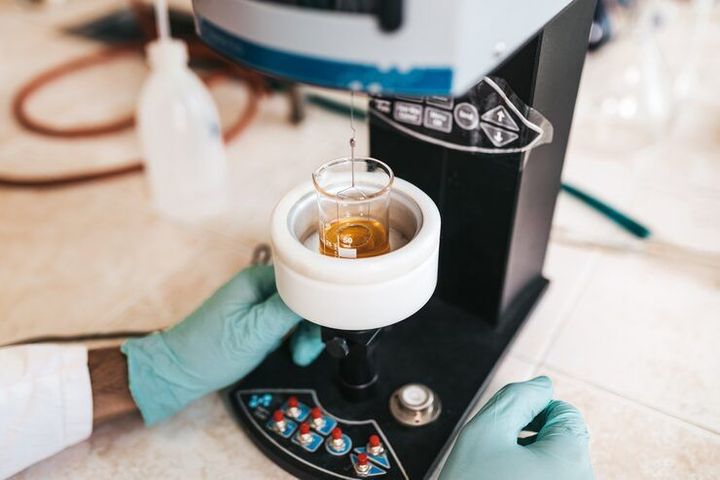
| Laboratory Vacuum Homogenizer | Smaller-scale processing configuration | Formulation development and testing |
The choice depends on viscosity, batch size, desired dispersion, temperature requirements, and the physical characteristics of the ingredients.
Laws or Policies
Vacuum homogenizer operations are influenced by the rules that apply to the industry and product category in which the equipment is used. Because requirements differ between countries and sectors, there is no single global regulatory framework covering every vacuum homogenizer.
Manufacturers handling food, cosmetics, pharmaceuticals, or chemicals generally need to follow applicable production, hygiene, material, labeling, workplace, and quality-control requirements. Equipment that comes into contact with a product may also need suitable construction materials and appropriate cleaning procedures.
Manufacturing and Hygiene Requirements
In regulated manufacturing environments, equipment design can be evaluated according to factors such as:
- Product-contact material compatibility.
- Cleanability and sanitation.
- Protection against contamination.
- Temperature and pressure control.
- Equipment identification and maintenance records.
- Process documentation and quality checks.
For pharmaceutical and certain food-related applications, documented procedures and controlled production environments can be especially important.
Pressure and Workplace Considerations
A vacuum homogenizer operates with pressure differences between the inside of the vessel and the surrounding environment. Proper vessel design, pressure controls, inspection procedures, and protective systems are therefore important.
Applicable workplace and equipment-safety rules depend on the jurisdiction and application. Operators should follow the manufacturer's operating instructions and the regulations applicable to the facility.
Tools and Resources
Several resources can help readers understand vacuum homogenizer operation and equipment selection without relying on promotional material.
Process Calculators
Engineering calculators can help estimate mixing parameters, vessel volume, heating requirements, cooling loads, and material flow characteristics. These calculations are useful for understanding how physical properties influence equipment requirements.
Technical Manuals
Equipment manuals and technical documentation can provide information about operating ranges, cleaning procedures, component specifications, and maintenance requirements. Such documents are usually more useful for specific equipment than general descriptions.
Process Simulation Tools
Engineering simulation platforms can be used to study fluid movement, heat transfer, and mixing behavior. These tools are generally more relevant to engineers and process-development teams than to casual readers.
Standards and Regulatory Resources
Official regulatory publications and recognized industry standards can help organizations understand requirements related to hygiene, pressure equipment, electrical safety, materials, and manufacturing processes. The relevant resources depend on the country and industry.
FAQs
What is a vacuum homogenizer?
A vacuum homogenizer is a processing machine that combines mixing and homogenization while operating under reduced pressure. It is used to create uniform mixtures and reduce air incorporation during processing.
How does a vacuum homogenizer work?
A vacuum homogenizer uses an agitator to move materials while a homogenizing mechanism applies mechanical shear. A vacuum system lowers the pressure inside the vessel, helping reduce trapped air during mixing.
What are the main vacuum homogenizer types?
Common configurations include bottom homogenizers, bottom-up systems, inline homogenizers, high-shear systems, and laboratory vacuum homogenizers. Each type has different capabilities based on vessel design, processing method, and material characteristics.
What are vacuum homogenizers used for?
Vacuum homogenizers are used for products such as creams, lotions, gels, emulsions, sauces, pastes, and other materials requiring controlled mixing or dispersion. Applications vary according to industry and formulation requirements.
Why is vacuum used in a homogenizer?
Vacuum conditions can reduce air incorporation and help remove bubbles from certain mixtures. This can be useful when the presence of air affects appearance, texture, filling, or subsequent processing.
Conclusion
Vacuum homogenizers combine controlled mixing, homogenization, and reduced-pressure processing in a single equipment system. Their working principles allow manufacturers to process materials that require uniform dispersion, controlled texture, and reduced air inclusion. Different vacuum homogenizer types are designed for different material properties, production scales, and processing methods. Current equipment development is increasingly focused on automation, monitoring, flexible configurations, hygienic design, and efficient process control.