Train Door Manufacturing Machines Explore: Automation Systems, Fabrication Steps and Applications
Train door manufacturing machines are industrial systems used to cut, form, weld, assemble, finish, and inspect door components for passenger rail vehicles. A modern train door can include a frame, door leaf, glass, seals, hinges or sliding mechanisms, locks, sensors, actuators, control electronics, and emergency release parts.
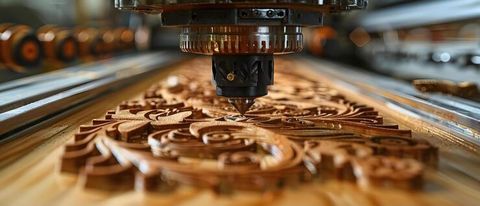
Equipment may include CNC cutting systems, sheet-metal forming machines, automated welding cells, drilling and fastening tools, surface-treatment equipment, assembly fixtures, and dimensional inspection tools. The combination depends on the train type, door design, materials, production volume, and railway specifications.
Common train door types
Passenger trains can use several door arrangements. Sliding doors move along a guide, plug doors move outward and then slide, and hinged doors rotate around a hinge axis. Some coaches also use pocket sliding doors for internal spaces, while automatic exterior doors can integrate locking, obstacle detection, warning signals, and vehicle-control interfaces.
The design affects manufacturing. Sliding doors require accurate guides and alignment, while automatic plug doors require coordinated movement between the mechanism and vehicle body. Materials can include stainless steel, aluminium alloys, glass, seals, and engineering plastics.
Importance
Train doors directly affect passenger entry and exit, accessibility, environmental separation, and operational safety. A door must fit accurately within the coach structure and continue to move predictably after repeated cycles. Small dimensional errors can create alignment, sealing, noise, or movement problems.
Automation systems help manufacturers maintain repeatable fabrication and assembly steps. CNC machines can follow programmed dimensions, while automated welding equipment can control the position and sequence of welds. Sensors and inspection systems can then check dimensions, movement, surface condition, and selected functional characteristics.
Indian Railways documentation describes automatic door arrangements in which the train is prevented from starting when specified coach doors are not closed and locked. Recent RDSO specifications also describe obstacle detection, emergency manual release, warning indications, and door-status monitoring.
Problems addressed by manufacturing automation
Manufacturing automation can address several production challenges:
- Repeatability: programmed equipment can reproduce defined cutting, forming, and welding sequences.
- Alignment: fixtures and measurement systems help maintain the position of door leaves, frames, tracks, and locking parts.
- Cycle testing: test rigs can repeatedly operate a door assembly to identify functional problems.
- Handling: automation can reduce direct handling during some repetitive fabrication operations.
Recent Updates
From 2024 through 2026, the general direction of train door technology has been toward greater integration between automatic door mechanisms, sensors, vehicle control systems, passenger information systems, and diagnostic functions. RDSO published a 2024 draft specification for a single-leaf automatic plug door for Vande Bharat train sets, describing automatic opening and closing, obstacle detection, and manual operation during emergencies.
Recent RDSO material for EMU door systems also describes requirements for obstacle detection, repeated closing attempts, door-status information, emergency manual release, audible and visual warnings, and monitoring of door faults through train control systems. These features show how door manufacturing increasingly involves both mechanical fabrication and electronic control integration.
Automation trends in fabrication
Current workflows increasingly combine programmable machines with digital measurement. A production cell may use CAD drawings, CNC equipment, robotic welding for selected joints, and automated inspection after assembly.
Modular production is another trend. Door leaves, frames, guide assemblies, locking mechanisms, and electronic modules can be prepared as subassemblies before final integration. Production systems may also record inspection measurements and cycle counts.
Laws or Policies
In India, train door manufacturing is shaped primarily by railway technical specifications, drawings, procurement requirements, safety procedures, and standards applicable to the particular rolling-stock project. The Research Designs and Standards Organisation (RDSO) publishes technical documents used within Indian Railways, including specifications related to automatic door locking and opening mechanisms and newer automatic plug-door designs.
For a particular train program, the applicable RDSO specification and approved drawings are important references because door dimensions, materials, strength, movement, locking, emergency release, and testing requirements can vary by vehicle design. RDSO documentation for LHB coaches, for example, describes automatic door arrangements and conditions intended to prevent train movement when specified doors are not secured.
The Bureau of Indian Standards maintains the Indian Standards system and provides a searchable portal for standards, amendments, testing information, and related documents. General door hardware standards may apply to particular components, but a rail vehicle door should not be assumed to comply with a general building-door standard simply because both products contain similar hardware.
Requirements can differ between mainline coaches, metro vehicles, EMUs, train sets, and specialized rail vehicles, so the applicable technical documents must be identified before materials, machines, inspection methods, and tests are selected.
Tools and Resources
Several tools and reference sources help readers understand train door manufacturing machines and railway door systems:
- RDSO technical specifications: Useful for locating Indian Railways requirements for particular coach and door systems.
- BIS standards portal: Useful for searching Indian Standards by product name or standard number and checking revisions or related information.
- CAD software: Used for door geometry, component drawings, and assemblies.
- CNC programming software: Converts defined geometry into machine instructions.
- Coordinate measuring machines: Inspect selected dimensions and geometric relationships.
- Welding fixtures: Hold components in position during welding.
- Door-cycle test rigs: Repeatedly operate door assemblies to evaluate movement, locking, sensing, and control functions.
- Electrical test equipment: Verifies sensors, actuators, control signals, and wiring.
A useful workflow connects design data, machine programs, inspection records, and final assembly documentation.
Simplified fabrication sequence
A train door manufacturing process can commonly follow these stages:
- Design and planning: Door geometry, materials, interfaces, and control requirements are defined.
- Material preparation: Sheets, profiles, glass, seals, and other approved components are prepared.
- Cutting and forming: CNC cutting, bending, punching, or machining creates the required shapes.
- Frame fabrication: Door frames and reinforcement elements are assembled using suitable fixtures.
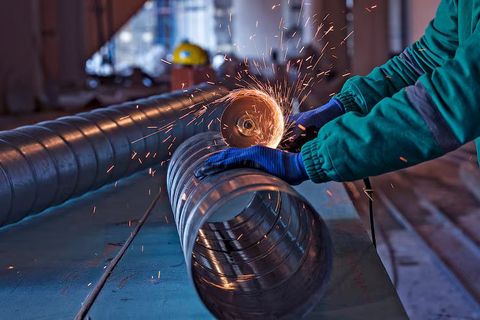
- Welding and joining: Selected joints are welded, fastened, bonded, or otherwise joined according to the design.
- Surface preparation: Components receive appropriate cleaning, finishing, or protective treatment.
- Mechanical assembly: Guides, rollers, hinges, locks, handles, seals, and other mechanisms are installed.
- Automation integration: Sensors, actuators, controllers, warning devices, and related wiring are connected.
- Functional testing: Opening, closing, locking, obstruction response, emergency release, and status signals are checked as applicable.
- Final inspection: Dimensions, appearance, movement, documentation, and specified test results are reviewed.
| Manufacturing stage | Common equipment | Main purpose |
|---|---|---|
| Cutting | CNC laser, plasma, or shear equipment | Prepare door components |
| Forming | Press brake or forming machine | Create bends and profiles |
| Joining | Welding cell, fixture, fastening tools | Build frames and assemblies |
| Machining | CNC mill, drill, or router | Produce holes and interfaces |
| Assembly | Fixtures and torque tools | Install mechanisms and hardware |
| Control integration | Electrical test equipment | Check sensors and control circuits |
| Inspection | Gauges, CMM, vision tools | Verify dimensions and features |
| Functional testing | Door-cycle test rig | Check repeated operation |
FAQs
What are train door manufacturing machines used for?
Train door manufacturing machines are used for cutting, forming, machining, welding, assembly, inspection, and testing of railway door components. The equipment selected depends on the door design and production requirements.
How does a train door manufacturing process work?
A typical train door manufacturing process begins with design and material preparation, followed by cutting, forming, joining, surface preparation, mechanical assembly, automation integration, and functional testing.
What automation systems are used in train doors?
Automation systems can include electric or pneumatic actuators, sensors, door controllers, locking mechanisms, warning devices, and interfaces with train control systems. Modern RDSO specifications describe functions such as obstacle detection and door-status monitoring.
Why is obstacle detection important in automatic train doors?
Obstacle detection helps the door system identify an obstruction during movement and respond according to its programmed safety logic. Specific detection and response requirements depend on the applicable railway specification.
Which standards apply to train door manufacturing in India?
Requirements depend on the rail vehicle and project. RDSO specifications, approved railway drawings, applicable Indian Standards, and project-specific technical documents can all be relevant. The exact requirements should be checked for the particular vehicle type.
Conclusion
Train door manufacturing combines metal fabrication, mechanical assembly, automation, electrical control, inspection, and functional testing. Modern railway doors increasingly connect physical mechanisms with sensors, controllers, warning systems, and train-control interfaces. In India, RDSO documents and project-specific railway requirements play an important role in defining door design and testing expectations. Understanding the complete manufacturing sequence helps explain how a train door moves from raw materials and fabricated parts to a tested door assembly.