Skydiving Above Islands Explained With Jumping Techniques, Locations, and Travel Information
Skydiving above islands is an adventure activity in which participants jump from an aircraft at altitude and descend toward a designated landing area using a parachute. Island skydiving combines the experience of freefall with views of coastlines, beaches, lagoons, coral reefs, and surrounding ocean landscapes.
The activity is commonly associated with tandem jumps, where a participant is securely attached to an experienced instructor.
Modern recreational skydiving developed from parachute technology originally used in aviation and military operations. As equipment, training methods, and aircraft operations evolved, parachuting became an organized recreational activity in many parts of the world. Island destinations later became popular settings because their coastal scenery provides distinctive aerial views.
Skydiving above islands involves more than jumping from an aircraft. Participants must understand aircraft procedures, body positioning, parachute deployment, weather conditions, landing zones, and safety requirements. The experience also depends on the island's geography, the altitude of the jump, and the operating procedures of the local skydiving center.
How Island Skydiving Works
A typical tandem skydive follows several stages. Participants receive a briefing before boarding the aircraft, including instructions about body posture, communication signals, and landing preparation. After reaching the planned altitude, the instructor and participant exit the aircraft together.
During freefall, air resistance slows the descent relative to an uncontrolled fall, while the instructor maintains the required body position. The parachute is deployed according to the planned procedure, allowing a slower descent toward the landing area. The instructor manages the canopy and guides the landing.
Common Types of Island Skydiving
Several formats are available, depending on local facilities and participant experience.
Tandem skydiving involves an instructor controlling the jump and parachute while the participant follows instructions.
Accelerated freefall training introduces independent parachuting skills through structured instruction and supervised jumps.
Experienced skydiving involves licensed or appropriately qualified participants performing jumps under applicable operating rules.
Scenic skydiving focuses on aerial views of islands, coastlines, and nearby ocean features.
Each format has different training, equipment, eligibility, and supervision requirements.
Importance
Island skydiving matters to adventure travelers because it combines aerial recreation with geographical exploration. From the aircraft, participants may see the relationship between beaches, reefs, mountain ranges, settlements, and open water more clearly than from ground level. These views can also create an interest in local geography and coastal environments.
The activity affects several groups, including travelers, instructors, aircraft operators, tourism businesses, and local communities. Its operation requires coordination between aviation personnel, parachuting professionals, land managers, and emergency responders. Weather monitoring and designated landing areas are particularly important when the surrounding terrain includes beaches, cliffs, forests, or water.
Safety and Environmental Challenges
Island environments introduce challenges that may differ from inland skydiving locations. Coastal winds can change direction or strength, while clouds, rain, and poor visibility may affect aircraft operations. Sea breezes and turbulence can also influence parachute handling and landing accuracy.
Landing near the ocean presents additional considerations. A planned landing area should be clearly defined, and participants must understand that a parachute jump is not intended to end in open water unless the operation is specifically designed and authorized for that purpose.
Environmental protection is another concern. Aircraft activity, visitor traffic, and tourism infrastructure can affect sensitive coastal habitats. Responsible operations consider local land-use restrictions, wildlife areas, noise concerns, and the protection of beaches and marine environments.
Who Can Participate?
Eligibility depends on the operator, equipment, local regulations, and the participant's circumstances. Tandem skydiving may have minimum age requirements, weight limits, and health-related restrictions. Some operators require additional approval for participants with particular mobility limitations or other conditions that could affect safe participation.
Before a jump, participants generally need to understand and follow instructions, use the supplied equipment correctly, and comply with the instructor's directions. Anyone uncertain about their physical suitability should discuss the matter with an appropriately qualified healthcare professional and the operator before participating.
Recent Updates
Island skydiving continues to reflect wider developments in adventure tourism, aviation safety, digital booking systems, and environmental awareness. Across the 2024–2026 period, the general direction has been toward clearer pre-jump information, improved digital coordination, and more attention to operational risk management rather than a single universal change in skydiving procedures.
Technology and Equipment Developments
Modern parachute systems use engineered canopies, harnesses, reserve parachutes, and deployment components designed for specific operational requirements. Automatic activation devices are used in many skydiving configurations to initiate reserve deployment when preset conditions are met. However, these devices are supplementary safeguards, not substitutes for training, maintenance, or sound judgment.
Digital weather forecasts, aviation information systems, and electronic communication tools help operators assess conditions and coordinate activities. Video systems also allow participants to record their experience, although camera use may be restricted during particular jumps or for some participant categories.
Changing Travel Preferences
Adventure travelers increasingly combine outdoor activities with broader island itineraries. A skydiving experience may form one part of a trip that includes snorkeling, hiking, wildlife observation, cultural visits, or coastal sightseeing.
Online reservations and digital briefings have also made it easier to review operating requirements before arriving. However, advance reservations do not eliminate the possibility of weather delays, aircraft disruptions, or operational cancellations. Local conditions and safety decisions remain more important than a travel schedule.
General Developments to Watch
The following areas continue to influence island skydiving operations.
Weather assessment: improved access to forecasts supports planning, but actual conditions still require operational judgment.
Equipment maintenance: documented inspections and appropriate servicing remain essential.
Participant information: clearer explanations of eligibility, cancellation arrangements, and jump procedures help travelers prepare.
Environmental management: designated landing zones and awareness of protected coastal areas help reduce unnecessary disturbance.
These developments vary by operator and jurisdiction. There is no single worldwide system governing every island skydiving operation.
Laws or Policies
Skydiving above islands is shaped by aviation regulations, parachuting rules, land-use permissions, and local safety requirements. The applicable framework depends on the country or territory where the jump takes place. Travelers should not assume that procedures permitted at one destination are automatically permitted elsewhere.
Aviation and Parachuting Regulations
National aviation authorities generally establish rules concerning aircraft operation, pilot qualifications, airspace use, and relevant operational approvals. Parachuting activities may also be subject to requirements covering equipment, instructor qualifications, operating procedures, and designated jumping areas.
Depending on the jurisdiction, an operator may need specific authorization to conduct commercial tandem jumps or use a particular aircraft for parachuting. Participants may be required to complete safety briefings, follow age or weight limits, and comply with equipment and passenger rules.
Land Access and Coastal Restrictions
Island landing areas may be located on private land, public property, designated recreational grounds, or approved aviation facilities. Operators must comply with applicable access permissions and land-use restrictions. Beaches and coastal zones may also be subject to environmental protections or restrictions on aircraft activity.
Marine protected areas, wildlife habitats, and restricted airspace can influence where a jump may take place. A scenic view of a protected location does not mean that landing or flying directly above it is permitted.
Participant Responsibilities
Before participating, travelers should review:
Operator authorization and instructor qualifications where applicable.
Required identification, eligibility conditions, and health disclosures.
Equipment procedures, emergency instructions, and landing requirements.
Cancellation, rescheduling, insurance, and liability documentation.
Restrictions relating to photography, personal equipment, and landing locations.
These checks help clarify the responsibilities of both participants and operators. Legal requirements should be confirmed through the relevant aviation authority and local operating organization.
Tools and Resources
Planning an island skydiving trip requires information about weather, travel arrangements, eligibility, and the operating location. Several categories of digital tools can help travelers organize these details.
Weather and Flight Planning Tools
Weather applications provide forecasts for wind, precipitation, cloud cover, and visibility. These indicators help travelers understand why a jump might be delayed, but the operator makes the final decision based on the conditions and applicable operating procedures.
Aviation weather reports and official forecasts may provide more detailed information than general consumer weather applications. Travelers should distinguish between a general forecast and a formal operational assessment.
Booking and Preparation Resources
Skydiving operator websites and reservation platforms commonly provide details about available jump formats, participant requirements, meeting points, expected duration, and rescheduling policies. Official operator information is particularly important because procedures differ between locations.
A digital checklist can help organize travel and preparation requirements.
Confirm the jump location and meeting time.
Review identification and eligibility requirements.
Check baggage, clothing, and footwear instructions.
Understand the cancellation and weather-delay policy.
Arrange transport to and from the landing area.
Keep a flexible schedule in case conditions change.
Island Destination Comparison
The following table provides a general overview of island destinations associated with scenic skydiving. Availability depends on current operators, local permissions, weather, and operating schedules.
Destination | Geographic setting | Planning consideration |
|---|---|---|
Hawaii, United States | Volcanic islands and Pacific coastline | Check island-specific operators and coastal weather |
North Island, New Zealand | Coastal landscapes and ocean views | Review local aviation rules and seasonal conditions |
Wollongong, Australia | Coastal scenery near the Tasman Sea | Confirm current tandem-jump availability and transport |
Palm Jumeirah, Dubai, United Arab Emirates | Engineered island development and urban coastline | Check designated jump operations and airspace restrictions |
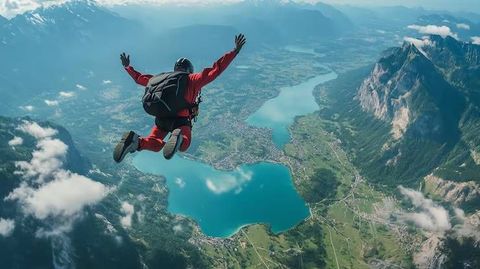
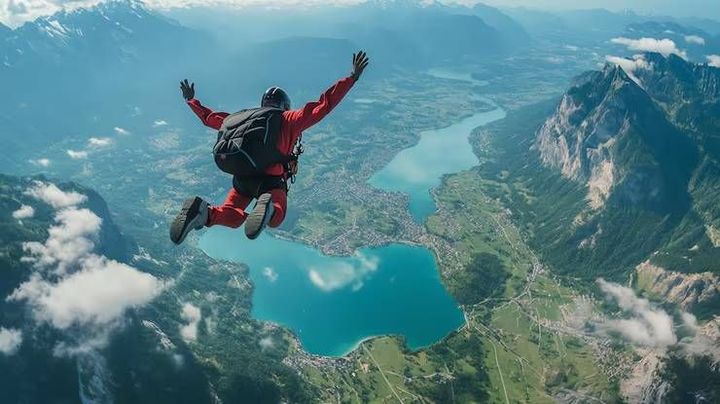
Interlaken-area lake and mountain scenery, Switzerland | Inland alpine setting rather than an ocean island | Consider as an alternative for dramatic aerial scenery |
These locations illustrate different geographical settings rather than a ranking. Not every island destination has an active skydiving operation, and availability should be verified before travel arrangements are finalized.
Travel Budget and Schedule Planning
A trip planner can help estimate the overall travel budget by accounting for transport, accommodation, meals, activity charges, insurance, and possible additional nights. These amounts vary according to the destination, season, and travel arrangements.
A separate itinerary calendar is useful because weather-related delays may affect the planned jump. Travelers with connecting flights or other time-sensitive activities should leave sufficient flexibility rather than scheduling the jump immediately before departure.
FAQs
What is skydiving above islands?
Skydiving above islands involves jumping from an aircraft and descending by parachute while viewing island landscapes, coastlines, and surrounding water. Tandem jumps are a common format for beginners.
Which island destinations have skydiving locations?
Hawaii, parts of New Zealand, coastal Australia, and Dubai are associated with scenic skydiving operations. Current availability, operating locations, and eligibility requirements should be checked with the relevant operator.
How does tandem skydiving above islands work?
A participant is attached to an instructor using a tandem harness system. After a safety briefing and aircraft ascent, the pair exits the aircraft, experiences freefall, deploys the parachute, and lands in a designated area under the instructor's control.
What weather conditions are suitable for island skydiving?
Suitable conditions depend on wind strength, visibility, cloud conditions, precipitation, and the operator's procedures. Coastal weather can change quickly, so the final decision to proceed rests with the qualified operational team.
What should travelers check before booking island skydiving?
Travelers should check operator authorization, participant eligibility, safety procedures, insurance arrangements, weather-related cancellation terms, transport, and the location of the landing area. They should also allow schedule flexibility for possible delays.
Conclusion
Skydiving above islands combines parachuting techniques with aerial views of distinctive coastal and island landscapes. A successful trip depends on suitable weather, qualified supervision, appropriate equipment, and compliance with local aviation and land-use rules. Destination research, clear eligibility information, and flexible travel planning help travelers understand the practical requirements. Procedures and availability vary between locations, so general information should always be distinguished from the rules of a specific operation.