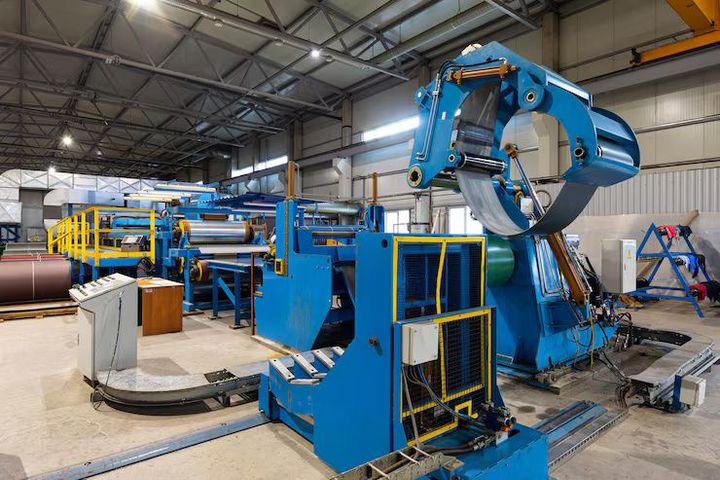
Rubber Refining Mills Guide With Rubber Processing and Manufacturing Insights
Rubber refining mills are important machines used in rubber processing to transform raw, reclaimed, or previously processed rubber into a more uniform material for further manufacturing. A typical rubber refining mill uses two rotating rolls that work the rubber through controlled pressure, friction, temperature, and repeated passes.
The basic concept comes from traditional rubber processing, where mechanical working was needed to soften and homogenize rubber before additional ingredients or shaping processes were introduced. Modern rubber refining mills continue this principle while incorporating improved roll design, temperature control, monitoring systems, guarding, and automation.
Rubber refining mills are commonly associated with rubber processing equipment used for natural rubber, synthetic rubber, reclaimed rubber, and certain rubber compounds. The exact machine configuration depends on the material, required output characteristics, and downstream manufacturing process.
How rubber refining mills work
A rubber refining mill normally contains two horizontal rolls rotating at controlled speeds. Rubber enters the gap between the rolls and is repeatedly compressed, stretched, folded, and passed through the working zone.
Important operating elements include:
- Roll diameter and working width
- Roll speed and speed ratio
- Roll gap
- Roll temperature
- Material feed rate
- Friction between the rolls
- Cooling or heating arrangement
- Drive motor and transmission system
- Emergency stopping and guarding equipment
The operator or automated control system adjusts these variables according to the rubber formulation and processing stage.
Rubber refining in the wider process
Rubber refining is generally one stage within a broader rubber manufacturing sequence. Depending on the application, processing can include raw material preparation, mixing, refining, compounding, calendering, extrusion, molding, vulcanization, inspection, and finishing.
A refining mill may therefore work alongside internal mixers, rubber extruders, calendering equipment, cooling systems, weighing systems, and laboratory testing equipment.
Importance
Rubber refining mills matter because rubber does not always enter production in a condition that is ready for consistent downstream processing. Natural rubber can contain variations in texture and composition, while reclaimed rubber may contain different particle sizes or physical characteristics.
Mechanical refining helps improve material uniformity and prepares rubber for subsequent processing. This can affect how consistently the material moves through extrusion, calendering, molding, or other production stages.
Who uses rubber refining mills
These machines can be relevant to several areas of rubber manufacturing, including:
- Rubber compound preparation
- Reclaimed rubber processing
- Rubber sheet production
- Industrial rubber components
- Sealing materials
- Rubber profiles
- Belts and hoses
- Footwear components
- Vibration-control products
- Various molded rubber products
The specific mill configuration should correspond to the material and intended processing sequence.
Processing factors that matter
A rubber refining mill does more than simply compress material. The interaction between roll speed, pressure, temperature, and material residence time influences the physical condition of the rubber.
| Processing factor | General purpose | Possible effect |
|---|---|---|
| Roll gap | Controls working thickness | Influences deformation |
| Roll speed | Controls mechanical movement | Affects processing intensity |
| Speed ratio | Creates differential roll action | Supports shearing and working |
| Temperature | Controls material condition | Influences softness and flow |
| Feed rate | Controls material loading | Affects consistency |
| Number of passes | Controls repeated working | Supports material uniformity |
| Cooling | Controls excessive heat | Helps maintain process stability |
These factors need to be considered together rather than independently. Excessive mechanical working can generate heat, while insufficient working may leave material insufficiently prepared for the next process.
Safety considerations
Rubber refining mills contain moving rolls and significant mechanical forces. Proper guarding, emergency stopping systems, operating procedures, training, and routine inspection are therefore important parts of responsible machine operation.
Operators also need to understand material feeding procedures and safe distances around moving components. Safety arrangements should follow the applicable machinery requirements and workplace rules.
Recent Updates
From 2024 through 2026, developments around rubber processing equipment have increasingly involved automation, machine safety, monitoring, and conformity requirements.
One significant development in India concerns machinery used for working rubber and plastics. BIS has published category-specific guidelines under Scheme-X for machinery covered by the Machinery and Electrical Equipment Safety (Omnibus Technical Regulations) Order, 2024. The guidelines address certification procedures and technical documentation for relevant machinery categories.
Automation and process monitoring
Modern rubber refining mills can incorporate digital controls for roll speed, temperature, pressure, motor load, and operating conditions. Data monitoring can help operators identify changes in process behavior and maintain more consistent operating conditions.
Automation can also connect refining equipment with upstream weighing or mixing systems and downstream sheet handling equipment. The level of automation varies considerably between installations.
Energy and heat management
Heat generation remains an important consideration in rubber processing. Current equipment development places attention on temperature monitoring, roll cooling, motor efficiency, and process control.
Temperature management is particularly relevant because rubber properties can change as processing conditions change. Maintaining appropriate thermal conditions can therefore support repeatable processing.
Improved safety systems
Machine guarding, emergency controls, interlocks, and documented operating procedures continue to receive attention in industrial machinery design. BIS guidance published for rubber and plastics machinery reflects the broader movement toward formalized machinery safety and conformity assessment.
Standards and testing developments
Rubber standards continue to be reviewed and updated. BIS maintains standards covering rubber materials, rubber products, testing methods, and related technical requirements. Its standards database also shows ongoing reviews and newer standards within the rubber sector.
Laws or Policies
For India, rubber processing and rubber machinery can be affected by several layers of requirements covering machinery safety, environmental management, workplace safety, product standards, and industrial operations.
Machinery conformity
BIS identifies machinery for working rubber and plastics as a category covered under Scheme-X certification requirements. Category-specific guidelines published in 2025 describe documentation and conformity assessment procedures associated with applicable machinery.
This means manufacturers and organizations dealing with applicable machinery should verify whether a particular machine falls within the current regulatory scope rather than assuming that every rubber processing machine has identical requirements.
Rubber product standards
BIS maintains Indian Standards covering rubber materials and products. The standards framework includes specifications and test methods for different rubber categories. For example, BIS maintains standards covering natural rubber and rubber testing procedures.
Product requirements can vary according to the final application. A rubber refining mill itself and the rubber product manufactured using that mill may therefore be subject to different technical considerations.
Environmental considerations
Rubber processing facilities may also need to follow applicable environmental rules covering emissions, waste handling, wastewater, energy use, and industrial operations. Requirements can depend on the type of process, materials used, facility location, and applicable environmental classification.
Because environmental requirements can change, manufacturers and plant operators should consult the current rules and the relevant authorities for their specific facility.
Tools and Resources
Several technical resources can help readers understand rubber refining mills and related manufacturing processes.
Rubber processing calculators
Engineering calculators can be used for basic conversions involving roll dimensions, rotational speed, throughput, power requirements, temperature measurements, and material quantities. These calculations are useful for understanding machine operating parameters.
BIS standards databases
The BIS standards portal provides searchable information about Indian Standards, amendments, testing information, and related documentation. Its Know Your Standard feature allows users to search using an Indian Standard number or a product-related keyword.
Process specification sheets
A process sheet can record important operating information such as:
- Rubber material type
- Batch identification
- Roll temperature
- Roll gap
- Roll speed
- Processing sequence
- Number of passes
- Cooling conditions
- Inspection observations
Maintaining consistent process records can help technical teams compare batches and identify process variation.
Rubber testing equipment
Laboratories may use instruments for hardness, tensile properties, elongation, aging behavior, viscosity, compression characteristics, and other rubber properties. The appropriate test depends on the material and final application.
BIS maintains standards covering numerous rubber test methods, providing a reference framework for understanding how particular physical properties may be evaluated.
FAQs
What is a rubber refining mill?
A rubber refining mill is a machine that mechanically works rubber between two rotating rolls. It is used to improve material uniformity and prepare rubber for subsequent processing stages.
How does a rubber refining mill differ from a rubber mixing mill?
A rubber refining mill focuses heavily on mechanical working and preparation of rubber, while a rubber mixing mill may be used more specifically for incorporating ingredients into a rubber compound. Actual machine configurations and processing sequences vary by application.
What factors affect rubber refining mill performance?
Roll gap, roll speed, speed ratio, temperature, feed rate, number of passes, and material characteristics can all influence the refining process. Operators normally consider these factors together.
Are rubber refining mills covered by machinery regulations?
In India, machinery for working rubber and plastics is included within the machinery categories identified under Scheme-X certification. The exact applicability depends on the machine and current regulatory requirements.
What safety measures are important for rubber refining mills?
Important measures include appropriate roll guarding, emergency stopping arrangements, controlled feeding procedures, operator training, equipment inspection, and compliance with applicable workplace and machinery safety requirements.
Conclusion
Rubber refining mills play an important role in preparing rubber materials for consistent downstream processing. Their operation depends on factors such as roll speed, roll gap, temperature, material characteristics, and processing sequence. Recent developments have placed greater attention on automation, monitoring, machinery safety, and conformity requirements. Understanding these elements provides a useful foundation for interpreting modern rubber processing and manufacturing systems.