Robotic Process Control Guide: Working Principles, Technologies, Uses and Key Considerations
Robotic process control combines robots, sensors, controllers, software, and connected equipment to perform and manage repeatable physical processes. A robotic process control system can monitor operating conditions, make programmed decisions, and coordinate machines with limited manual intervention. It is increasingly associated with industrial automation, smart manufacturing, warehouses, laboratories, and other environments where consistent process execution is important.
Context
What Robotic Process Control Means
Robotic process control is a broad term for using robotic equipment together with control technologies to manage physical tasks and processes. Unlike a basic robot that repeatedly follows a fixed movement sequence, a controlled robotic system can receive information from sensors, compare that information with programmed conditions, and adjust its actions.
The concept developed from industrial automation, where machines were introduced to handle repetitive or physically demanding activities. Early automated systems relied heavily on mechanical controls, relays, and programmable controllers. Modern systems can combine robotics, sensors, industrial networks, software, machine vision, and data analysis.
Robotic process control should also be distinguished from robotic process automation, or RPA. RPA generally focuses on software-based tasks such as moving information between digital applications, while robotic process control generally refers to the control of physical equipment, machines, or production processes.
How a Robotic Process Control System Works
A typical system follows a continuous sequence of sensing, processing, decision-making, and action. Sensors collect information about factors such as position, temperature, pressure, speed, vibration, or object presence. A controller then processes these signals according to programmed instructions.
The controller sends commands to motors, robotic arms, valves, conveyors, grippers, or other equipment. Feedback from the equipment is then collected again, allowing the control system to determine whether the process is operating within the defined conditions.
For example, a robotic packaging line may detect an item using a sensor, identify its position with a vision system, move a robotic arm toward it, place it into a designated location, and confirm that the movement was completed correctly.
Importance
Why Robotic Process Control Matters
Robotic process control is relevant because many physical processes involve repeated movements, precise timing, continuous monitoring, or exposure to environments that may be difficult for people to work in for long periods. Automation can coordinate these activities through programmed sequences and sensor feedback.
The technology affects manufacturing workers, engineers, maintenance teams, warehouse personnel, system designers, and organizations operating automated equipment. It can also affect consumers indirectly because automated production and logistics systems influence how physical products are processed and handled.
Common challenges addressed by robotic process control include:
- Repetitive physical movements
- Consistent positioning and handling
- Continuous process monitoring
- Coordination between several machines
- Detection of process abnormalities
- Material movement between production stages
- Operation in enclosed, hot, dusty, or hazardous environments
- Collection of operational data for analysis
Main Technologies Used
Several technologies normally work together rather than operating independently.
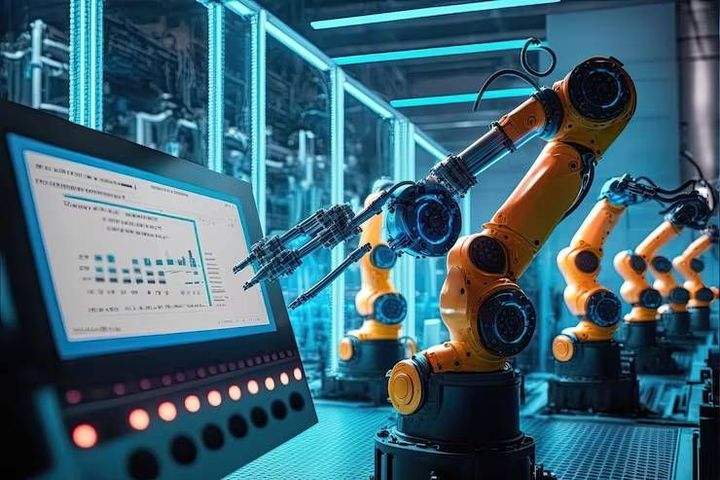
Industrial robots perform physical movements such as picking, placing, welding, assembly, inspection, or material handling. Programmable logic controllers, commonly called PLCs, process input signals and execute control logic. Sensors provide information about the surrounding process.
Machine vision systems use cameras and image-processing software to identify objects, positions, shapes, or visible defects. Human-machine interfaces, or HMIs, allow operators to view process information and interact with control settings.
Industrial communication networks connect controllers, robots, sensors, drives, and other equipment. More advanced installations may also use industrial data platforms, edge computing, digital twins, and artificial intelligence for monitoring or analysis.
Common Uses
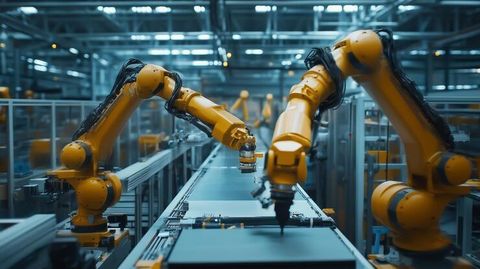
Robotic process control can be applied across many physical processes. In manufacturing, robotic arms can handle assembly, welding, material transfer, inspection, and packaging. In warehouses, automated equipment can coordinate movement and sorting activities.
Other applications include:
- Automotive component handling
- Electronics assembly
- Food and beverage processing
- Pharmaceutical manufacturing
- Metal fabrication
- Packaging operations
- Laboratory automation
- Warehouse material movement
- Machine tending
- Quality inspection
- Agricultural automation
The exact technology depends on the task, physical environment, production requirements, safety conditions, and level of interaction between people and machines.
Important System Factors
A robotic process control system needs more than a robot and a controller. The surrounding process must also be considered.
| Factor | What It Covers |
|---|---|
| Sensors | Position, pressure, temperature, movement, presence, and other measurements |
| Controller | Logic used to interpret inputs and coordinate actions |
| Robot | Physical movement, handling, assembly, or manipulation |
| Software | Programming, monitoring, configuration, and data analysis |
| Safety system | Protective devices, controlled access, emergency functions, and risk reduction |
| Communication | Data exchange between machines and control components |
| Maintenance | Inspection, calibration, component replacement, and troubleshooting |
| Data | Operational information used for monitoring and process analysis |
Recent Updates
Movement Toward Connected Robotics
From 2024 through 2026, robotics development has increasingly focused on connected systems rather than isolated machines. Industrial robots are being combined with sensors, machine vision, industrial networks, edge computing, and artificial intelligence to handle more variable operating conditions.
India has also continued developing its robotics ecosystem. In 2026, a Technology Advisory Group under the Office of the Principal Scientific Adviser discussed a strategic roadmap for robotics, including advanced robotic technologies, research, testing infrastructure, safety, and development of domestic capabilities.
Updated Safety Standardization
Safety standards for industrial robotics have also been evolving. The Bureau of Indian Standards published a 2024 draft revision aligned with ISO 10218 for industrial robot safety. The draft addressed robot design, operating modes, and safety requirements, while a related draft addressed industrial robot applications and robot cells.
Another noticeable development is the growing connection between robotics and intelligent manufacturing. Instead of simply repeating fixed movements, newer systems can combine sensor feedback, machine vision, software analytics, and adaptive control methods. This creates a stronger connection between robotics and broader Industry 4.0 systems.
Laws or Policies
Industrial Safety in India
Robotic process control installations in India can be affected by workplace safety requirements and applicable industrial regulations. The Occupational Safety, Health and Working Conditions Code, 2020 establishes a framework covering occupational safety and working conditions. Its implementation and associated rules need to be considered according to the applicable government notifications and sector requirements.
For robotic equipment, safety planning can include machine guarding, restricted access, emergency stopping functions, risk assessment, safe operating modes, and appropriate training. The exact requirements depend on the equipment and working environment.
Indian Standards for Robotics
The Bureau of Indian Standards maintains standards related to industrial automation and robotics. Indian standards based on the ISO 10218 series address safety requirements for industrial robots and robot systems. BIS also provides a “Know Your Standard” platform where users can search Indian Standards by standard number or keyword.
Compliance requirements can vary by product and application. BIS notes that certification is generally voluntary, while certain products may be subject to mandatory requirements through government-issued quality control orders.
Data Protection Considerations
Some robotic process control environments use cameras, identification systems, employee records, access logs, or other digital information that may contain personal data. India's Digital Personal Data Protection framework therefore may become relevant when personal data is processed through connected systems.
The Digital Personal Data Protection Rules, 2025 were notified by the Ministry of Electronics and Information Technology, with a phased implementation framework. Organizations using connected automation systems need to consider applicable data-processing responsibilities where personal data is involved.
The regulatory position can vary according to the application, organization, sector, and type of information processed. This article provides general information rather than legal advice.
Tools and Resources
Control and Monitoring Tools
Several categories of tools are commonly used when designing or studying robotic process control systems. PLC programming environments are used to create control logic, while SCADA systems can provide monitoring and visualization across industrial processes.
Simulation software can model robot movements before physical deployment. Digital twin platforms can represent equipment or processes digitally for analysis, testing, and monitoring. Machine vision software can process camera data for object recognition, positioning, or inspection.
Standards and Reference Resources
Useful resources include:
- Bureau of Indian Standards for Indian Standards and technical references
- ISO robotics standards for international technical guidance
- PLC programming documentation
- Robot manufacturer programming manuals
- Industrial automation training materials
- Robotics simulation platforms
- SCADA and HMI documentation
- Machine vision reference materials
- Industrial cybersecurity guidance
- Equipment maintenance documentation
Technical documentation should be reviewed alongside the specific equipment and process because control methods can differ substantially between robotic systems.
FAQs
What is robotic process control?
Robotic process control is the use of robots, controllers, sensors, software, and related equipment to monitor and manage physical processes. The system receives information from the process and uses programmed logic to coordinate machine actions.
How does robotic process control work?
A robotic process control system generally collects information through sensors, processes that information through a controller, and sends commands to robotic or mechanical equipment. Feedback is then used to monitor whether the process is operating according to programmed conditions.
What technologies are used in robotic process control?
Common technologies include industrial robots, PLCs, sensors, machine vision, HMIs, industrial networks, SCADA systems, simulation tools, and data platforms. More advanced systems can also incorporate artificial intelligence, edge computing, and digital twins.
Is robotic process control the same as robotic process automation?
No. Robotic process automation normally refers to software-based automation of digital tasks, while robotic process control generally relates to physical machines, robots, sensors, and industrial processes. Some modern environments can use both approaches together.
What safety standards apply to robotic process control in India?
Industrial robotic applications can be influenced by applicable Indian workplace safety requirements and relevant BIS standards. The ISO 10218-based Indian standards provide technical guidance for industrial robot safety and robot system integration, while the exact regulatory requirements depend on the application and operating environment.
Conclusion
Robotic process control combines robotics, sensors, controllers, software, and communication technologies to manage physical processes. Its applications range from manufacturing and packaging to inspection, material handling, laboratories, and warehouse operations. Recent developments have connected robotics more closely with machine vision, artificial intelligence, data systems, and intelligent manufacturing. In India, safety standards, workplace rules, technical standards, and data protection requirements can all be relevant depending on how a robotic system is designed and used.

You May Also Like