Robotic Pick-and-Place Systems Guide With Automation and Manufacturing Insights
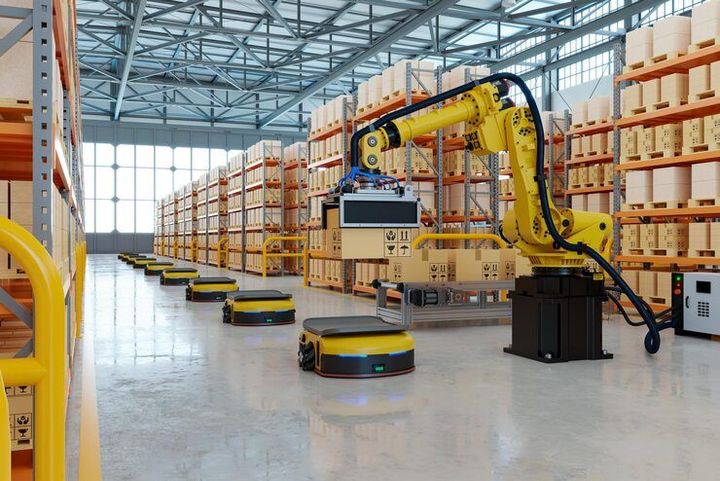
Robotic pick-and-place systems are automated machines designed to move objects from one location to another with repeatable motion. A typical system uses a robotic arm, gripper or suction tool, sensors, a controller, and software that coordinates movement.
These systems appear in manufacturing environments where products, components, packages, or materials need to be repeatedly picked, positioned, sorted, or transferred.
The idea comes from industrial automation, which developed as manufacturers looked for ways to perform repetitive physical tasks with consistent timing. Early industrial robots were used for structured operations such as material handling and assembly. As sensors, motion controls, machine vision, and computing improved, robotic pick-and-place systems became capable of handling more varied objects and production arrangements.
A robotic pick and place machine generally follows a sequence. It identifies or receives information about an object, moves toward it, grips or captures it, transfers it along a programmed path, releases it at a target position, and returns for another cycle. Depending on the application, the robot may work with fixed positions or respond to information from cameras and other sensors.
Common robotic configurations include articulated robots, delta robots, SCARA robots, and collaborative robots. Delta robots are often associated with rapid sorting and packaging, while SCARA systems can handle horizontal movement and assembly tasks. Articulated robots provide several axes of movement, and collaborative robots are designed for applications where people and robots may operate in nearby work areas under appropriate safeguards.
Importance
Robotic pick-and-place automation matters because repetitive handling can consume significant production time and can create ergonomic challenges. Moving the same items hundreds or thousands of times can involve frequent reaching, lifting, twisting, or precise positioning. Automation can shift suitable repetitive motions from people to machines while allowing human workers to focus on tasks that require judgment, inspection, supervision, or problem solving.
The technology also helps manufacturers coordinate production steps. A robotic pick and place system can transfer parts between machines, arrange products for packaging, separate items according to inspection results, or load and unload production equipment. When integrated with sensors and control software, the system can respond to changing object positions rather than relying only on fixed mechanical stops.
Several groups can be affected by this technology:
- Production teams may interact with robots through controls, monitoring screens, or supervised work areas.
- Maintenance teams may inspect mechanical, electrical, pneumatic, and software-related components.
- Engineers and system integrators may design motion sequences, tooling, safety functions, and connections with other equipment.
- Quality teams may use vision systems and sensors to identify position, orientation, dimensions, or visible defects.
- Business planners may evaluate throughput, space requirements, equipment utilization, training needs, and the expected financial impact of automation.
The physical product is only one part of a robotic pick-and-place system. Gripper selection, object characteristics, cycle timing, robot reach, payload, sensor placement, conveyor speed, and software logic all influence how the complete process operates.
A simple comparison of common robot types helps explain where each configuration may fit:
| Robot type | Typical movement | Common applications | Key consideration |
|---|---|---|---|
| Delta robot | Fast multi-axis movement | Sorting, packaging, food handling | High-speed operation |
| SCARA robot | Mainly horizontal movement | Assembly, transfer, component handling | Structured work areas |
| Articulated robot | Multi-axis movement | Machine tending, palletizing, material handling | Flexible reach |
| Collaborative robot | Multi-axis movement with collaborative features | Light handling, assembly, inspection | Application-specific safety assessment |
Recent Updates
From 2024 through 2026, robotic pick-and-place systems have increasingly developed around flexible automation rather than narrowly fixed sequences. Machine vision, improved sensing, easier programming interfaces, and more capable controllers are helping robots recognize variations in object location, orientation, and presentation.
Artificial intelligence is also becoming more relevant. Vision-based systems can use machine-learning techniques to classify objects or identify suitable pick locations. This does not mean every robotic pick and place machine uses artificial intelligence; many industrial systems continue to use conventional programmed logic because the environment is predictable.
Another trend is greater integration between robots and other factory equipment. Robots can exchange signals with conveyors, programmable logic controllers, inspection cameras, warehouse systems, and production machines. This creates connected workflows in which a pick-and-place operation can be triggered by upstream production conditions or inspection results.
Programming and simulation tools are also becoming more accessible. Digital simulation can help teams examine robot reach, movement paths, collision risks, workspace requirements, and approximate cycle behavior before physical installation. Offline programming can reduce the need to develop every motion directly on the production floor.
Energy use and equipment efficiency are receiving more attention as well. Manufacturers are examining robot duty cycles, motor control, pneumatic consumption, standby behavior, and system layout. Compact robotic cells can also help organizations use limited floor space more effectively, although the required safety zone and supporting equipment still need to be considered.
Laws or Policies
Robotic pick-and-place automation is shaped by workplace safety rules, machinery requirements, electrical provisions, and industry-specific standards. The exact legal framework depends on the country, application, machine design, and relationship between people and automated equipment.
A major safety principle is risk assessment. Before a robot is placed into operation, the complete work cell should be examined for hazards such as unexpected movement, crushing points, sharp components, falling objects, stored energy, and access to hazardous areas.
Industrial robotic systems may use protective measures such as guarding, interlocked access doors, safety-rated monitoring, emergency stop functions, presence sensing, reduced-speed modes, and controlled restart procedures. The appropriate combination depends on the robot, tooling, process, and surrounding equipment.
Collaborative robot applications require particular attention because the presence of a collaborative feature does not automatically make every application safe for close human interaction. Payload, speed, tooling, object shape, workspace layout, and foreseeable human contact all influence the risk assessment.
Organizations should consult the machinery and occupational safety requirements that apply in their jurisdiction. International standards can provide technical frameworks for robot safety and risk reduction, but local laws and conformity requirements may determine what documentation, testing, guarding, training, and operating procedures are necessary.
Tools and Resources
Several tools help with the planning and operation of robotic pick-and-place automation. Robot manufacturers and automation software providers commonly provide simulation environments, programming interfaces, configuration tools, technical manuals, and application documentation.
Machine vision software is useful when the robot must locate objects rather than pick from a fixed coordinate. Vision systems can identify position, orientation, shape, or other defined characteristics and then communicate coordinates or classifications to the robot controller.
Cycle-time calculators can help estimate how many handling cycles a system could perform under defined conditions. These calculations should account for approach distance, gripping and release time, robot acceleration, conveyor movement, product spacing, and any inspection or synchronization steps.
Simulation platforms can model robot reach and motion before equipment is installed. Useful planning resources may include:
- Robot reach and payload specifications
- Gripper selection guides
- Conveyor layout templates
- Risk-assessment worksheets
- Robot simulation software
- PLC programming documentation
- Machine-vision configuration tools
- Preventive maintenance checklists
A complete evaluation should consider the entire cell rather than the robot alone. Tooling, conveyors, sensors, control panels, guarding, software, compressed air, electrical infrastructure, and maintenance access can all affect system performance and safety.
FAQs
What is a robotic pick-and-place system?
A robotic pick-and-place system is an automated setup that identifies, grips, moves, and places objects. It may use a robotic arm, gripper, sensors, cameras, conveyors, and control software.
How does robotic pick-and-place automation work?
Robotic pick-and-place automation usually combines object detection, programmed motion, gripping, transfer, and release. Sensors or machine vision may provide information about an object's position and orientation.
What types of robots are used for robotic pick and place?
Common choices include delta robots, SCARA robots, articulated robots, and collaborative robots. The appropriate configuration depends on payload, reach, speed, object characteristics, workspace, and safety requirements.
What factors affect a robotic pick and place machine?
Important factors include payload, reach, cycle time, gripper design, object shape, conveyor speed, sensor accuracy, controller capabilities, workspace, and required safety measures.
Is robotic pick-and-place automation suitable for every factory?
No. Its suitability depends on the production process, object variation, handling frequency, available space, safety requirements, integration needs, and overall operational objectives. Some processes are easier to automate than others.
Conclusion
Robotic pick-and-place systems combine mechanical movement, sensing, tooling, and control software to automate repetitive material handling. Modern developments are making these systems more flexible through machine vision, simulation, connected controls, and improved programming tools. Safety assessment remains an important part of system design, particularly where people and robots share or approach the same workspace. Understanding the robot type, application requirements, supporting equipment, and applicable rules provides a useful foundation for evaluating robotic pick-and-place automation.