Robotic Machine Tending Information With Precision Handling and Industrial Engineering Details
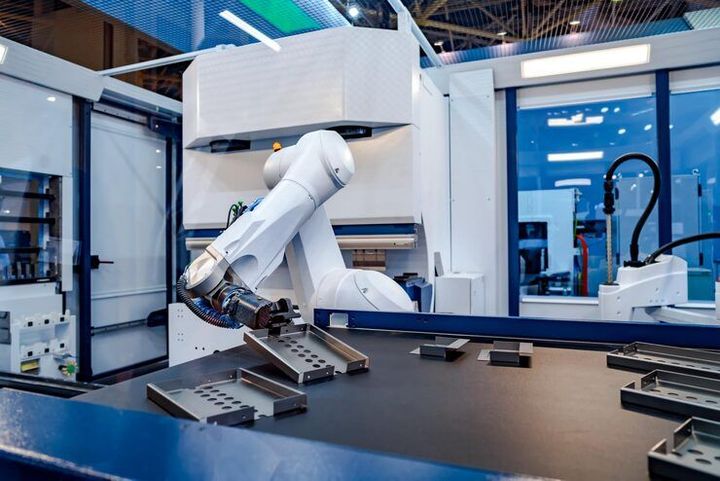
Robotic machine tending is an industrial automation process in which robotic systems handle materials, components, and finished parts around manufacturing equipment.
These systems commonly load raw materials into machines, position components for processing, remove completed parts, and transfer them to another production stage. Robotic machine tending combines industrial robotics, precision handling, machine control, and automated material movement.
The concept developed alongside the wider adoption of industrial robots in manufacturing. Traditionally, machine operators performed repetitive activities such as placing metal components into CNC machines, removing processed parts, and preparing equipment for another production cycle. As manufacturing requirements became more complex, automated handling systems emerged to improve consistency and reduce the need for repeated manual movements.
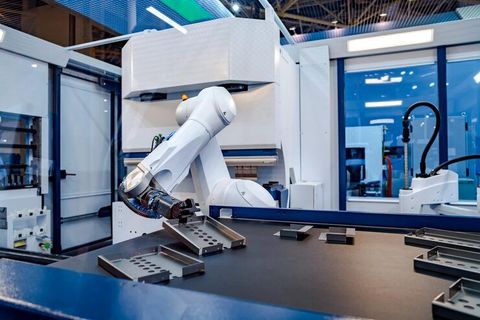
Today, robotic machine tending is used with CNC machining centres, injection moulding machines, press equipment, laser processing systems, and other industrial machinery. A typical installation includes a robotic arm, gripper, safety equipment, machine interface, and control software.
The main purpose is to coordinate material handling with machine operations. Instead of requiring an operator to perform every loading and unloading movement, a programmed robot carries out these activities according to predefined instructions.
How Robotic Machine Tending Works
A robotic machine tending system follows a sequence of coordinated operations. Although configurations differ between manufacturing facilities, the general process includes:
Part identification: The system identifies or receives information about the component that needs processing.
Material pickup: A robotic arm uses a suitable gripper to collect the raw material.
Machine loading: The robot positions the component inside the machine's working area.
Processing coordination: The machine performs its programmed operation while the robot follows the required safety sequence.
Part removal: After processing, the robot removes the completed component.
Inspection and transfer: The component may undergo inspection before moving to another production stage.
These activities are coordinated through control software, sensors, and communication interfaces. Proper positioning is important because incorrect placement can affect machining accuracy and product consistency.
Main Components of a Robotic Tending System
Several mechanical and electronic components work together to perform automated handling.
Industrial robotic arm: Provides controlled movement across different positions.
End-of-arm tooling: Includes grippers, vacuum devices, magnetic tools, or specialised handling attachments.
Robot controller: Processes movement instructions and coordinates robotic operations.
Sensors: Detect component positions, machine conditions, and operating status.
Machine interface: Enables communication between the robot and manufacturing equipment.
Safety equipment: Includes protective enclosures, interlocks, scanners, and emergency stopping devices.
The selection of these components depends on material dimensions, component weight, machine layout, production requirements, and environmental conditions.
Importance
Robotic machine tending has become an important part of modern manufacturing because production facilities increasingly require consistent component handling, accurate positioning, and coordinated machine operations. Repetitive loading and unloading can involve frequent movements, heavy materials, sharp edges, and exposure to hot or moving equipment.
Automation addresses several operational challenges while allowing human operators to focus on activities that require judgement, inspection, and process supervision.
Why Robotic Machine Tending Matters
The importance of automated machine tending can be understood through several manufacturing requirements.
Consistent positioning: Robots follow programmed movement paths, helping maintain repeatable component placement during production.
Reduced repetitive handling: Automated systems perform repeated pickup, loading, and unloading movements.
Production coordination: Robots can communicate with multiple machines and coordinate material movement between processing stages.
Workplace risk reduction: Properly designed robotic cells can limit direct human exposure to hazardous machine areas.
Production monitoring: Sensors and control systems provide information about machine status, handling cycles, and operational interruptions.
Flexible manufacturing: Programmable robots can handle different component sizes and production sequences when equipped with suitable tooling.
These advantages depend on correct installation, programming, maintenance, and safety arrangements. Automation does not eliminate every manufacturing challenge, and human supervision remains important.
Industries Using Robotic Machine Tending
Robotic machine tending is used across several industrial sectors where machines require regular material loading and unloading.
Industry | Typical application | Handling requirement |
|---|---|---|
Automotive | CNC machining and metal processing | Accurate component positioning |
Aerospace | Precision component machining | Controlled material handling |
Electronics | Small-part manufacturing | Delicate component placement |
Metal fabrication | Press and cutting operations | Repetitive material movement |
Plastics | Injection moulding | Part removal and transfer |
Medical equipment manufacturing | Component machining | Controlled handling and inspection |
General manufacturing | Multi-machine production | Coordinated loading and unloading |
The specific application depends on production volume, component characteristics, machine compatibility, and required handling accuracy.
Challenges Addressed by Industrial Automation
Manual machine tending can create difficulties when production involves frequent component changes, repetitive movements, or multiple machines operating simultaneously. Human operators may also need to coordinate material preparation, machine operation, quality checks, and finished-part movement.
Robotic machine tending helps organise these activities into a repeatable process. However, manufacturing facilities must consider several challenges:
Component variation: Differences in shape, dimensions, and surface conditions can affect gripping accuracy.
Machine compatibility: Older machinery may require additional communication hardware or modifications.
Workspace limitations: Robotic arms need sufficient operating space and appropriate access to machine doors.
Programming complexity: Different products may require separate movement sequences and gripping arrangements.
Maintenance requirements: Mechanical wear, sensor problems, and software errors can interrupt production.
Understanding these limitations is important when evaluating an automated manufacturing system.
Recent Updates
Industrial robotics continues to develop through improvements in artificial intelligence, machine vision, collaborative applications, sensor technology, and manufacturing software. Between 2024 and 2026, these developments have influenced how robotic machine tending systems are designed, integrated, and monitored.
Artificial Intelligence and Machine Vision
Artificial intelligence is increasingly being incorporated into industrial automation. Machine vision systems use cameras and image-processing software to identify components, examine their orientation, and detect positioning differences.
Traditional robotic systems often depend on predefined component locations. Vision-guided robotic machine tending can accommodate certain variations by adjusting pickup positions according to camera information.
This technology is particularly relevant when components arrive in different orientations or when manufacturing processes involve multiple part types. However, lighting conditions, reflective surfaces, camera calibration, and image quality can influence system performance.
Collaborative Robot Applications
Collaborative robots, commonly called cobots, are designed for applications that involve interaction between people and automated equipment. They are increasingly considered for machine tending tasks involving smaller components, compact production areas, and flexible manufacturing arrangements.
A collaborative robot is not automatically safe to operate without protective equipment. The complete application must undergo risk assessment, including consideration of the gripper, workpiece, movement speed, machine hazards, and surrounding workspace.
Digital Monitoring and Predictive Maintenance
Modern robotic machine tending systems increasingly connect with industrial monitoring platforms. These platforms collect information about cycle times, machine availability, operating conditions, and equipment interruptions.
Predictive maintenance methods analyse operating information to identify patterns that may indicate developing equipment problems. This can help maintenance teams plan inspections and address potential faults before they interrupt production.
New Industrial Robot Safety Standards
An important development during this period was the publication of revised international industrial robot safety standards in 2025. ISO 10218-1:2025 addresses the safety of industrial robots, while ISO 10218-2:2025 covers industrial robot applications and robot cells, including integration, commissioning, operation, and maintenance.
These developments reflect the growing importance of evaluating the complete robotic application rather than considering the robotic arm as an isolated machine.
Laws or Policies
Robotic machine tending is influenced by industrial machinery regulations, workplace safety requirements, electrical safety provisions, and international engineering standards. The applicable rules depend on the country, manufacturing sector, machinery configuration, and intended operating environment.
There is no single worldwide law covering every robotic machine tending installation. Manufacturers, system integrators, and facility operators generally need to consider the relevant national requirements alongside recognised international standards.
International Robot Safety Standards
The ISO 10218 series provides an important framework for industrial robot safety.
ISO 10218-1:2025: Addresses the safety requirements, risk reduction measures, and design considerations for industrial robots.
ISO 10218-2:2025: Addresses the integration and safe operation of industrial robot applications and complete robotic cells.
ISO 12100: Provides general principles for machinery risk assessment and risk reduction.
ISO/TS 15066: Provides additional guidance for collaborative robot applications.
These standards help manufacturers and integrators evaluate mechanical hazards, protective equipment, operating procedures, and human interaction with automated machinery.
Workplace Safety and Machinery Regulations
Industrial facilities must also consider national workplace safety requirements. Common regulatory areas include:
Machine guarding and protective enclosures.
Emergency stopping arrangements.
Electrical installation and equipment protection.
Control of hazardous energy during maintenance.
Operator training and safe operating procedures.
Risk assessment and equipment inspection.
For example, in the United States, the Occupational Safety and Health Administration identifies general industry requirements concerning machine guarding, hazardous energy control, and workplace protection as relevant to robotic environments.
Requirements differ between jurisdictions. A robotic machine tending installation should therefore be evaluated against the applicable local legislation and relevant technical standards before entering operation.
Tools and Resources
Robotic machine tending requires a combination of engineering software, programming platforms, measurement equipment, and industrial monitoring tools. These resources help engineers plan robotic movements, configure machine interfaces, assess workplace risks, and monitor production activities.
Robotic Simulation and Programming Software
Simulation software allows engineers to create virtual representations of robotic workspaces before physical installation. It can help evaluate robotic reach, movement sequences, machine accessibility, and possible collisions.
Commonly used platforms include:
ABB RobotStudio: Used for robot programming, simulation, and virtual commissioning.
FANUC ROBOGUIDE: Supports robotic cell simulation and offline programming.
KUKA.Sim: Helps engineers plan robotic applications and examine movement sequences.
RoboDK: Supports offline robot programming and simulation across various robot models.
Universal Robots PolyScope: Provides programming and configuration capabilities for compatible collaborative robots.
Engineering and Measurement Equipment
Additional equipment supports accurate robotic machine tending operations.
3D vision cameras: Identify component locations and orientations.
Force and torque sensors: Monitor contact forces during selected handling operations.
Digital measuring instruments: Check component dimensions and positioning accuracy.
Industrial PLC controllers: Coordinate machine operations, sensors, and robotic movements.
Condition monitoring systems: Collect operational information for equipment assessment.
Information and Technical Resources
Engineering teams can consult manufacturer documentation, industrial automation manuals, technical standards, and robotics training materials. These resources explain robotic programming, gripper selection, machine communication, risk assessment, and preventive maintenance.
The International Organization for Standardization, occupational safety authorities, and industrial robotics manufacturers provide technical information relevant to system design and workplace requirements.
FAQs
What Is Robotic Machine Tending?
Robotic machine tending is an industrial automation process in which robotic arms load raw materials into machines, remove processed components, and transfer parts between production stages. It is commonly used in CNC machining, metalworking, plastics manufacturing, and automated production facilities.
How Does a Robotic Machine Tending System Work?
A robotic machine tending system uses programmed movements, sensors, grippers, and machine communication interfaces. The robot collects a component, positions it inside the machine, waits for processing to finish, and removes the completed part according to the programmed sequence.
What Are the Main Applications of Industrial Robotic Machine Tending?
Common applications include CNC machine loading, injection moulding part removal, press machine tending, metal component handling, and automated material transfer. These systems are also used in electronics and precision manufacturing environments.
Are Collaborative Robots Suitable for Machine Tending?
Collaborative robots can perform selected machine tending activities, particularly where flexible handling and compact installation arrangements are required. Their suitability depends on application-specific risk assessments, payload requirements, gripper design, and machine safety arrangements.
What Safety Standards Apply to Robotic Machine Tending?
ISO 10218-1:2025 and ISO 10218-2:2025 address industrial robot and robotic application safety. Other relevant requirements may include ISO 12100, electrical safety standards, machinery regulations, and national workplace protection legislation.
Conclusion
Robotic machine tending combines industrial robotics, precision handling, machine communication, and automated material movement to support modern manufacturing operations. Developments in artificial intelligence, machine vision, collaborative robotics, and digital monitoring are expanding its industrial applications. Safety standards, appropriate engineering design, and regular equipment maintenance remain important considerations. Its role continues to develop across manufacturing sectors that require consistent and coordinated material handling.