Robotic Cutting Systems Guide With Automated Manufacturing and Precision Cutting Insights
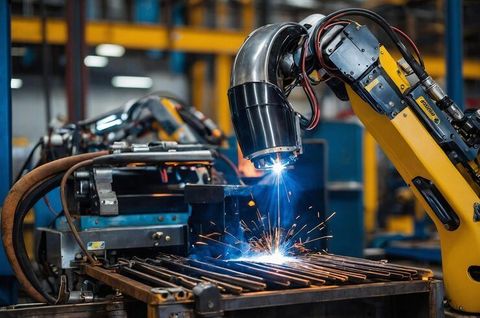
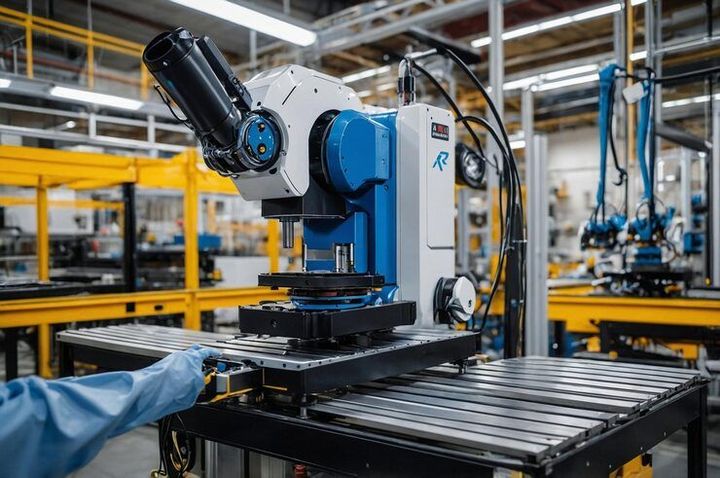
Robotic cutting systems are automated production systems that use industrial robots, cutting tools, sensors, software, and control equipment to process materials with repeatable movements. They are used across manufacturing environments where cutting accuracy, consistent motion, material handling, and production flexibility are important.
Traditional cutting methods often depend on fixed machines or manual handling. Robotic cutting systems introduce programmable movement, allowing a robotic arm to follow digital cutting paths and process different shapes without requiring major mechanical changes. Depending on the application, the cutting tool may use a blade, saw, router, laser, waterjet, plasma, or another specialized mechanism.
The development of robotic cutting is closely connected with industrial automation. As computer-controlled manufacturing became more common, robots gained the ability to interpret programmed coordinates and repeat complex movements. Modern systems combine robotics with computer-aided design, machine vision, sensors, motion controllers, and manufacturing software.
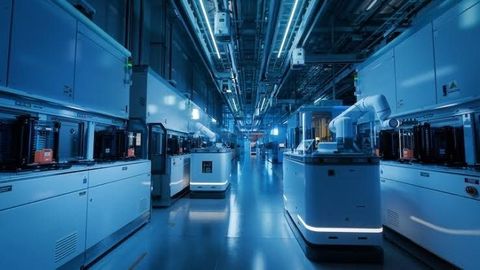
Automated manufacturing has expanded the role of robotic cutting systems beyond simple repetitive cutting. A robotic cell can potentially handle material positioning, cutting, inspection, tool changes, and communication with other production equipment. This makes robotic cutting relevant to industries such as automotive manufacturing, aerospace production, furniture, construction materials, plastics, composites, metal fabrication, packaging, and general industrial production.
How Robotic Cutting Systems Work
A typical robotic cutting system contains several interconnected components:
- Robotic arm for controlled multi-axis movement
- Cutting head or cutting tool for material processing
- Motion controller for coordinating movement
- Sensors for detecting position, force, distance, or process conditions
- Software for creating and managing cutting paths
- Workholding equipment for keeping materials correctly positioned
- Safety equipment such as guards, interlocks, scanners, and emergency controls
The process usually begins with a digital design or cutting pattern. Manufacturing software converts the design into movement instructions. The robot then moves the cutting tool along the programmed path while sensors and controllers help maintain the required position.
Precision cutting depends on several factors, including robot rigidity, tool selection, calibration, material characteristics, cutting speed, path accuracy, and environmental conditions. A robotic system does not automatically produce accurate results simply because a robot is involved. Proper setup and process control remain important.
Importance
Robotic cutting systems matter because manufacturing increasingly requires consistent processing of complex shapes while maintaining production flexibility. Many products contain curved surfaces, irregular profiles, holes, slots, or detailed contours that can be difficult to process efficiently with simple fixed tooling.
Manufacturing Challenges Addressed
Automated cutting can address several common production challenges:
- Repeating the same cutting pattern across multiple parts
- Processing complex three-dimensional shapes
- Reducing variations caused by manual movement
- Managing large or difficult-to-handle materials
- Changing cutting patterns through software
- Coordinating cutting with other automated equipment
- Recording process information for quality analysis
Precision cutting is particularly important when dimensional accuracy affects assembly or downstream processing. Inaccurate cuts can create alignment problems, additional material handling, or increased processing requirements.
Robotic systems can also be configured for different production volumes. A programmable robot may process several part designs using different digital programs, while dedicated machinery can remain configured for a specific operation. This flexibility can be useful for manufacturers producing varied product designs.
Who Uses Robotic Cutting Systems
The technology affects manufacturers, machine operators, engineers, production planners, quality teams, and maintenance personnel. It can also influence material suppliers and downstream assembly operations because cutting accuracy affects the dimensions of finished components.
Industries commonly associated with robotic cutting include:
- Automotive components
- Aerospace structures
- Plastic and composite fabrication
- Metal processing
- Furniture manufacturing
- Building materials
- Textile and soft-material processing
- Packaging production
- Industrial equipment manufacturing
The appropriate configuration depends heavily on the material and cutting method. A system designed for composite trimming, for example, can have different tooling, extraction, sensing, and programming requirements from a robotic plasma cutting cell.
Recent Updates
Between 2024 and 2026, robotic cutting has continued moving toward more connected, sensor-based, and software-driven manufacturing. Rather than treating the robot as an isolated machine, manufacturers increasingly integrate robotic cells with production planning systems, inspection equipment, digital design tools, and factory data platforms.
Greater Use of Machine Vision
Machine vision is becoming increasingly relevant to automated cutting. Cameras and other sensing technologies can help identify material position, part orientation, reference points, and variations between workpieces.
Vision-guided systems can be useful when materials do not arrive in exactly the same position every time. Instead of relying only on fixed coordinates, the system can use detected reference points to adjust the cutting path.
Improved Digital Integration
Robotic cutting systems are also becoming more closely connected with computer-aided manufacturing software. Digital designs can be converted into robot movement instructions, allowing production changes to be managed through software rather than extensive mechanical modification.
Another developing area is digital monitoring. Production data can be collected from controllers, sensors, and connected machines to help manufacturers understand machine utilization, process interruptions, tool condition, and production performance.
Greater Interest in Flexible Automation
Manufacturers are increasingly examining flexible automation for production environments where product designs change frequently. Robots can move through multiple axes and may accommodate different tools, making them suitable for applications involving varied cutting patterns.
Collaborative robotic technology is also being considered for selected manufacturing activities. However, collaborative operation does not mean that every cutting application is automatically suitable for close human interaction. Cutting tools can create significant hazards, so application-specific risk assessment remains essential.
Current Technology Comparison
| Cutting Approach | Typical Strength | Flexibility | Common Application |
|---|---|---|---|
| Robotic blade cutting | Controlled contour processing | High | Soft materials, composites |
| Robotic routing | Material shaping and trimming | High | Plastics, wood, composites |
| Robotic laser cutting | Precise thermal processing | High | Selected metals and materials |
| Robotic plasma cutting | Thermal metal cutting | High | Metal fabrication |
| Robotic waterjet cutting | Cold cutting process | High | Stone, metal, composites |
| Fixed CNC cutting | Repeatable programmed machining | Medium to high | Panels, sheets, components |
The actual performance of each approach depends on the machine configuration, material, tooling, programming, and operating conditions.
Laws or Policies
Robotic cutting systems are influenced by workplace safety rules, machinery requirements, electrical standards, environmental controls, and industrial automation regulations. Requirements vary by country and application, so manufacturers normally need to determine which rules apply to their specific installation.
Machine Safety
Industrial robotic cells generally require measures designed to prevent unintended access to hazardous motion or cutting areas. These can include physical guarding, safety-rated interlocks, emergency stopping systems, presence detection, warning systems, and controlled access procedures.
A robotic cutting cell should be assessed as a complete system rather than considering the robot alone. The cutting tool, workholding equipment, material movement, electrical components, and surrounding machinery can all contribute to operational hazards.
Risk Assessment and Training
Risk assessment is an important part of automated manufacturing. It considers possible hazards during normal operation, maintenance, setup, programming, tool changes, cleaning, and fault recovery.
Personnel working with robotic cutting equipment may need appropriate training for programming, operation, maintenance, and safety procedures. Lockout and isolation procedures may also apply when maintenance activities require access to hazardous areas.
Environmental Considerations
Some cutting processes generate dust, fumes, heat, noise, sparks, or liquid waste. Appropriate extraction, ventilation, containment, filtration, and waste-handling measures may therefore be required depending on the material and cutting method.
Manufacturers should also consider applicable machinery, electrical, occupational safety, and environmental requirements before installing or modifying an automated cutting cell.
Tools and Resources
Several digital and physical tools support robotic cutting systems throughout the production process.
Design and Programming Tools
Computer-aided design software is commonly used to create part geometry. Computer-aided manufacturing software can then help convert designs into cutting paths and machine instructions.
Robot simulation software can also be used to evaluate reach, movement, collision risks, cycle sequences, and tool orientation before production operation. Simulation is particularly useful for multi-axis cutting because the robot must maintain appropriate tool positioning throughout complex movements.
Measurement and Calibration Equipment
Precision cutting depends on accurate calibration. Common resources include:
- Robot calibration equipment
- Coordinate measurement systems
- Laser measurement devices
- Vision sensors
- Tool length measurement equipment
- Digital inspection instruments
- Process monitoring software
These tools help verify whether the programmed movement corresponds with the physical position of the workpiece and cutting tool.
Maintenance and Monitoring Resources
Manufacturing teams may also use equipment-monitoring dashboards, maintenance-management platforms, production data systems, and machine diagnostic tools. These resources can help track operating conditions and identify recurring interruptions.
FAQs
What are robotic cutting systems?
Robotic cutting systems combine industrial robots with cutting tools, controllers, sensors, and software to automate material cutting. They can follow programmed paths and process different shapes depending on their configuration.
How does automated manufacturing use robotic cutting?
Automated manufacturing can connect robotic cutting with material handling, inspection, production planning, and other machines. This allows several production steps to operate as part of a coordinated workflow.
What materials can precision cutting robots process?
The material range depends on the cutting technology. Robotic systems may process metals, plastics, composites, wood, textiles, stone, foam, and other materials when the appropriate cutting method and tooling are used.
Are robotic cutting systems suitable for complex shapes?
Yes, multi-axis robotic movement can be useful for curved, irregular, and three-dimensional shapes. Accuracy depends on robot configuration, calibration, tooling, programming, material positioning, and process conditions.
What safety measures are used around robotic cutting equipment?
Safety measures can include guarding, access controls, emergency stopping systems, presence detection, ventilation, extraction, training, and documented operating procedures. The required measures depend on the specific robotic cell and cutting process.
Conclusion
Robotic cutting systems combine programmable robotic movement with specialized cutting technologies to support automated manufacturing and precision cutting. Their applications range from material trimming and profiling to complex three-dimensional processing across multiple industries. Recent development has focused on machine vision, digital integration, process monitoring, simulation, and flexible automation. Safe implementation requires appropriate system design, risk assessment, training, maintenance, and compliance with applicable machinery and workplace requirements.