Precision Gear Manufacturing Machines Explained With Types, Processes, and Applications
Precision gear manufacturing machines are industrial systems designed to produce gears with accurate dimensions, tooth profiles, surface finishes, and alignment. Gears are mechanical components that transfer rotational movement and power between shafts.
The development of precision gear manufacturing began with the need for reliable mechanical motion. Traditional gear production depended heavily on manual measurement, basic cutting equipment, and skilled operators. As machinery became faster and more complex, manufacturers needed equipment capable of producing consistent gear geometry with tighter dimensional control.
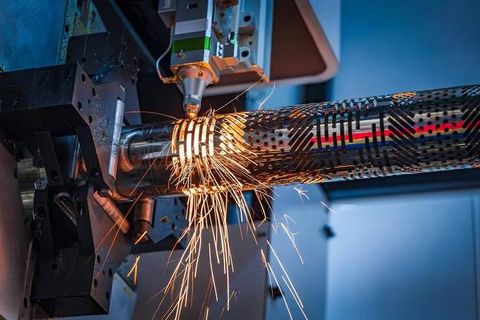
Modern gear manufacturing combines computer-controlled machinery, specialized cutting tools, inspection systems, and software. CNC gear hobbing machines, gear shaping machines, gear grinding machines, gear honing systems, and multi-axis machining centers can perform different stages of production. These technologies help manufacturers produce gears suited to applications where smooth movement, accurate transmission, and controlled mechanical interaction are important.
What Precision Gear Manufacturing Means
Precision gear manufacturing refers to the controlled production of gears according to defined dimensional and geometric requirements. Important characteristics include tooth thickness, pitch, profile accuracy, concentricity, runout, hardness, and surface condition.
The manufacturing approach depends on the gear design, material, production quantity, required accuracy, and intended application. A small transmission gear may require different equipment from a large industrial gear used in heavy machinery.
Main Gear Types
Common gear designs include spur gears, helical gears, bevel gears, worm gears, and internal gears. Each design transfers motion differently.
- Spur gears have straight teeth and are commonly used for parallel shafts.
- Helical gears have angled teeth that provide smoother engagement.
- Bevel gears transfer movement between intersecting shafts.
- Worm gears use a worm and gear arrangement for specific speed and torque relationships.
- Internal gears have teeth on the inside of a ring and are frequently used in planetary transmission systems.
Importance
Precision gears influence the performance, efficiency, noise level, and operating life of many mechanical systems. Even small dimensional variations can affect how two gears contact each other. Poor alignment or an inaccurate tooth profile can contribute to vibration, uneven loading, noise, and accelerated component wear.
The importance of precision gear manufacturing has increased as machinery becomes more compact and automated. Electric vehicles, robotics, industrial automation, medical equipment, renewable-energy systems, and advanced manufacturing equipment often require carefully controlled mechanical transmission components.
Industries Using Precision Gear Machines
Precision gear manufacturing machines support a wide range of industries.
- Automotive systems use gears in transmissions, steering mechanisms, differentials, and other drive systems.
- Aerospace equipment requires carefully controlled components for various mechanical systems.
- Industrial machinery uses gears in conveyors, pumps, compressors, mixers, and production equipment.
- Robotics relies on precision transmission components for controlled movement.
- Energy equipment uses gears in selected turbines, generators, and mechanical drive systems.
- Agricultural machinery incorporates gears into tractors, harvesting equipment, and power-transfer mechanisms.
For general users, the effects are often indirect. Accurate gears can contribute to smoother operation of vehicles, factory equipment, automated systems, and mechanical products encountered in everyday environments.
Manufacturing Challenges
Several factors make precision gear production demanding. Material behavior can change during cutting and heat treatment, while temperature variations can influence dimensional accuracy. Tool wear can also affect tooth geometry as production continues.
Other challenges include maintaining machine alignment, controlling vibration, managing cutting conditions, and inspecting finished components. Modern manufacturing therefore uses measurement equipment alongside machining systems rather than relying only on the cutting machine.
Recent Updates
The current direction of precision gear manufacturing is strongly connected with automation, digital control, inspection technology, and data-based production management. CNC systems have become increasingly capable of coordinating complex machining movements while maintaining repeatable production parameters.
CNC and Automated Manufacturing
CNC gear manufacturing machines can follow programmed machining instructions with limited manual intervention. Modern systems may integrate automatic tool changes, workpiece handling, probing, and process monitoring.
Automation is also expanding beyond individual machines. Production cells can connect machining equipment with robots, inspection stations, material-handling systems, and manufacturing software.
Advanced Gear Grinding
Gear grinding remains important when high dimensional accuracy and refined surface characteristics are required. Modern grinding machines can control wheel movement and machining parameters with high precision.
Computer-controlled grinding also supports the production of complex gear geometries. In some applications, grinding follows earlier cutting and heat-treatment stages to refine the final tooth shape.
In-Process Inspection
Measurement technology is becoming an increasingly important part of gear production. Coordinate measuring machines, gear measurement systems, optical inspection equipment, and machine-integrated probing can identify dimensional variations.
Digital inspection data can help production teams identify trends before they become larger process problems. This approach supports more consistent manufacturing and reduces dependence on final inspection alone.
Industry 4.0 and Connected Equipment
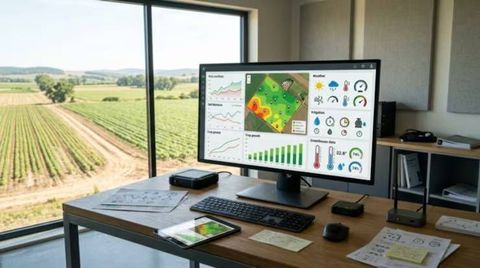
Connected machinery allows production information to move between equipment and manufacturing software. Sensors can collect information about machine conditions, temperature, vibration, tool usage, and other operating parameters.
Data analysis can then be used to understand equipment behavior and production patterns. Digital twins, predictive maintenance systems, simulation software, and machine monitoring are becoming more common within advanced manufacturing environments.
Emerging Gear Manufacturing Methods
Additive manufacturing is also being studied for selected gear-related applications, particularly where unusual geometries, lightweight structures, or specialized prototypes are required. However, conventional cutting, shaping, hobbing, and grinding remain important for many precision gear applications.
The broader trend is toward combining conventional machining with digital planning, automated inspection, and intelligent production controls.
Laws or Policies
Precision gear manufacturing is influenced by workplace safety requirements, machinery regulations, environmental rules, product standards, and quality-management frameworks. Exact requirements differ according to the country, industry, machine type, and application.
Machinery Safety
Industrial gear machines contain rotating tools, moving worktables, cutting systems, electrical equipment, and other potential hazards. Safety frameworks commonly address guarding, emergency controls, electrical protection, operator access, maintenance procedures, and machine documentation.
Manufacturing facilities generally need procedures that reduce exposure to moving components, cutting tools, hot surfaces, noise, and machining debris.
Environmental Requirements
Gear manufacturing can involve metalworking fluids, lubricants, coolants, chips, grinding residues, and other industrial materials. Environmental policies may regulate their storage, handling, treatment, and disposal.
Facilities may also need to manage emissions, waste streams, energy consumption, and workplace exposure depending on the processes involved.
Quality Standards
International and national standards can establish requirements for gear geometry, dimensional accuracy, materials, testing, and quality management. Gear manufacturers may use recognized standards to define tooth accuracy classes, inspection procedures, and documentation requirements.
For specialized industries, additional requirements may apply to traceability, material certification, inspection records, and process control.
Tools and Resources
Several tools help engineers, manufacturers, students, and technical readers understand precision gear manufacturing machines and their applications.
Gear Design Software
Gear design programs can calculate parameters such as tooth dimensions, gear ratios, pitch, contact relationships, and other geometric characteristics. CAD software can then create digital models for design evaluation and manufacturing preparation.
CNC Programming Software
Computer-aided manufacturing software helps generate machining instructions for CNC equipment. Simulation features can identify potential tool collisions, movement problems, and machining issues before production.
Gear Measurement Equipment
Common inspection tools include gear analyzers, coordinate measuring machines, optical measurement systems, surface-finish instruments, micrometers, and specialized gauges. These systems help verify dimensional and geometric characteristics.
Technical Standards and Documentation
Engineering standards, machine manuals, tooling catalogs, CAD libraries, technical calculators, and manufacturing references provide useful information for understanding gear design and production. Educational platforms and technical databases can also help readers learn terminology and machining principles.
Precision Gear Machine Comparison
| Machine Type | Primary Process | Typical Application | Main Characteristic |
|---|---|---|---|
| Gear Hobbing Machine | Hobbing | Spur and helical gears | Continuous cutting |
| Gear Shaping Machine | Shaping | Internal and external gears | Reciprocating cutter |
| Gear Grinding Machine | Grinding | High-accuracy gears | Fine finishing |
| Gear Honing Machine | Honing | Gear finishing | Surface refinement |
| Gear Broaching Machine | Broaching | High-volume production | Rapid material removal |
| CNC Machining Center | Milling and machining | Specialized gear components | Flexible programming |
| Gear Inspection Machine | Measurement | Quality verification | Dimensional analysis |
FAQs
What are precision gear manufacturing machines?
Precision gear manufacturing machines are specialized industrial systems used to cut, shape, finish, or inspect gears. They help produce controlled tooth geometry and dimensional accuracy for mechanical transmission applications.
Which machines are used for precision gear manufacturing?
Common equipment includes CNC gear hobbing machines, gear shaping machines, gear grinding machines, gear honing machines, broaching machines, and gear inspection systems. The selected machine depends on the gear design and required production characteristics.
How does CNC gear manufacturing work?
CNC gear manufacturing uses programmed instructions to control machine movements, cutting tools, workpiece positioning, and machining parameters. This allows complex gear-production operations to be performed with repeatable digital control.
What materials are used in gear manufacturing?
Steel is widely used because of its strength and suitability for heat treatment. Other materials can include stainless steel, cast iron, bronze, brass, engineering plastics, and specialized alloys depending on the mechanical requirements.
Why is gear inspection important?
Gear inspection verifies characteristics such as tooth profile, pitch, runout, dimensions, and surface condition. Accurate inspection helps determine whether a finished gear conforms to its specified design requirements.
Conclusion
Precision gear manufacturing machines combine cutting, shaping, finishing, automation, and inspection technologies to produce accurately controlled mechanical components. CNC hobbing, gear shaping, grinding, honing, and measurement systems each perform different functions within the manufacturing process. Recent developments increasingly connect these machines with automation, digital monitoring, simulation, and inspection technologies. Together, these developments support the production of gears for transportation, robotics, industrial machinery, energy equipment, and other mechanical systems.