Plastic Pipe Socketing Machines Guide With Pipe Joining Technology and Manufacturing Insights
Plastic pipe socketing machines are equipment used to prepare and join thermoplastic pipes with compatible fittings. They are commonly associated with socket fusion, a joining method in which the outside surface of a pipe and the inside surface of a fitting are heated, aligned, and pressed together.
The technology developed from the wider use of thermoplastic piping in water distribution, irrigation, plumbing, drainage, industrial fluid handling, and other applications. Materials such as polypropylene and polyethylene can be shaped with controlled heat, making thermal joining practical for many pipe systems.
A plastic pipe socketing machine normally includes a heating element, socket and spigot tooling, temperature controls, clamps, and an alignment arrangement. Some machines use manual controls, while production-oriented systems can add hydraulic movement, digital temperature displays, timers, and programmable sequences.
Importance
Pipe joints are important because a piping system can only perform consistently when its connections are properly formed. A pipe may have suitable dimensions and material properties, but poor alignment, incorrect heating, contamination, or insufficient cooling can weaken the joint.
Plastic pipe socketing machines help standardize several parts of the joining process. The equipment can hold components in position, apply controlled heat, and maintain alignment while the connection is formed. This can reduce repeated manual handling and improve process consistency.
The technology affects several groups, including pipe manufacturers, plumbing contractors, infrastructure operators, maintenance teams, and industrial processors. It is also relevant to buildings, water systems, irrigation networks, and other infrastructure that depends on plastic piping.
Common challenges include:
- Maintaining the correct heating temperature for the material and tooling.
- Keeping pipe and fitting axes properly aligned.
- Preventing dust, moisture, or other contamination at joining surfaces.
- Applying suitable insertion depth and joining pressure.
- Allowing adequate cooling before the joint is moved.
- Checking dimensions and joint appearance after processing.
A socketing machine does not remove the need for process control. Material grade, pipe diameter, wall thickness, fitting geometry, tooling condition, and manufacturer instructions can all influence the joining sequence.
Pipe Joining Technology
How Socket Fusion Works
Socket fusion generally begins with preparation. The pipe end and fitting socket are cleaned, checked for damage, and positioned against compatible heating tools. Heat is transferred to the joining surfaces until they reach the required fusion condition.
After heating, the components are removed from the tooling and brought together in a controlled axial movement. Rotation during this stage is generally avoided because it can disturb the softened material. The assembly is then held in position while the joint cools.
Different plastics require different processing conditions. Polypropylene and polyethylene products may have different temperature ranges, heating periods, dimensions, and joining procedures. A general machine setting should therefore not automatically be applied to every pipe.
Machine Types
Plastic pipe socketing machines can be grouped by their operating arrangement rather than by one universal design.
Manual socketing machines rely heavily on operator control. They can be suitable for smaller production environments or applications where pipe sizes and joining quantities vary.
Semi-automatic machines add mechanical movement or timed controls while retaining some operator involvement. They can improve repeatability without requiring a fully programmable production line.
Automatic socketing systems can coordinate heating, movement, timing, and cooling steps through programmed controls. These systems are more suited to repeat production where consistent cycle parameters are important.
Machine type should be considered alongside pipe size, material, production volume, tooling range, available workspace, and required process documentation.
Key Machine Components
A typical machine may contain several important elements:
- Heating plate or socket heater: transfers controlled heat to pipe and fitting surfaces.
- Socket and spigot tooling: provides the forming surfaces required for selected dimensions.
- Clamping system: holds components securely during heating and joining.
- Alignment mechanism: helps keep the pipe and fitting on a common axis.
- Temperature controller: monitors or regulates heating conditions.
- Timer or control interface: supports repeatable heating and cooling sequences.
- Frame or support structure: maintains stability during operation.
Tooling must match pipe and fitting geometry. Incorrect tooling can create uneven heating or poor dimensional control.
Manufacturing Insights
Production Integration
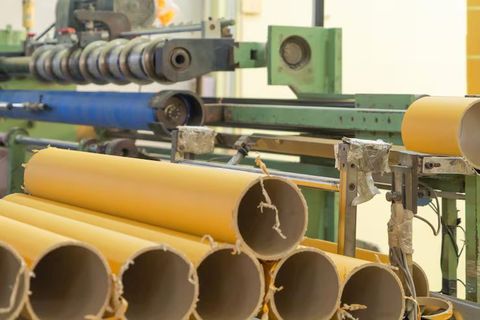
In pipe manufacturing, socketing may be integrated after extrusion, cutting, inspection, and dimensional verification. The pipe is produced continuously or in defined lengths, then prepared for connection with a socket or compatible fitting arrangement.
Production planning often considers pipe diameter, wall thickness, material grade, cycle time, tooling changes, and inspection frequency. A machine that handles several diameters may require interchangeable tooling sets, while a dedicated line may focus on a narrower size range.
Quality Control
Quality checks can include visual inspection, dimensional measurement, alignment checks, and mechanical or pressure-related testing appropriate to the product specification.
For polyethylene pipes, Indian Standard IS 4984:2016 covers polyethylene pipes for water supply and includes requirements involving dimensions, material characteristics, pressure performance, and joint-related testing. BIS laboratory information also lists testing for properties such as melt flow rate, density, carbon black content, and tensile strength for butt-fusion.
A related Indian standard, IS 15801:2008, covers polypropylene random copolymer pipes for hot and cold water supplies. BIS testing information includes dimensions, hydraulic characteristics, fusion compatibility, impact strength, melt flow rate, and thermal stability among the relevant test areas.
Recent Updates
From 2024 through 2026, the general direction of plastic pipe manufacturing has been toward greater process monitoring, repeatability, digital controls, and structured quality documentation. Modern equipment may combine temperature displays, electronic timers, programmable control sequences, and sensors that help operators observe production conditions.
Another development is stronger attention to material traceability and testing. Current BIS laboratory records show ongoing testing activity for polyethylene and polypropylene pipe standards, including fusion-related properties and material characteristics. This indicates continued emphasis on measurable product quality rather than relying only on visual inspection.
Manufacturers are also using more adaptable tooling arrangements for different pipe sizes. This can reduce the need for completely separate machines when production involves several dimensions, although the actual range depends on machine design.
Automation is another continuing trend. Rather than removing human oversight, automated controls are generally intended to make heating, movement, timing, and documentation more repeatable. Operators still need to verify material compatibility, tooling condition, and process requirements.
Laws or Policies
Plastic pipe socketing machines are affected by product standards, workplace safety requirements, environmental rules, and installation specifications. The exact requirements vary by country, pipe material, application, and intended use.
Where India is the applicable market, BIS standards are an important reference for specified plastic pipe products. IS 4984:2016 addresses polyethylene pipes for water supply, while IS 15801:2008 addresses polypropylene random copolymer pipes for hot and cold water supplies. BIS product and laboratory records identify inspection and testing requirements associated with these standards.
For other markets, manufacturers and users may need to follow national standards, international standards, building rules, potable-water requirements, environmental regulations, and workplace equipment rules. A machine itself does not determine compliance; the complete pipe, fitting, joining process, and application must be considered.
Tools and Resources
Several resources can help readers understand plastic pipe socketing machines and pipe joining technology:
- Pipe dimension charts can help identify outside diameter, wall thickness, and compatible tooling.
- Material technical sheets provide information about plastic grades and recommended joining conditions.
- Machine manuals describe tooling, temperature controls, operating sequences, and maintenance procedures.
- Quality-control checklists can record heating, alignment, cooling, and inspection steps.
- Measurement tools such as calipers and temperature instruments can support dimensional and process checks.
- Standards databases from recognized standards organizations can help identify applicable pipe specifications.
- Production records can help track tooling changes, process settings, inspection results, and material batches.
A useful data table for understanding common considerations is shown below.
| Factor | Why it matters | Typical consideration |
|---|---|---|
| Pipe material | Determines joining behavior | PE, PP, or another compatible thermoplastic |
| Pipe diameter | Determines tooling dimensions | Matching socket and spigot sizes |
| Wall thickness | Influences heating and joint geometry | Follow the applicable specification |
| Heating control | Supports consistent fusion | Controlled temperature and timing |
| Alignment | Affects joint geometry | Axial positioning before joining |
| Cooling | Helps stabilize the joint | Hold without unnecessary movement |
| Inspection | Detects process problems | Visual, dimensional, or specified testing |
FAQs
What is a plastic pipe socketing machine?
A plastic pipe socketing machine is equipment used to prepare and join compatible thermoplastic pipes and fittings, commonly through controlled heating and socket fusion.
How does a plastic pipe socketing machine join pipes?
The machine heats pipe and fitting surfaces with matched tooling, aligns them, brings the softened surfaces together, and holds the joint while it cools.
Which materials can use pipe joining technology?
Pipe joining technology varies by material. Polyethylene and polypropylene are common thermoplastics used with heat-based joining methods, but the exact process depends on the product specification.
What should be checked before using a socketing machine?
Operators should check material compatibility, pipe dimensions, tooling condition, temperature controls, alignment, cleanliness, and the applicable joining procedure.
Are plastic pipe socketing machines used in manufacturing?
Yes. They can be incorporated into pipe manufacturing and fitting production where repeated socket preparation and joining are required. Production arrangements vary according to pipe size, material, and output requirements.
Conclusion
Plastic pipe socketing machines provide controlled equipment for joining compatible thermoplastic pipes and fittings. Their operation depends on suitable material selection, matched tooling, temperature control, alignment, and cooling. Recent manufacturing trends emphasize digital monitoring, repeatable processes, testing, and documentation. Applicable standards and workplace requirements vary by market, so the complete piping application must be considered when evaluating the joining process.