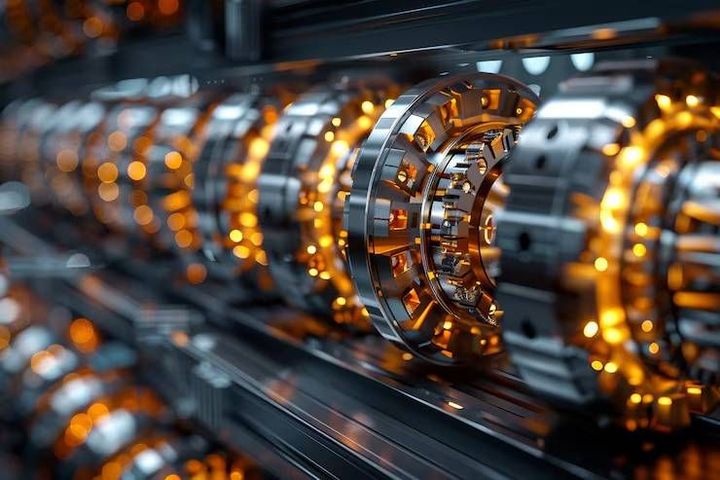
Piston Manufacturing Machines: Top Industrial Equipment & Buying Guide
Modern automotive and heavy machinery sectors rely heavily on piston manufacturing machines to produce durable, high-tolerance engine components at scale. Investing in the right industrial metalworking equipment directly impacts production speed, material efficiency, and profit margins for OEMs and aftermarket suppliers.
Building a successful piston production line requires integrating multiple specialized machines that transform raw aluminum alloys or steel billets into finished engine parts. Every stage of the workflow demands extreme dimensional accuracy because even microscopic deviations can cause catastrophic engine failure under high combustion pressures. Manufacturers typically divide their floor layout into primary forming zones, heat treatment stations, and secondary precision finishing cells. Selecting automated machinery with seamless robotic loading reduces manual labor costs while maintaining strict quality assurance across thousands of cycles.
Melting Furnaces and Die Casting Machines
The initial phase of mass-producing standard automotive pistons begins in the foundry with high-capacity induction melting furnaces and gravity die casting machines.
Hydraulic Forging Presses for High-Performance Pistons
For racing, aviation, and heavy-duty diesel applications, manufacturers replace casting equipment with heavy-tonnage hydraulic forging presses. Forging equipment applies immense compressive force to heated solid metal slugs, aligning the internal grain flow to deliver superior tensile strength and thermal resistance.
Precision CNC Machining Equipment for Pistons
Once the raw piston blanks cool and undergo T6 or T7 heat treatment in industrial aging ovens, they move to computer-controlled cutting centers. Raw castings and forgings lack the tight tolerances needed for combustion sealing, making precision CNC machining the most critical value-adding stage. High-speed automated lathes and multi-axis milling centers remove excess stock while shaping the crown, skirt, ring grooves, and wrist pin bores.
CNC Turning Centers and Ovality Lathes
Standard round turning is insufficient for modern engine pistons because thermal expansion causes the metal to swell unevenly during operation. Specialized CNC piston turning lathes utilize high-speed linear motor drives to machine complex oval and barrel-shaped skirt profiles in a single pass. These vertical and horizontal turning centers also cut ultra-precise compression and oil ring grooves using diamond-tipped tooling.
Multi-Axis VMC and Pin Bore Drilling Machines
Creating the wrist pin bore and oil drain holes requires dedicated 5-axis vertical machining centers (VMC) and precision boring equipment.
Surface Finishing and Quality Inspection Systems
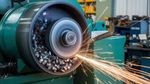
The final stage of manufacturing focuses on friction reduction, wear protection, and micron-level dimensional verification. Centerless and cam grinding machines refine the outer piston skirt to exact clearances before protective surface coatings are applied.
Key Buying Factors for Industrial Machinery Buyers
Purchasing commercial piston manufacturing equipment represents a major capital expenditure that requires careful technical and financial evaluation. Buyers should first calculate their target annual production volume to decide between flexible stand-alone CNC cells and dedicated high-speed transfer lines. Evaluating energy consumption per part, spare parts availability, and local technical service support prevents costly unplanned downtime. Additionally, modern factories benefit from Industry 4.0-ready machines equipped with predictive maintenance sensors and PLC connectivity for real-time production tracking. Requesting sample test cuts and cycle-time guarantees from equipment suppliers ensures the machinery delivers a strong return on investment.
Disclaimer: This article is provided strictly for informational and educational purposes regarding industrial manufacturing processes and machinery selection. It does not constitute professional engineering, financial, or commercial procurement advice. Specifications, operational capabilities, and regulatory compliance requirements vary across industrial equipment manufacturers, so buyers should always consult certified mechanical engineers and authorized machinery suppliers before making capital investment decisions.