Packaging Machinery Explained: Types, Components, Packaging Processes and Industry Applications
Packaging machinery refers to equipment used to prepare, fill, close, label, wrap, inspect, and otherwise handle products during packaging operations. These machines range from relatively simple filling and sealing equipment to integrated automated systems that perform several packaging stages in sequence.
Context
Packaging developed from manual methods in which products were measured, placed into containers, wrapped, and labeled by hand. As manufacturing volumes increased, machinery became important for creating more consistent packaging processes and coordinating multiple production steps.
Modern packaging machinery is used across food and beverage, pharmaceuticals, cosmetics, chemicals, household products, agriculture, electronics, and other manufacturing sectors. The appropriate equipment depends on the product, package material, required production process, environmental conditions, and handling requirements.
What packaging machinery does
A packaging line can contain one machine or several connected machines. A typical sequence may involve product feeding, measuring, filling, container formation, closing, labeling, inspection, and secondary packaging.
The machinery used for each stage can vary considerably. Liquid products may require pumps and liquid fillers, while powders may require auger or other metering systems. Solid products can use volumetric, weighing, counting, or other feeding mechanisms.
Packaging machinery can therefore be understood as a group of specialized equipment rather than one particular machine category.
Common packaging machine categories
| Machine category | Primary function | Typical packaging format |
|---|---|---|
| Filling machine | Places a measured quantity into a container | Bottles, jars, pouches |
| Form-fill-seal machine | Forms, fills, and seals packaging | Bags and pouches |
| Capping machine | Places and tightens closures | Bottles and containers |
| Labeling machine | Applies labels or identification marks | Bottles, cartons, containers |
| Cartoning machine | Places products into cartons | Cartons and boxes |
| Wrapping machine | Wraps products or grouped packages | Film-wrapped products |
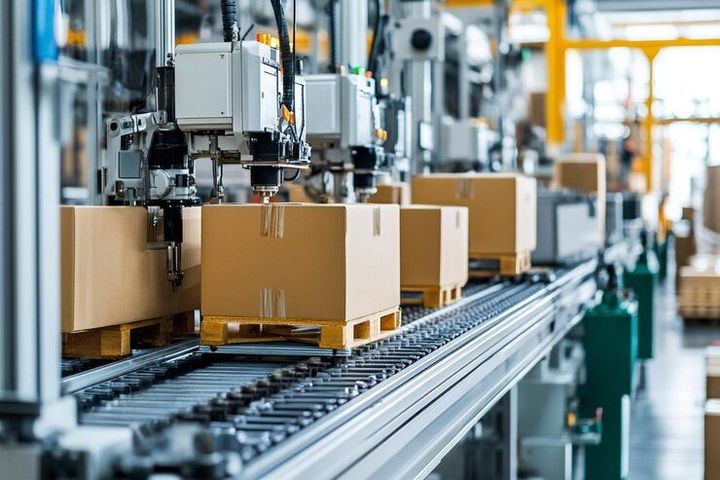
| Case packing machine | Places packaged products into cases | Shipping cases |
| Inspection system | Checks packaging or product characteristics | Various formats |
Importance
Packaging machinery affects how products are prepared for storage, transportation, distribution, and use. Packaging can help contain products, protect them from physical conditions, provide identification information, and create standardized units for handling.
For manufacturers, packaging is also connected to production planning. The packaging process needs to accommodate product characteristics, package dimensions, material properties, production volume, and quality requirements.
Consistency and process control
Manual packaging can involve differences in filling quantities, positioning, sealing, labeling, and handling. Machinery can perform repetitive actions according to defined operating parameters.
This does not mean that automated equipment eliminates variation. Machine settings, material changes, component wear, environmental conditions, and operator adjustments can all influence results.
Product and package differences
A packaging system designed for one product may not be appropriate for another. Viscosity, particle size, moisture, temperature, shape, density, and sensitivity to contamination can affect the selection of equipment.
Packaging material also matters. Paper, plastic films, glass, metal, corrugated board, and composite materials have different characteristics and may require different handling methods.
For example, a liquid filling machine needs to control fluid movement, while a powder filling system needs to manage material flow and dust. A carton packaging system has different mechanical requirements from a pouch packaging machine.
Primary, secondary, and tertiary packaging
Packaging processes are often divided into three broad levels.
- Primary packaging comes into direct contact with the product, such as a bottle, pouch, jar, or blister.
- Secondary packaging groups one or more primary packages, such as cartons or multipacks.
- Tertiary packaging is used for transportation and handling, such as cases, pallets, and larger shipping units.
A complete packaging operation may use machinery at all three levels.
Recent Updates
Packaging machinery has increasingly incorporated automation, electronic controls, sensors, machine vision, data collection, and connectivity. From 2024 through 2026, manufacturers have continued developing systems that can provide more information about machine operation and production conditions.
Automation is also becoming more modular. Instead of treating an entire packaging line as a single unit, manufacturers can connect individual machines through standardized communication systems and control architectures.
Digital monitoring and data collection
Modern packaging equipment may collect information about production cycles, machine conditions, faults, material usage, and operating parameters. Depending on the system, this information can be displayed through a human-machine interface or transferred to a broader manufacturing information system.
Data can help operators understand production patterns and identify process interruptions. However, data quality depends on the sensors, configuration, software, and procedures used to collect it.
Machine vision and inspection
Machine vision systems are increasingly used for automated inspection. Cameras and image-processing software can examine characteristics such as label position, package presence, printed information, closures, seals, or visible defects.
The inspection criteria depend on the product and application. Vision systems can also be combined with other sensors when visual information alone is insufficient.
Packaging material development
Packaging machinery is also adapting to changes in packaging materials. Some manufacturers are examining recyclable, lightweight, mono-material, paper-based, and other packaging formats.
Changing the packaging material can affect machine operation. Differences in stiffness, friction, thickness, sealing behavior, and dimensional stability may require adjustments to forming, feeding, or sealing equipment.
Flexible production
Many packaging operations handle multiple product sizes or package formats. Equipment with adjustable components and programmable settings can support product changeovers between different formats.
The practical effect depends on machine design and production conditions. Frequent format changes can still require cleaning, component replacement, adjustment, verification, and other procedures.
Laws or Policies
Packaging machinery is influenced by regulations covering machine safety, electrical systems, workplace protection, packaging materials, product labeling, and environmental requirements. The exact rules vary by country, industry, product category, and intended market.
Machine safety requirements commonly address hazards such as moving components, electrical systems, pressure, heat, guarding, emergency stopping, and access to hazardous areas. Manufacturers and operators may have separate responsibilities under applicable regulations.
Packaging used for food, medicines, chemicals, and other regulated products can involve additional requirements. These may cover material suitability, contamination control, labeling, traceability, or package integrity.
Environmental policies are also influencing packaging design. Regulations in several markets increasingly address packaging waste, recyclability, material composition, and producer responsibilities.
Compliance considerations
Before equipment is introduced into a production environment, businesses may need to consider:
- Applicable machinery safety requirements
- Electrical and control-system requirements
- Product-specific packaging regulations
- Workplace health and safety rules
- Packaging-material requirements
- Labeling and traceability requirements
- Waste and environmental regulations
Because these requirements vary by jurisdiction, manufacturers and operators need to consult the regulations applicable to their particular products and production location.
Tools and Resources
Several resources can help readers understand packaging machinery and evaluate packaging processes.
Packaging specifications
A packaging specification normally identifies information such as product dimensions, package dimensions, material type, filling quantity, closure type, labeling requirements, and inspection criteria.
A clear specification allows different stages of a packaging process to be considered together rather than evaluating each machine separately.
Process diagrams
A simple process diagram can show how products move through a packaging line. A typical sequence might be:
Product feeding → Filling → Sealing or closing → Labeling → Inspection → Secondary packaging → Case packing
The actual sequence depends on the product and packaging format.
Production calculations
Packaging planning can involve calculations for container dimensions, filling quantities, production rates, material usage, conveyor speeds, and changeover requirements. Spreadsheet models can help organize these calculations and compare different production scenarios.
Equipment documentation
Technical manuals, operating instructions, electrical diagrams, maintenance schedules, parts lists, and safety documentation are important resources for understanding equipment operation.
Machine specifications should be considered together with the intended product and package rather than examined as isolated numbers.
FAQs
What is packaging machinery?
Packaging machinery is equipment used to perform one or more stages of a packaging process. Common functions include filling, forming, sealing, capping, labeling, wrapping, inspection, cartoning, and case packing.
What are the main types of packaging machines?
Common types include filling machines, form-fill-seal machines, capping machines, labeling machines, wrapping machines, cartoning machines, case packing machines, and inspection systems. The appropriate type depends on the product and package format.
How does packaging machinery work?
Packaging machinery performs a sequence of mechanical, pneumatic, electrical, or electronic operations. Depending on the system, products may be fed, measured, filled into containers, sealed, labeled, inspected, and transferred to another packaging stage.
What factors affect packaging machine selection?
Important factors include product characteristics, package material, container dimensions, filling quantity, production requirements, changeover frequency, inspection requirements, available space, and applicable safety or regulatory requirements.
What is automated packaging machinery?
Automated packaging machinery uses programmed controls, sensors, mechanical systems, and other technologies to perform packaging operations with limited manual intervention. The level of automation can range from a single automated operation to an interconnected packaging line.
Conclusion
Packaging machinery covers a broad range of equipment used for filling, forming, sealing, labeling, inspection, wrapping, and handling packaged products. Its configuration depends on product characteristics, packaging materials, production requirements, and regulatory considerations. Recent developments have placed greater emphasis on automation, machine vision, digital monitoring, flexible production, and packaging-material changes. Understanding the individual machines and how they work together provides a clearer view of modern packaging processes.