Organic Cotton Guide: Production Methods, Fiber Properties, Textile Uses and Key Benefits
Organic cotton is cotton produced under organic farming standards that regulate how the crop is grown, handled, and documented. Instead of relying on a conventional farming system, organic cotton production emphasizes approved agricultural inputs, soil management, crop rotation, biological approaches, and traceability. The resulting fiber can be spun, woven, or knitted into textiles used for clothing, home fabrics, personal items, and other cotton-based products.
Context
What Organic Cotton Means
Organic cotton is cotton produced under organic farming standards that regulate how the crop is grown, handled, and documented. Instead of relying on a conventional farming system, organic cotton production emphasizes approved agricultural inputs, soil management, crop rotation, biological approaches, and traceability. The resulting fiber can be spun, woven, or knitted into textiles used for clothing, home fabrics, personal items, and other cotton-based products.
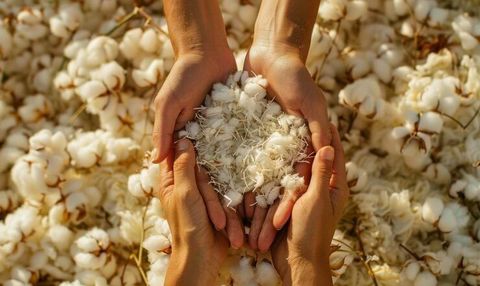
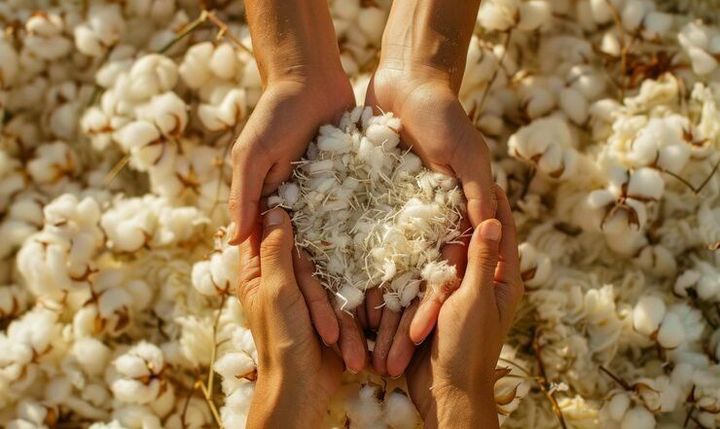
Cotton itself is a natural cellulose fiber collected from the bolls of the cotton plant. After harvesting, the fiber is separated from seeds, cleaned, spun into yarn, and converted into fabrics. Organic status relates mainly to the production and handling system rather than creating a different type of cotton fiber.
Production Process
Organic cotton production follows several connected stages:
- Soil preparation and crop planning: Farmers manage soil fertility through permitted practices and plan crop rotations where appropriate.
- Seed selection: Seeds must meet the requirements of the applicable organic standard.
- Crop cultivation: Weed, pest, and soil management methods follow the relevant organic rules.
- Harvesting: Cotton is collected and handled in ways that reduce mixing with non-certified material.
- Ginning: Fibers are separated from cotton seeds and prepared for textile processing.
- Spinning and weaving: Fiber is converted into yarn and then fabric through textile processes.
- Certification and traceability: Records and inspections help verify the production chain.
These stages matter because organic claims depend on the documented production system, not simply on the appearance or feel of a finished fabric.
Fiber Properties and Textile Uses
Organic cotton fiber has the same basic cellulose structure as conventional cotton. Depending on cotton variety and growing conditions, fiber length, strength, fineness, and color can vary. Processing methods also influence the final characteristics of yarn and fabric.
Common textile uses include:
- T-shirts, shirts, trousers, and casual clothing
- Towels, bedding, and household fabrics
- Baby and children's textile products
- Bags and reusable fabric items
- Yarn for knitting and weaving
- Home furnishings and decorative textiles
Fabric performance depends on more than whether the cotton is organic. Yarn construction, weave or knit structure, finishing, blending, and laundering can all influence softness, durability, absorbency, shrinkage, and appearance.
Importance
Why It Matters
Organic cotton is relevant to farmers, textile processors, manufacturers, retailers, consumers, and organizations that track agricultural and textile supply chains. The production system focuses attention on agricultural inputs, soil management, biodiversity, record keeping, and the handling of certified materials.
For consumers, an organic cotton label can provide information about how the cotton was produced when the claim is supported by an appropriate certification system. It does not, by itself, describe every characteristic of the finished textile. Dyeing, finishing, stitching, packaging, and other stages can involve separate standards.
Environmental and Agricultural Considerations
Organic farming systems generally restrict synthetic agricultural inputs and place greater emphasis on soil management and ecological practices. However, environmental outcomes can vary by region, irrigation conditions, farm methods, climate, processing, and other factors.
It is also useful to distinguish organic cotton from other textile claims. Organic certification primarily concerns the agricultural production system and its controlled handling. Terms such as recycled, regenerative, biodegradable, or low-impact refer to different attributes and should not automatically be treated as equivalent.
Recent Updates
Certification Developments in India
India's organic sector has continued to develop through changes to its national certification framework. The National Programme for Organic Production, administered by the Agricultural and Processed Food Products Export Development Authority, has an updated eighth edition. The revised framework was notified in early 2025 following a revision process that began earlier.
Recent APEDA information also shows continued activity around organic cotton certification. In 2025, procedures were introduced for additional checks for new and renewing organic cotton operators, alongside updated lists of certification bodies. These measures place greater attention on verification and traceability within the cotton chain.
International alignment has also remained part of the wider trend. APEDA states that NPOP standards have recognition arrangements for certain markets, while an India-Australia organic equivalence arrangement was addressed through an export procedure in 2025. In 2026, APEDA issued further notices concerning NPOP amendments and procedures involving organic ingredients for processing and re-export.
Textile Standard Changes
Textile manufacturers may also work with voluntary standards such as the Global Organic Textile Standard, commonly known as GOTS. Its current materials include an eighth edition and updated implementation resources, reflecting continuing changes in textile processing, chemical management, traceability, and certification practices.
Laws or Policies
India's Organic Production Framework
In India, organic production is governed through national standards and certification systems rather than through a single cotton-specific consumer rule. NPOP provides standards for organic production, accreditation procedures, inspection, certification, grower groups, and use of the India Organic logo. APEDA implements the programme under the Ministry of Commerce and Industry.
For domestic and local markets, India also has the Participatory Guarantee System for India, or PGS-India. APEDA describes NPOP and PGS-India as two national organic certification systems with different verification and documentation approaches.
Organic cotton operators therefore need to follow the requirements applicable to their certification route. Records, inspections, approved inputs, handling procedures, and physical separation can be important parts of verification. Claims about organic status should correspond with the relevant certification and scope.
Certification and Traceability
Certification is particularly important when cotton moves through several stages. A documented chain helps distinguish certified material from conventional material and supports accurate labeling. APEDA's certification information describes controls covering cultivation, storage, processing, packaging, distribution, records, and segregation.
Tools and Resources
Official Information Sources
Several resources can help readers understand organic cotton and certification:
- APEDA's NPOP portal provides Indian organic standards, certification information, announcements, and certification data.
- TraceNet supports record and traceability processes used within the NPOP framework.
- The APEDA directory of accredited certification bodies can help identify organizations operating under the national programme.
- The GOTS website provides information about textile processing requirements, certification, implementation documents, and standard updates.
APEDA's current certification directory lists accredited bodies and related operator information, while its organic data portal provides statistics on certified agricultural areas, production, operators, and exports.
Simple Comparison of Cotton Attributes
| Attribute | Organic Cotton | Conventional Cotton |
|---|---|---|
| Fiber base | Cellulose | Cellulose |
| Farming system | Follows an organic standard | Uses conventional agricultural practices |
| Synthetic agricultural inputs | Restricted under the applicable standard | May be used under conventional rules |
| Certification | Required for a verified organic claim | Not an organic certification requirement |
| Textile applications | Clothing, home textiles, yarn, fabrics | Clothing, home textiles, yarn, fabrics |
| Fiber performance | Depends on variety and processing | Depends on variety and processing |
The table shows that organic status primarily describes the production system. It does not mean that every organic cotton fabric has identical physical properties.
FAQs
What is organic cotton?
Organic cotton is cotton produced and handled according to an approved organic standard. Certification verifies that specified production, handling, and record-keeping requirements have been followed.
How is organic cotton produced?
Organic cotton production uses practices permitted by the applicable organic standard. These can include soil management, crop rotation, approved crop-protection methods, controlled inputs, careful harvesting, and documented handling.
Is organic cotton more environmentally friendly?
Organic cotton can support agricultural practices that restrict certain synthetic inputs and emphasize soil and ecological management. Its overall environmental effect depends on factors such as water use, farming conditions, processing, transportation, and textile finishing.
What are the main textile uses of organic cotton?
Organic cotton is used for clothing, bedding, towels, yarn, household textiles, bags, and other cotton-based fabrics. The final characteristics depend on fiber quality, spinning, weaving or knitting, finishing, and laundering.
How is organic cotton certification checked in India?
India uses certification systems including NPOP and PGS-India. NPOP involves accredited certification bodies, inspections, documentation, and traceability procedures for covered organic operators.
Conclusion
Organic cotton is a natural cellulose fiber produced within a defined organic agricultural and handling system. Its textile uses are similar to those of other cotton because fiber performance depends strongly on variety and processing. In India, NPOP and PGS-India provide national pathways for organic verification, while textile standards can address additional stages after farming. Recent developments have placed continued attention on certification, traceability, international recognition, and textile processing standards.