Milling Machine Technology Insights Into CNC Systems Tools And Production Methods
Milling machine technology is a manufacturing method in which a rotating cutting tool removes material from a workpiece to create a required shape, surface, slot, hole, or contour. Milling machines are used with metals, plastics, composites, wood, and other machinable materials.
Modern systems range from manually controlled machines to computer numerical control, commonly called CNC, equipment capable of following programmed tool paths.
Traditional milling machines developed around mechanical movement systems that allowed operators to control the position of the cutting tool and workpiece. Over time, improvements in motors, controls, measurement systems, cutting tools, and computer technology transformed milling into a highly programmable manufacturing process.
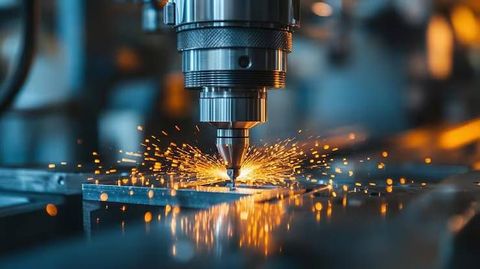
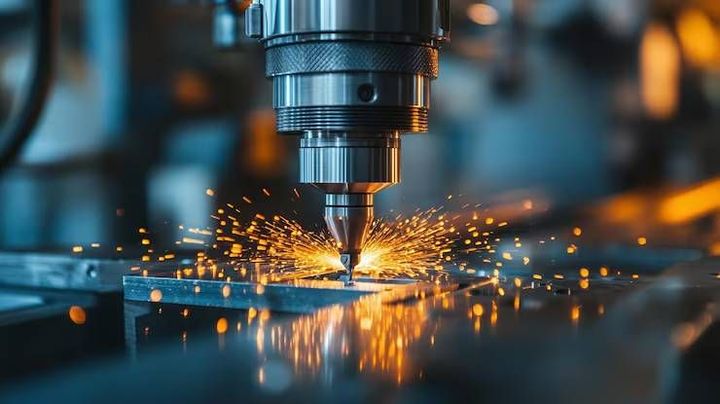
A milling machine normally contains a spindle, cutting tool, workholding system, table, axes, drive mechanisms, and control system. The spindle rotates the cutter while the machine moves the workpiece or cutting tool along one or more axes. The interaction between tool movement, spindle speed, feed rate, and cutting depth determines how material is removed.
CNC milling systems use programmed instructions to coordinate these movements. A digital design can be converted into machine instructions that control tool movement, spindle operation, coolant functions, and other machine actions. This allows complex shapes and repeated production sequences to be processed according to defined parameters.
Main Types of Milling Machines
Milling machines can be classified according to their structure and operating method. Vertical milling machines have a spindle oriented vertically and are widely used for face milling, slotting, drilling, and contouring.
Horizontal milling machines have a horizontally oriented spindle and can be useful for particular heavy cutting and production applications. Universal milling machines provide additional movement arrangements that can accommodate different machining operations.
CNC machining centers may combine milling with automated tool changes, enclosed work areas, coolant systems, probing equipment, and multi-axis movement.
Common machine categories include:
Vertical milling machines
Horizontal milling machines
CNC milling machines
CNC machining centers
Bed-type milling machines
Turret milling machines
Five-axis machining systems
Compact milling systems
The appropriate machine configuration depends on workpiece dimensions, material, geometry, production volume, tolerance requirements, and machining operations.
Milling Machine Tools
Cutting tools are selected according to the material and machining operation. End mills can remove material from the sides and ends of a workpiece, while face mills are commonly used to produce flat surfaces.
Other tools include drills, slot cutters, ball-nose cutters, reamers, and specialized form tools. Tool material can include high-speed steel, carbide, ceramic, or other engineered materials designed for particular cutting conditions.
Tool geometry also matters. Flute number, helix angle, diameter, cutting-edge design, and coating can influence chip removal, heat generation, surface finish, and tool life.
Importance
Milling machine technology is important because it supports the production of components with controlled dimensions and complex geometries. It is used in industries ranging from automotive and aerospace to electronics, machinery, medical equipment, energy systems, and general manufacturing.
Milling also provides flexibility because a single machine can perform several operations by changing tools and programmed paths. CNC systems extend this flexibility by allowing complex sequences to be controlled through digital instructions.
CNC Systems and Production Methods
A CNC milling system generally follows instructions generated from a computer-aided manufacturing process. A digital model or drawing can be used to create tool paths that determine where the cutting tool moves.
The basic sequence may include:
Creating or importing a digital component design
Defining the material and workpiece dimensions
Selecting cutting tools
Creating tool paths
Setting machining parameters
Simulating the machining sequence
Transferring the program to the machine
Securing and measuring the workpiece
Performing machining operations
Inspecting the finished component
CNC systems can use different numbers of controlled axes. Three-axis machines commonly control movement along three primary directions, while four- and five-axis systems can coordinate additional rotary movement.
Production Accuracy and Repeatability
CNC milling can produce repeated components according to programmed coordinates and machining parameters. However, actual results depend on machine condition, tool wear, workholding, material characteristics, temperature, programming, measurement systems, and operator procedures.
Inspection equipment is therefore an important part of production. Coordinate measuring machines, gauges, probes, optical systems, and other measurement tools can be used to verify dimensions.
Thermal expansion can also influence precision, particularly during extended machining operations. Temperature management and appropriate machine calibration can help account for these effects.
Materials Used in Milling
Milling can be applied to many materials, but each material requires suitable cutting conditions. Aluminum is relatively easy to machine in many applications, while stainless steel and titanium can require different tool geometries, speeds, feeds, and cooling approaches.
Plastics and composites also require specialized considerations because excessive heat or inappropriate cutting conditions can affect their surfaces or dimensions.
Material properties that influence machining include:
Hardness
Strength
Thermal conductivity
Brittleness
Ductility
Abrasiveness
Heat sensitivity
Understanding these characteristics helps determine tool selection and machining parameters.
Recent Updates
From 2024 through 2026, milling machine technology has continued to develop around automation, digital manufacturing, machine monitoring, multi-axis machining, improved tooling, and integration with manufacturing software.
CNC Automation
Modern CNC milling systems can incorporate automatic tool changers, workpiece probing, pallet systems, chip management, and automated material handling. These features allow multiple machining stages to be coordinated within a production cell.
Machine monitoring systems can collect information about spindle load, cycle time, tool usage, alarms, temperature, and other operating conditions. The information can be displayed through machine interfaces or connected production platforms.
Five-Axis Milling
Five-axis CNC machining allows the cutting tool and workpiece to move through additional rotary positions while maintaining coordinated machining. This can help produce complex surfaces and reduce the number of separate workholding arrangements required for some components.
Five-axis machining is particularly relevant to components with curved surfaces, deep features, angled geometries, or complex tool-access requirements. Programming and setup are more involved than conventional three-axis machining.
Digital Simulation
Simulation software can show how a tool path will interact with a workpiece before machining begins. It can identify certain potential collisions, excessive movements, incorrect tool paths, and other programming issues.
Digital simulation can also help estimate machining sequences and examine material-removal strategies. The accuracy of a simulation depends on the quality of the machine, tooling, material, and process information entered into the software.
Advanced Cutting Tools
Cutting-tool development continues to focus on geometry, coatings, substrate materials, and chip-control characteristics. Tool manufacturers develop different configurations for materials such as aluminum, hardened steel, titanium, nickel alloys, and composites.
Tool monitoring is also becoming more connected to CNC systems. Sensors and software can help track tool usage and identify operating conditions that may indicate tool wear.
Connected Manufacturing
CNC milling machines can increasingly connect with production-management systems. Machine data can be collected and analyzed alongside scheduling, quality, maintenance, and inventory information.
This approach supports a broader digital manufacturing environment in which machining equipment is treated as part of an interconnected production system rather than as an isolated machine.
Laws or Policies
Milling machines are affected by machinery safety, electrical protection, workplace safety, environmental requirements, and industrial equipment standards. The exact rules vary according to jurisdiction, machine configuration, workplace conditions, and material being processed.
Machine Safety
CNC milling machines contain rotating spindles, sharp cutting tools, moving tables, automated tool changers, electrical systems, and potentially high-pressure coolant equipment. Safety measures commonly include enclosed work areas, interlocked doors, emergency stops, guarding, warning systems, and controlled operating modes.
Operators and maintenance personnel need appropriate procedures for setup, tool changes, cleaning, inspection, and maintenance. Machine access during operation should be controlled according to the applicable safety requirements.
Electrical and Control Safety
CNC systems include motors, drives, controllers, sensors, electrical panels, and communication equipment. Electrical safety requirements can address grounding, circuit protection, emergency controls, wiring, and isolation procedures.
Maintenance can involve stored electrical, mechanical, pneumatic, or hydraulic energy. Appropriate energy-isolation procedures are therefore important before accessing hazardous machine areas.
Workplace and Environmental Considerations
Milling operations can generate metal chips, dust, noise, coolant residues, and heat. Facilities may need suitable ventilation, waste handling, coolant management, and workplace protection measures.
Different materials and coolants can create different environmental considerations. Applicable requirements depend on the substances used and the facility's operating environment.
Tools and Resources
Several tools support milling machine planning and operation. Computer-aided design software can create digital component models, while computer-aided manufacturing software converts those designs into machining strategies and tool paths.
CNC simulation platforms can help examine programmed movements before a workpiece is machined. Cutting-parameter calculators can assist with spindle speed, feed rate, cutting speed, and chip-load calculations.
Useful resources include:
CAD software
CAM software
CNC simulation platforms
Cutting-speed calculators
Feed-rate calculators
Tool catalogs
Workholding specifications
Coordinate measuring systems
Digital calipers and micrometers
Tool presetters
Machine inspection checklists
Preventive maintenance schedules
Production monitoring platforms
A simplified comparison of milling machine categories is shown below:
| Machine Type | Main Characteristic | Common Production Role |
|---|---|---|
| Vertical Mill | Vertical spindle | General machining |
| Horizontal Mill | Horizontal spindle | Heavy and specialized cutting |
| Three-Axis CNC | Three coordinated linear axes | General CNC production |
| Four-Axis CNC | Additional rotary movement | Indexed and complex machining |
| Five-Axis CNC | Multiple coordinated axes | Complex surfaces |
| Machining Center | Automated tools and machining functions | Integrated production |
Selecting Machining Parameters
Machining parameters influence cutting performance and surface results. Spindle speed determines how quickly the cutting tool rotates, while feed rate determines how quickly the tool moves through the workpiece.
Cutting depth controls how much material is removed during a pass. Tool diameter, flute count, material hardness, coolant conditions, machine rigidity, and workholding also influence the appropriate parameters.
There is no single setting suitable for every milling operation. Parameters are normally established from tool specifications, material characteristics, machine capabilities, and the specific machining strategy.
FAQs
What is milling machine technology?
Milling machine technology uses rotating cutting tools to remove material from a workpiece and create defined shapes, surfaces, slots, holes, and contours. Modern systems include manual machines and CNC-controlled equipment.
How do CNC milling systems work?
CNC milling systems follow programmed instructions that coordinate spindle rotation, tool movement, feed rates, and other machine functions. The program can be generated from a digital component model using CAM software.
What tools are used in CNC milling?
Common CNC milling tools include end mills, face mills, ball-nose cutters, drills, slot cutters, reamers, and specialized form tools. Tool selection depends on the material, geometry, machining operation, and required surface characteristics.
What is five-axis milling?
Five-axis milling coordinates multiple linear and rotary axes to allow complex tool orientations during machining. It is used for components with curved, angled, or difficult-to-access surfaces.
What factors affect milling machine production methods?
Important factors include workpiece material, machine configuration, cutting-tool geometry, spindle speed, feed rate, cutting depth, workholding, coolant, tool wear, component geometry, inspection requirements, and production volume.
Conclusion
Milling machine technology uses rotating cutting tools to shape workpieces across many manufacturing applications. CNC systems add programmable movement, automated tool handling, digital simulation, measurement, and machine monitoring to traditional milling processes. Recent developments include five-axis machining, connected monitoring, advanced cutting tools, and greater integration between CAD, CAM, and production systems. Safe and consistent milling also depends on suitable machine setup, tooling, workholding, inspection, maintenance, and applicable workplace requirements.