Metal Forming Machines Guide With Modern Manufacturing and Engineering Insights
Metal forming machines are industrial systems used to shape metal into specific dimensions and geometries without removing most of the material. Metal forming machines support manufacturing processes such as bending, stamping, rolling, forging, drawing, and pressing.
They are used for components found in construction equipment, vehicles, appliances, industrial machinery, electrical systems, and many other products. Understanding how these machines operate helps explain how flat sheets, bars, tubes, and other metal stock are transformed into useful components.
Context
What Are Metal Forming Machines
Metal forming machines apply controlled mechanical force to change the shape of metal. Depending on the process, the material may be compressed, stretched, bent, rolled, or pressed while remaining substantially intact.
The equipment can range from relatively compact hydraulic presses to large automated production lines. Machine selection depends on the material, component dimensions, required shape, production volume, accuracy, and forming method.
Metal forming has roots in traditional blacksmithing and mechanical forging, where heat and manual force were used to shape metals. Industrial development introduced mechanical presses, rolling mills, powered hammers, and specialized forming equipment. Modern systems combine mechanical structures with hydraulic, electrical, electronic, and computer-based controls.
Main Types of Metal Forming Machines
Different machines are designed for different forming operations. Common categories include:
- Press brakes for bending sheet and plate metal.
- Hydraulic presses for pressing, forming, compression, and deep-drawing operations.
- Mechanical presses for repeated stamping and forming processes.
- Power presses for shaping sheet metal with dies and controlled force.
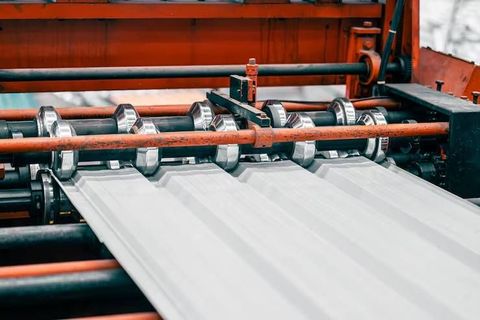
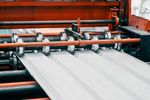
- Rolling machines for reducing thickness or creating curved profiles.
- Forging presses for shaping metal under high compressive forces.
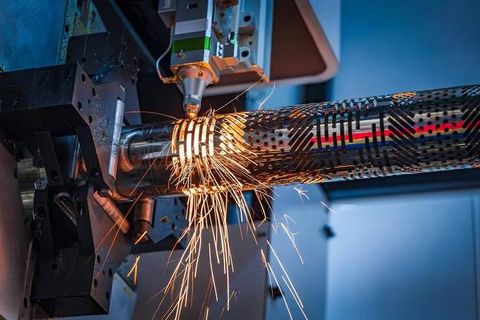
- Tube and pipe forming machines for producing controlled bends and profiles.
- Metal spinning machines for creating round or symmetrical components.
- Wire forming machines for shaping wire into defined geometries.
Each category uses different tooling arrangements and operating principles. The correct configuration depends on the geometry of the component and the properties of the material being processed.
How the Forming Process Works
A typical metal forming process begins with material preparation. The metal may arrive as a sheet, coil, bar, tube, billet, or another standard form. It is then positioned in or around specialized tooling.
The machine applies a controlled force to change the material's shape. Sensors, mechanical stops, programmable controls, or measurement systems can help maintain dimensional consistency.
After forming, the component may undergo additional operations such as trimming, drilling, joining, surface treatment, inspection, or finishing. In automated manufacturing environments, several operations can be connected into a coordinated production sequence.
Importance
Why Metal Forming Matters
Metal forming is important because many industrial components require precise shapes that would be difficult to produce through manual methods. Forming can also preserve much of the original material, making it different from manufacturing processes that primarily create shapes by cutting material away.
The technology affects manufacturers, engineers, maintenance teams, machine operators, product designers, and quality-control personnel. It also indirectly affects consumers because formed metal components are incorporated into products and infrastructure used in everyday life.
Major Manufacturing Applications
Metal forming equipment is used across numerous industries. Examples include:
| Industry | Common Forming Application | Typical Material |
|---|---|---|
| Automotive | Body panels and structural components | Steel, aluminum |
| Construction | Profiles, brackets, panels | Steel, aluminum |
| Appliances | Cabinets and structural parts | Stainless steel, sheet steel |
| Electrical | Enclosures and metal housings | Steel, aluminum |
| Aerospace | Structural and formed components | Aluminum, titanium alloys |
| Energy | Tubes, panels, structural parts | Steel and specialty alloys |
| General machinery | Frames, brackets, shafts and housings | Steel and alloys |
Productivity and Dimensional Control
Modern metal forming machines can repeat programmed movements with controlled force and position. This is important when many components need similar dimensions.
Digital controls can also help operators monitor machine settings and production conditions. Automated material handling can reduce manual movement between individual process stages, while inspection equipment can identify dimensional variation.
However, automation does not eliminate the need for appropriate tooling, machine setup, maintenance, material selection, and operator training.
Material Considerations
Metal behavior changes according to its composition, thickness, temperature, hardness, ductility, and previous processing history. Steel, aluminum, copper, titanium alloys, and other metals can respond differently to the same forming operation.
Engineers therefore consider factors such as yield strength, tensile strength, elongation, thickness, bend radius, springback, and work hardening. These characteristics influence machine capacity and tooling requirements.
Recent Updates
Digital Controls and Smart Manufacturing
Recent developments in metal forming increasingly involve digital control systems and connected production equipment. Computer numerical control, programmable logic controllers, sensors, and production-monitoring systems can provide more detailed information about machine operation.
Some modern systems collect information about force, position, temperature, cycle time, vibration, and equipment condition. This information can support process analysis and maintenance planning.
Automation and Robotics
Robotic handling has become increasingly relevant to metal forming production. Robots can move sheets, blanks, formed parts, or tooling between defined stages while maintaining programmed movement patterns.
Automated loading and unloading can be particularly useful for repetitive operations. Collaborative robotic systems are also being evaluated for tasks where people and automated equipment operate within carefully designed work areas.
Energy and Material Efficiency
Manufacturing organizations are paying greater attention to energy consumption and material utilization. Hydraulic and mechanical systems are being developed with more efficient drives, improved control systems, and optimized operating cycles.
Material efficiency is also influenced by die design, nesting arrangements, forming sequences, and process simulation. Digital modeling can help identify potential deformation or tooling issues before physical production begins.
Simulation and Predictive Monitoring
Computer-aided engineering tools can simulate forming operations before equipment is used for production. Simulation may help identify wrinkles, cracks, excessive thinning, springback, and other potential problems.
Predictive monitoring is another developing area. Sensors and analytical software can help identify changes in machine behavior that may indicate maintenance requirements or process variation.
Laws or Policies
Workplace Safety Requirements
Metal forming machines involve significant mechanical forces and moving components, so workplace safety rules commonly address guarding, emergency stopping systems, operator controls, maintenance procedures, and equipment inspection.
Requirements vary according to jurisdiction and industrial application. Organizations generally need to follow the applicable occupational safety framework governing their facility and equipment.
Machine Safety and Risk Assessment
Machine safety frameworks commonly emphasize hazard identification and risk reduction. Typical concerns include crushing points, moving dies, stored hydraulic energy, sharp metal edges, unexpected machine movement, and access to operating areas.
Risk assessments may consider the machine design, intended use, maintenance activities, operator interaction, and foreseeable misuse. Safety controls can include physical guards, interlocks, emergency controls, warning systems, and documented operating procedures.
Environmental and Energy Considerations
Industrial facilities may also be subject to rules concerning energy use, waste handling, noise, emissions, lubricants, and industrial materials. Requirements differ considerably between jurisdictions and sectors.
Manufacturers and facility operators generally need to identify which national, regional, or industry-specific requirements apply to their operations rather than assuming one standard applies universally.
Tools and Resources
Engineering and Selection Tools
Several digital tools can support the planning and analysis of metal forming processes. Engineering calculators can help estimate forming force, bending parameters, material behavior, and basic dimensional relationships.
Computer-aided design software is commonly used to develop component geometry and tooling concepts. Computer-aided engineering platforms can then analyze forming behavior through digital simulations.
Production Monitoring Platforms
Manufacturing execution systems and industrial monitoring platforms can collect information from production equipment. Depending on the system, users may review cycle times, machine status, production quantities, alarms, and selected process parameters.
Maintenance management platforms can also organize inspection schedules, maintenance records, equipment histories, and replacement planning.
Technical Documentation
Useful resources for understanding metal forming include:
- Machine operating manuals
- Tooling specifications
- Material property databases
- Engineering design references
- Machine safety documentation
- Preventive maintenance schedules
- Quality inspection templates
- Computer-aided design libraries
- Forming-process simulation software
These resources help connect machine capabilities with material characteristics, tooling requirements, production conditions, and safety considerations.
FAQs
What are metal forming machines used for?
Metal forming machines are used to change the shape of metal through processes such as bending, stamping, pressing, rolling, forging, drawing, and spinning. They are used to produce components for many manufacturing industries.
What is the difference between hydraulic presses and mechanical presses?
Hydraulic presses use fluid pressure to generate controlled force, while mechanical presses generally use mechanical mechanisms such as flywheels, cranks, or eccentric systems. Their operating characteristics make them suitable for different forming applications.
How does a metal forming machine affect production accuracy?
Accuracy depends on machine rigidity, tooling condition, material properties, setup, control systems, and inspection methods. Modern metal forming machines can use sensors and programmable controls to improve repeatability, but process control remains important.
What metals can be processed with metal forming machines?
Steel, stainless steel, aluminum, copper, titanium alloys, and other metals can be formed using suitable equipment and tooling. The appropriate process depends on material strength, thickness, ductility, geometry, and forming temperature.
What role does automation play in metal forming?
Automation can control repetitive movements, material handling, machine sequences, and selected inspection tasks. Robotics, sensors, programmable controls, and production-monitoring systems can be integrated into forming lines where the application requires them.
Conclusion
Metal forming machines transform metal stock into useful shapes through controlled bending, pressing, rolling, forging, drawing, and related processes. Their development now includes digital controls, automation, sensors, simulation, and production monitoring alongside established mechanical and hydraulic technologies. Machine selection and process design depend on material properties, component geometry, tooling, production requirements, accuracy, and workplace safety. Understanding these factors provides a useful foundation for interpreting modern manufacturing and engineering applications.