Inkjet Coding Systems Details: Printer Types, Coding Functions, Substrates and Maintenance Needs
Inkjet coding systems are printing technologies used to place variable information directly onto products, packages, labels, containers, and other materials. An inkjet coding system can print information such as batch numbers, production dates, expiry information, serial numbers, barcodes, QR codes, and manufacturing references without requiring a separate printed label for every variation.
The technology developed from the broader field of industrial printing, where manufacturers needed faster ways to identify products moving through production lines. Unlike conventional office printers, industrial inkjet printers are designed to work with moving products and different types of packaging materials.
Today, inkjet coding systems are used across food and beverage packaging, pharmaceuticals, cosmetics, electronics, automotive components, construction materials, cables, plastics, and other manufacturing environments. The appropriate system depends on the material being printed, production speed, print size, ink characteristics, and the information that must appear on the product.
How Inkjet Coding Works
Most inkjet coding processes create characters by placing very small ink droplets onto a surface. A controller determines when and where the droplets are deposited so that letters, numbers, symbols, or machine-readable codes are formed.
Some systems continuously circulate ink through the printhead, while others release ink only when a character or image is required. Sensors can detect the movement of products and trigger printing at the appropriate position.
The basic process generally involves:
- Product detection through a sensor
- Information selection from the printer controller
- Ink or droplet generation
- Printing onto the substrate
- Inspection or verification of the printed information
The result is a variable code that can change from one product to the next without changing the physical printing plate.
Importance
Inkjet coding systems matter because product identification is an important part of modern manufacturing and packaging. A printed code can help production teams distinguish batches, identify manufacturing periods, organize inventory, and trace products through different stages of distribution.
For consumers, printed information can provide useful details about a packaged product. For manufacturers, accurate coding can support internal records and traceability procedures.
Common Coding Functions
An industrial inkjet printer may perform several coding functions depending on its configuration and software.
- Date coding: Prints manufacturing, packaging, use-by, or other relevant dates.
- Batch and lot coding: Identifies a particular production group.
- Serial numbering: Assigns a different identification number to individual products or units.
- Barcode printing: Produces machine-readable linear codes.
- QR and 2D coding: Prints two-dimensional codes that can contain more information within a small area.
- Text printing: Adds product names, references, instructions, or production information.
- Variable data printing: Changes information automatically according to production data.
- Traceability coding: Connects physical products with manufacturing or distribution records.
Why Substrate Selection Matters
The substrate is the surface receiving the printed information. Ink adhesion, drying behavior, contrast, and durability can vary considerably between materials.
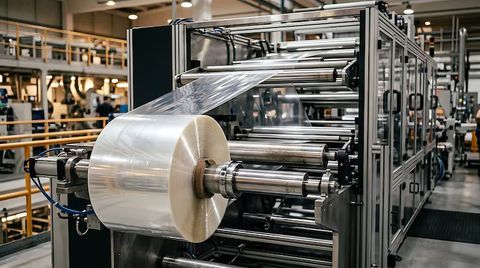
For example, porous cardboard can absorb certain inks, while glass and metal generally require ink formulations designed to adhere to non-porous surfaces. Plastic films can also present different requirements depending on their composition and surface treatment.
A coding system therefore needs to be matched with both the substrate and the intended production environment.
Recent Updates
From 2024 through 2026, industrial coding has continued to move toward more connected, automated, and data-driven production environments. Rather than functioning only as standalone printers, many coding systems are increasingly integrated with production-line controllers, sensors, inspection equipment, databases, and manufacturing software.
Automation and Data Integration
Modern systems can receive information from external production systems and automatically update printed content. This can reduce the need for repeated manual data entry when production information changes between batches.
Connectivity can also allow production information to move between printers and manufacturing systems. Depending on the equipment and software, interfaces may support centralized message management, production monitoring, or code verification.
Higher Information Density
QR codes and other 2D codes are increasingly relevant where a small printing area needs to contain machine-readable information. These codes can hold more data than many traditional linear barcodes and can be used as part of traceability systems.
Sustainability Considerations
Manufacturing environments are also paying greater attention to ink usage, packaging materials, solvent management, energy consumption, and waste reduction. These considerations have encouraged development of printing technologies and operating practices intended to use resources more efficiently.
The exact environmental characteristics depend on the printer, ink chemistry, substrate, production speed, and operating conditions. There is therefore no single inkjet technology that has identical environmental performance in every application.
Laws or Policies
In India, product coding and labeling can be affected by several regulatory frameworks. The exact requirements depend on the product category, packaging format, and intended use.
Legal Metrology Requirements
The Legal Metrology Act, 2009 and the Legal Metrology (Packaged Commodities) Rules, 2011 establish requirements for declarations on many pre-packaged commodities. Government guidance identifies information such as the manufacturer, packer or importer details, country of origin for imported products, and other prescribed declarations.
The rules have received amendments over time, including amendments published during 2025 and 2026. Therefore, businesses using inkjet coding systems for regulated packaging need to consider the version of the applicable rules in force for their product category.
Food Labeling Requirements
For packaged food in India, the Food Safety and Standards Authority of India regulates labeling and display requirements. The Food Safety and Standards (Labelling and Display) Regulations, 2020 cover essential information on pre-packaged foods. Requirements can include batch or lot identification and relevant date marking.
Inkjet coding may be used to place variable batch and date information on food packaging, but the printer itself does not determine regulatory compliance. The complete package label must meet the applicable requirements.
Packaging and Plastic Rules
Packaging materials may also be affected by India's Plastic Waste Management framework. Amendments have addressed areas such as biodegradable plastics, labeling-related provisions, and responsibilities connected with plastic packaging.
Because regulatory requirements can change, organizations should consult the applicable government rules and product-specific requirements when establishing a coding process.
Printer Types
Different inkjet printer types are designed for different production conditions. Understanding their operating principles helps explain why one system may be used for a particular substrate while another is selected for a different application.
Continuous Inkjet Printers
Continuous inkjet, commonly called CIJ, produces a continuous stream of tiny ink droplets. Selected droplets are directed toward the product while unused droplets can be collected and recirculated.
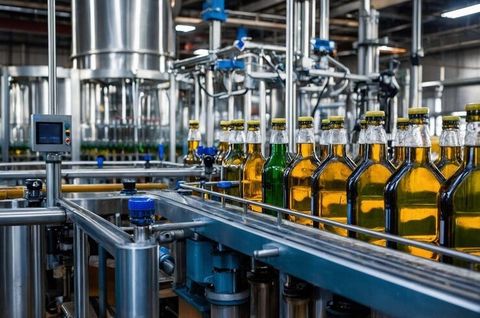
CIJ systems are commonly associated with high-speed production lines and can print relatively small characters on moving products. They are used with materials such as plastics, glass, metal, cables, and packaging films.
Thermal Inkjet Printers
Thermal inkjet, or TIJ, uses controlled heating to create small vapor bubbles that push ink droplets through microscopic nozzles. TIJ systems can produce sharp text and codes and are often used where clean, compact printing is required.
They can be suitable for porous and some specially prepared non-porous surfaces, depending on the ink formulation.
Drop-on-Demand Printers
Drop-on-demand systems produce ink droplets only when printing is required. Different technologies can be used to generate the droplets, including piezoelectric methods.
These systems can accommodate various print requirements and may be used for larger characters, variable information, or specialized industrial applications.
Laser Coding Compared With Inkjet
Laser coding is not an inkjet process because it marks the surface without depositing conventional liquid ink. It is nevertheless commonly considered alongside inkjet coding systems when manufacturers compare industrial identification technologies.
The choice between technologies depends on substrate properties, required code characteristics, production conditions, maintenance requirements, and regulatory considerations.
Substrates and Applications
The following table shows common substrate categories and coding considerations.
| Substrate | Common Coding Use | Important Consideration |
|---|---|---|
| Cardboard | Boxes and cartons | Ink absorption and contrast |
| Paper | Labels and paper packaging | Drying and print clarity |
| Plastic film | Flexible packaging | Surface treatment and adhesion |
| Glass | Bottles and containers | Non-porous surface adhesion |
| Metal | Cans and components | Ink durability and surface condition |
| Plastic containers | Bottles, pipes, parts | Material composition and drying |
| Cables | Wire and cable identification | Continuous movement and abrasion |
| Rubber | Industrial components | Surface texture and ink compatibility |
The same printer may not produce identical results on every substrate. Testing under actual production conditions is important because surface texture, temperature, moisture, speed, and handling can affect the final code.
Maintenance Needs
Regular maintenance helps keep an inkjet coding system operating consistently. The exact procedure varies according to printer design, ink type, operating environment, and manufacturer instructions.
Printhead Care
The printhead is one of the most important components because it controls the placement of ink droplets. Dust, dried ink, or contamination can affect nozzle performance and print quality.
Routine inspection and cleaning should follow the equipment manufacturer's instructions. Cleaning methods can differ substantially between ink technologies.
Ink and Fluid Management
Ink-based systems require appropriate management of ink, makeup fluid, or other operating fluids where applicable. Containers should be monitored so that the printer does not operate with unsuitable fluid levels or incompatible materials.
Different ink formulations can have different drying times and substrate compatibility, so changing ink types requires careful consideration.
Environmental Conditions
Temperature, humidity, dust, vibration, and airflow can influence printing performance. Production areas with significant dust or temperature variation may require additional environmental controls.
Code Verification
Printed codes should be checked periodically for legibility, position, completeness, and machine readability when applicable. Automated vision systems can be integrated into some production lines to inspect printed information as products move past the printer.
Tools and Resources
Several resources can help people understand and manage inkjet coding systems.
Manufacturer Documentation
Printer manuals provide information about setup, compatible fluids, cleaning procedures, error messages, operating limits, and maintenance schedules. These documents should be used when carrying out equipment-specific procedures.
Code Verification Tools
Barcode scanners, QR-code readers, and machine-vision inspection equipment can help determine whether printed codes are readable. These tools are particularly useful when codes are part of automated traceability processes.
Regulatory Resources
For Indian applications, government resources from the Department of Consumer Affairs and FSSAI provide information about Legal Metrology and food-labeling requirements. The applicable rules should be checked according to the product category and packaging type.
Production Data Systems
Manufacturing execution systems, enterprise resource planning platforms, databases, and programmable controllers can provide variable information to coding equipment. Integration requirements depend on the printer's communication capabilities and the production environment.
FAQs
What are inkjet coding systems used for?
Inkjet coding systems are used to print variable information such as dates, batch numbers, lot references, serial numbers, barcodes, QR codes, and other identification details on products and packaging.
What types of inkjet printers are commonly used?
Common types include continuous inkjet, thermal inkjet, and drop-on-demand systems. Each uses a different method to create and place ink droplets and may suit different substrates and production conditions.
Which substrates can an industrial inkjet printer code?
Industrial inkjet printers can be used with materials such as cardboard, paper, plastics, glass, metal, rubber, cables, and packaging films. The appropriate ink and printer configuration depend on the surface characteristics.
How often does an inkjet coding system need maintenance?
Maintenance frequency depends on the printer type, ink formulation, operating hours, production environment, and manufacturer's instructions. Printhead inspection, fluid checks, cleaning, and code verification may form part of routine maintenance.
Can inkjet coding systems print QR codes and barcodes?
Yes. Many modern coding systems can print linear barcodes and 2D codes such as QR codes when the printer has the necessary resolution, software, and data-handling capabilities.
Conclusion
Inkjet coding systems provide a method for printing variable product and packaging information directly onto many types of substrates. Printer types such as CIJ, TIJ, and drop-on-demand systems differ in their operating methods and application requirements. Current developments increasingly connect coding equipment with production data, inspection systems, and automated workflows. In India, applicable labeling and packaging requirements should be considered alongside substrate compatibility, coding functions, and routine maintenance needs.