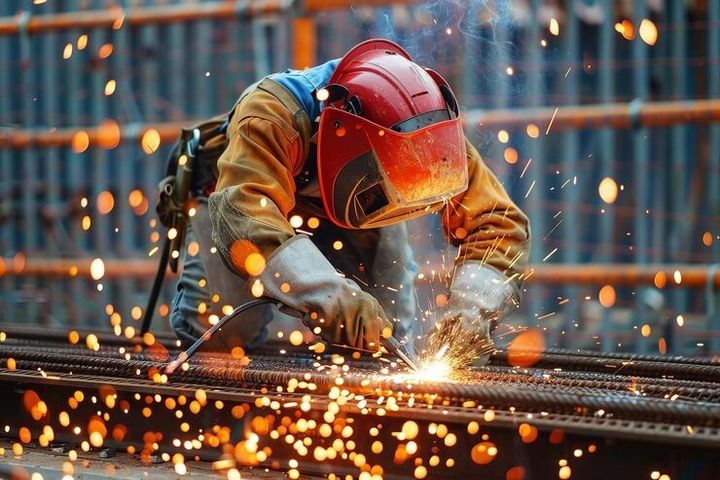
Industrial Welding Explained: Processes, Equipment, Materials, Applications and Safety Considerations
Industrial welding is a joining process used to connect metal parts by applying heat, pressure, or a combination of both. It is widely used in manufacturing, construction, transportation, energy, infrastructure, and equipment production. Industrial welding includes several processes, equipment types, and materials, and the appropriate approach depends on factors such as metal type, thickness, joint design, production requirements, and workplace conditions.
What Is Industrial Welding?
Welding joins two or more materials by creating a strong connection between their surfaces. In many industrial welding processes, heat melts a portion of the base materials and sometimes a separate filler material. As the heated area cools, it forms a joint between the components.
Some welding methods use an electric arc, while others use electrical resistance, a focused laser beam, or other heat sources. Pressure can also be part of the process. The choice depends on the materials being joined and the characteristics required from the finished assembly.
How Welding Developed
Early metal joining methods included forging and heating metals until they could be joined through pressure. Modern welding developed significantly with the introduction of electric arc processes and improved power sources. Gas welding also became widely used for fabrication and repair applications.
Industrial welding later expanded through processes such as shielded metal arc welding, gas metal arc welding, gas tungsten arc welding, submerged arc welding, resistance welding, and laser welding. Automation and computer-controlled equipment have further changed how welding is performed in modern manufacturing environments.
Main Industrial Welding Processes
Several welding processes are used across industrial applications:
- Shielded Metal Arc Welding (SMAW) uses a consumable electrode and an electric arc. It is commonly associated with structural fabrication and field work.
- Gas Metal Arc Welding (GMAW), often called MIG welding, uses a continuously fed wire electrode and shielding gas.
- Gas Tungsten Arc Welding (GTAW), commonly called TIG welding, uses a non-consumable tungsten electrode and is suited to applications requiring controlled welds.
- Flux-Cored Arc Welding (FCAW) uses a tubular wire containing flux. Depending on the process, additional shielding gas may be used.
- Submerged Arc Welding (SAW) uses granular flux to cover the welding arc and is frequently applied to long, continuous welds.
- Resistance welding joins materials by passing electrical current through the contact area while pressure is applied. Spot welding is a common example.
- Laser welding uses a concentrated beam of light to create localized heat and is used in applications requiring precise joining.
Importance
Why Industrial Welding Matters
Industrial welding supports the construction and manufacture of many products and structures used in everyday life. Steel frames, pipelines, vehicles, storage systems, machinery, pressure equipment, agricultural equipment, and many fabricated components can involve welded joints.
The quality of a welded connection can affect structural strength, dimensional accuracy, durability, and resistance to environmental conditions. For this reason, welding procedures are generally selected according to the material, joint design, operating conditions, and applicable technical requirements.
Industries That Use Welding
Industrial welding is used across a wide range of sectors, including:
- Construction and structural fabrication
- Automotive and transportation manufacturing
- Heavy equipment production
- Shipbuilding and marine fabrication
- Energy and power infrastructure
- Pipeline and process equipment fabrication
- Agricultural machinery
- General metal fabrication
- Aerospace and specialized manufacturing
Materials Used in Welding
Steel is one of the most widely welded materials, but industrial welding can also involve stainless steel, aluminum, nickel alloys, copper alloys, and other metals. Each material responds differently to heat.
Filler metals and shielding gases may also be selected according to the base material and welding process. Surface preparation is important because oil, moisture, paint, rust, scale, and other contaminants can affect weld quality.
Industrial Welding Equipment
A typical welding setup may include a power source, welding torch or electrode holder, cables, work clamp, filler material, shielding gas equipment, and protective equipment. Automated systems may additionally include robotic arms, positioning equipment, sensors, controllers, and monitoring systems.
The table below summarizes several common processes:
| Welding Process | Main Heat Source | Typical Materials | Common Applications |
|---|---|---|---|
| SMAW | Electric arc | Carbon and alloy steels | Structural fabrication |
| GMAW | Electric arc | Steel, stainless steel, aluminum | Manufacturing and fabrication |
| GTAW | Electric arc | Stainless steel, aluminum, nickel alloys | Precision fabrication |
| FCAW | Electric arc | Steels and alloys | Heavy fabrication |
| SAW | Electric arc | Carbon and alloy steels | Large fabricated structures |
| Resistance Welding | Electrical resistance | Sheet metals | Automotive and production lines |
| Laser Welding | Focused laser beam | Various metals | Precision manufacturing |
Recent Updates
Automation and Robotic Welding
Automation has become increasingly important in industrial welding. Robotic systems can repeat programmed welding movements and can be integrated with sensors, positioners, inspection equipment, and production controls.
Automated welding is particularly relevant where the same joint configuration is repeated across many components. Human operators remain important for setup, programming, monitoring, inspection, maintenance, and situations requiring flexible judgment.
Digital Monitoring and Process Control
Modern welding equipment increasingly incorporates digital controls that allow operators to adjust and monitor welding parameters. Depending on the equipment, these systems can record information such as current, voltage, wire-feed rate, travel speed, and other process variables.
Data collection can support process documentation and quality analysis. Digital monitoring is also being combined with sensors and automated inspection systems.
Laser and Hybrid Welding
Laser welding continues to receive attention in manufacturing because concentrated heat can create narrow weld zones and support precise joining. Hybrid approaches can combine laser energy with an arc process to address particular material and joint requirements.
Welding terminology has also continued to evolve. The American Welding Society's A3.0M/A3.0:2025 terminology standard includes updated definitions related to areas such as additive manufacturing, nondestructive examination, hybrid welding, plastic welding, and waveform-controlled welding.
Updated Technical Standards
Technical standards continue to be revised as materials, equipment, inspection methods, and fabrication practices change. AWS D1.1/D1.1M:2025, for example, contains updated and clarified requirements related to structural steel welding, including qualification, inspection, and material references.
These developments show a broader movement toward greater process control, automation, digital documentation, and standardized terminology in industrial welding.
Laws or Policies
Welding Safety Rules in India
In India, industrial welding activities can be subject to occupational safety requirements applicable to factories and other establishments. The Occupational Safety, Health and Working Conditions Code, 2020 consolidates several occupational safety and working-condition laws. India Code records its enforcement date as November 21, 2025.
Requirements can cover workplace safety, worker health, hazardous activities, protective measures, and other occupational conditions. Specific obligations can depend on the type of establishment, activity, workforce, and applicable rules.
Protection From Welding Hazards
The Indian Factories Act, 1948 includes provisions addressing eye protection and dangerous fumes, gases, vapours, and dust in applicable factory settings. The Ministry of Labour and Employment also identifies measures relating to eye protection, dangerous fumes, workplace conditions, machinery safety, and fire hazards.
State-level rules and other applicable requirements may also affect industrial workplaces. The Ministry of Labour and Employment notes that rules under the former Factories Act framework were framed by respective state governments.
Technical Standards and Workplace Procedures
Organizations may also use technical welding standards to establish procedures for fabrication, qualification, inspection, and safety. AWS publishes standards covering welding processes, structural welding, safety, ventilation, cables, welding screens, and robotic welding.
Applicable requirements can vary according to the project, industry, material, location, and type of equipment. Workplace procedures should therefore be based on the relevant regulations, technical specifications, equipment instructions, and safety documentation.
Tools and Resources
Welding Reference Materials
Several resources can help readers understand industrial welding:
- Welding process manuals can explain process selection, equipment, terminology, and basic operating principles.
- Welding procedure specifications can document parameters and conditions used for particular welding applications.
- Material data sheets can provide information about metals, filler materials, and shielding gases.
- Equipment manuals explain controls, operating limits, inspection points, and maintenance requirements.
- Safety data sheets provide information about hazards associated with relevant materials and chemicals.
Inspection and Measurement Tools
Industrial welding inspection can involve visual inspection, dimensional measurement, weld gauges, ultrasonic testing, radiographic testing, magnetic particle testing, and liquid penetrant testing. The appropriate method depends on the material, joint type, specification, and inspection requirement.
Digital welding systems may also provide process monitoring and data-recording functions. These tools can help document welding parameters and identify variations during production.
Safety Resources
The American Welding Society publishes safety information covering areas such as welding fumes, ventilation, eye protection, welding screens, cables, and general workplace practices. Its safety resources also address fire prevention, confined spaces, and protection of personnel.
Welding fumes and gases require particular attention because their composition can vary according to the process, base metal, filler material, coatings, and operating conditions. Appropriate ventilation and exposure-control measures are therefore important parts of a welding safety program.
FAQs
What is industrial welding?
Industrial welding is a group of processes used to join metal or other compatible materials through heat, pressure, or both. Common processes include SMAW, GMAW, GTAW, FCAW, SAW, resistance welding, and laser welding.
What equipment is used in industrial welding?
Industrial welding equipment can include power sources, torches, electrode holders, cables, work clamps, filler materials, shielding-gas systems, ventilation equipment, welding screens, and personal protective equipment. Automated installations may also use robots, sensors, positioners, and control systems.
Which materials are commonly used in industrial welding?
Carbon steel, stainless steel, aluminum, and various alloy systems are commonly welded. Material selection affects the welding process, filler material, heat control, joint preparation, and inspection requirements.
What safety considerations are important in industrial welding?
Important considerations include protection from arc radiation, electrical hazards, heat, sparks, fire, fumes, gases, and flying particles. Appropriate eye and face protection, protective clothing, ventilation, equipment inspection, fire precautions, and suitable workplace procedures are important parts of welding safety.
How are modern welding processes changing?
Modern industrial welding is increasingly incorporating robotics, sensors, digital process monitoring, automated inspection, laser systems, and data collection. Technical standards are also being updated to reflect newer welding methods and terminology.
Conclusion
Industrial welding is a broad group of joining processes used across manufacturing, construction, transportation, infrastructure, and equipment production. Different welding processes require different combinations of equipment, materials, heat control, joint preparation, and inspection. Recent developments have increased the use of automation, digital monitoring, laser technologies, and updated technical standards. Safety remains an essential part of industrial welding because workers can encounter heat, electrical energy, radiation, fumes, gases, sparks, and other workplace hazards.