Industrial Robots Guide: Designs, Working Principles, Applications, Features and Maintenance
Industrial robots are programmable machines designed to perform physical tasks in manufacturing and other industrial environments. An industrial robots guide usually covers robot designs, working principles, applications, features, safety, and maintenance so that readers can understand how these machines operate and where they are used. Modern systems can handle tasks such as material movement, welding, assembly, inspection, packaging, and surface treatment.
Context
Industrial robots are programmable machines designed to perform physical tasks in manufacturing and other industrial environments. An industrial robots guide usually covers robot designs, working principles, applications, features, safety, and maintenance so that readers can understand how these machines operate and where they are used. Modern systems can handle tasks such as material movement, welding, assembly, inspection, packaging, and surface treatment.
The development of industrial robots is connected with the growth of automated manufacturing. Early robotic systems were created to repeat controlled physical movements in factories, particularly for tasks that involved heavy materials, repetitive motions, or difficult working conditions. Over time, improvements in computing, sensors, motors, and control software expanded their capabilities.
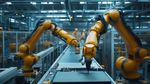
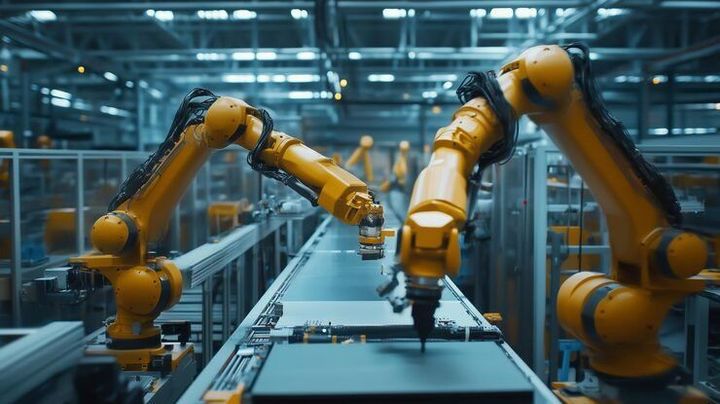
An industrial robot normally consists of several connected parts. These can include a mechanical arm, joints, motors, controllers, sensors, a power system, and an end effector. The end effector is the device attached to the robot arm that interacts with an object, such as a gripper, welding tool, suction device, or inspection instrument.
Industrial robots are different from simple machines because they can be programmed to perform sequences of movements. Their operation depends on programmed instructions, feedback from sensors, and control systems that coordinate movement between different components.
Common Industrial Robot Designs
Several robot designs are used according to the movement required and the physical environment.
- Articulated robots use multiple rotary joints and have a structure that resembles a human arm.
- SCARA robots are commonly used for horizontal assembly and precise positioning.
- Cartesian robots move along straight linear axes and are often arranged in X, Y, and Z directions.
- Delta robots use linked arms connected to a common platform and can perform rapid picking and placement.
- Cylindrical robots operate around a cylindrical working area using combinations of rotary and linear movement.
- Collaborative robots, often called cobots, are designed with control and sensing features that can support certain tasks in spaces shared with people when appropriate safety measures are applied.
The choice of design depends on factors such as movement range, payload, accuracy, operating speed, workspace, tooling, and the type of production process.
Importance
Industrial robots matter because manufacturing often involves repetitive physical activities that require consistent movement. Robots can repeat programmed sequences for extended production periods while maintaining the same programmed motion parameters. This can help manufacturers organize production processes involving repeated handling, assembly, welding, or inspection.
Robotics also affects workers and surrounding communities. Some machines are used for tasks involving heat, fumes, sharp materials, heavy components, or repetitive physical movement. Moving such activities into controlled automated processes can change how people interact with manufacturing equipment and can shift human responsibilities toward programming, monitoring, quality control, equipment adjustment, and maintenance.
The technology is also relevant to small and medium-sized manufacturing operations. Robot systems can be configured for different production volumes and tasks, although their suitability depends on the process, equipment layout, safety requirements, and available technical expertise.
Problems Addressed by Industrial Robots
Industrial robots are commonly applied to several manufacturing challenges:
- Repetitive movement: Robots can repeat programmed sequences with consistent motion.
- Material handling: Robotic arms can move components between defined locations.
- Hazardous environments: Robots can perform selected operations in controlled areas where heat, fumes, or other physical hazards are present.
- Precision tasks: Automated positioning can support processes that require repeatable movement.
- Production consistency: Programmed processes can reduce variation caused by changes in manual movement.
- Inspection: Cameras and other sensors can be integrated into robotic systems for selected inspection activities.
Main Features
Important features vary between robot types and applications. Common characteristics include programmable movement, multiple axes, position feedback, controller-based operation, configurable end effectors, and safety monitoring.
A robot's payload describes the mass it is designed to handle under specified operating conditions. Reach describes how far the robot can extend into its working area. Repeatability refers to how closely the robot can return to a programmed position under defined conditions.
| Feature | General meaning | Typical application |
|---|---|---|
| Payload | Load the robot can handle | Material handling |
| Reach | Available working distance | Assembly and welding |
| Axes | Independent movement directions | Complex positioning |
| Repeatability | Ability to return to a programmed position | Assembly and inspection |
| End effector | Tool attached to the robot | Gripping, welding, cutting |
| Controller | System that manages robot movement | Automated production |
| Sensors | Devices that detect position or conditions | Safety and process monitoring |
Recent Updates
From 2024 through 2026, industrial robotics has continued moving toward more connected, sensor-based, and flexible production systems. Developments in artificial intelligence, machine vision, digital manufacturing software, and industrial networking have influenced how robots are integrated into production environments.
Artificial Intelligence and Machine Vision
AI-based systems and machine vision are increasingly being combined with robotics for tasks that require visual interpretation. Cameras can capture images of components, while software can analyze characteristics such as position, shape, orientation, or visible defects.
These systems can support applications such as robotic picking, inspection, sorting, and adaptive handling. Their performance depends on camera quality, lighting, software configuration, training data where applicable, and the characteristics of the production environment.
Collaborative Robotics
Collaborative robotics continues to develop as manufacturers examine ways to combine robotic movement with human activities. Collaborative robots generally incorporate force sensing, speed monitoring, protective functions, or other controls intended for specific operating conditions.
The term collaborative does not mean that every robot can operate beside people without additional assessment. The actual application requires consideration of the robot, tooling, payload, movement, workspace, and foreseeable hazards.
Connected Manufacturing
Industrial robots are also becoming more connected to factory information systems. Industrial Ethernet, sensors, production monitoring platforms, and machine data systems can allow operational information to move between equipment and software.
This development supports condition monitoring and data analysis. Maintenance teams can examine information such as operating cycles, temperature, vibration, alarms, and other parameters when suitable sensors are available.
More Flexible Production
Manufacturers are also examining robotic systems that can be reprogrammed for different products or production stages. Modular tooling, software-based configuration, vision systems, and improved programming interfaces can make certain robotic cells more adaptable to changing production requirements.
Laws or Policies
In India, industrial robot deployment is influenced by workplace safety requirements, electrical rules, machinery-related practices, and sector-specific regulations. The exact requirements depend on the industry, equipment, workplace, and type of operation.
The Occupational Safety, Health and Working Conditions Code, 2020 provides a broader framework concerning occupational safety and working conditions. Its application should be considered alongside applicable rules and regulatory requirements relevant to a particular workplace.
Machine Safety
Industrial robot installations normally require a structured safety assessment. Important considerations can include restricted areas, emergency stopping, guarding, interlocking, access control, electrical safety, and procedures for maintenance activities.
Indian workplaces may also refer to applicable Bureau of Indian Standards publications and internationally recognized robotics safety standards. Standards such as ISO 10218 address safety requirements for industrial robots and robotic systems, while ISO/TS 15066 provides guidance associated with collaborative robot applications.
Safety requirements can differ according to the machine configuration and process. A qualified safety professional or relevant authority should determine the requirements for a specific installation rather than relying only on general information.
Tools and Resources
Several tools can help readers understand industrial robotics and evaluate how a robotic system works.
Robot Simulation Software
Simulation platforms allow users to create virtual robot cells, test movement paths, examine reach, and identify possible interference before physical installation. These tools are commonly used in robotics engineering, production planning, and training.
Robot Programming Interfaces
Robot manufacturers provide programming environments that allow movement sequences, inputs, outputs, and process instructions to be configured. The exact interface differs between robot controllers and applications.
Machine Vision Systems
Machine vision tools combine cameras, lighting, image processing, and software. They can be used to identify component locations, inspect selected characteristics, or guide robotic movement.
Maintenance Records
A structured maintenance record can contain information such as operating hours, inspection results, lubrication schedules, alarms, component replacement history, and observed abnormalities. Such records help organizations track equipment condition over time.
Digital Monitoring Platforms
Industrial monitoring platforms can collect information from connected machines and display operating parameters. Depending on the installation, these systems may support trend analysis for temperature, vibration, cycle counts, alarms, and other measurements.
Maintenance Practices
Industrial robot maintenance generally includes several routine activities:
- Visual inspection of cables, connectors, guards, tools, and mechanical components.
- Checking unusual noise, vibration, temperature, or movement.
- Reviewing controller alarms and recorded operating information.
- Inspecting lubrication and mechanical components according to manufacturer instructions.
- Checking safety devices and emergency stopping functions.
- Examining end effectors for wear or damage.
- Confirming that programmed positions remain appropriate after maintenance or equipment changes.
Maintenance intervals depend on robot design, operating conditions, workload, environmental exposure, and manufacturer specifications. Electrical isolation and appropriate safety procedures are important when personnel enter hazardous areas or work on equipment.
FAQs
What is an industrial robot?
An industrial robot is a programmable machine designed to perform physical tasks in an industrial environment. It normally uses a mechanical structure, controller, motors, sensors, and an end effector to carry out programmed movements.
What are the main industrial robot designs?
Common industrial robot designs include articulated, SCARA, Cartesian, delta, cylindrical, and collaborative robots. Each design has different movement characteristics and is suited to particular working areas and applications.
How do industrial robots work?
Industrial robots work by receiving programmed instructions through a controller. Motors move the robot's joints or linear axes, while sensors can provide information about position, movement, or operating conditions.
What are industrial robots used for?
Industrial robots are used for applications such as welding, assembly, material handling, packaging, machine tending, painting, inspection, and palletizing. The appropriate application depends on the robot's capabilities and the production process.
How is industrial robot maintenance performed?
Industrial robot maintenance can include inspections, lubrication according to manufacturer instructions, cable and connector checks, safety-device testing, alarm review, and examination of end effectors. Maintenance procedures vary according to the robot model and operating environment.
Conclusion
Industrial robots combine mechanical systems, controllers, sensors, software, and specialized tools to perform programmed industrial tasks. Their designs range from articulated and SCARA systems to Cartesian, delta, cylindrical, and collaborative configurations. Recent developments have increased the use of machine vision, connected manufacturing, AI-assisted systems, and flexible robotic cells. Safe operation depends on appropriate risk assessment, applicable regulations, suitable equipment configuration, and planned maintenance.