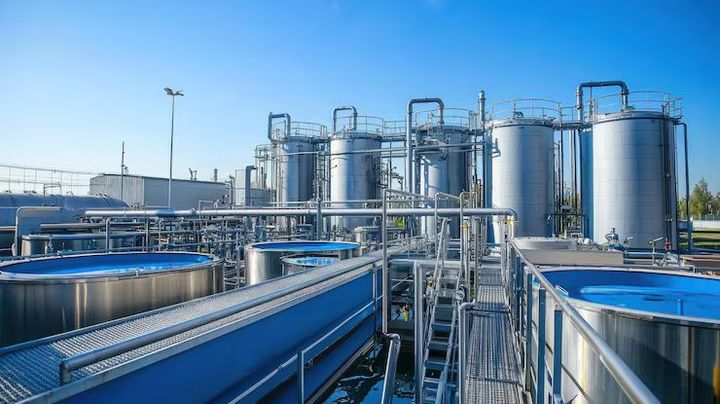
Industrial Reactors Guide With Refinery Processing and Chemical Engineering Insights
Industrial reactors are enclosed vessels or processing units designed to control chemical or physical reactions under defined conditions. They are widely used in refineries, chemical plants, pharmaceutical manufacturing, food processing, polymers, energy production, and other industrial environments.
An industrial reactor can be as simple as a heated vessel for mixing materials or as complex as a continuously operated system with automated controls.
The basic idea behind a reactor comes from the need to make a reaction occur in a controlled environment. Temperature, pressure, mixing, residence time, feed composition, and heat transfer can all influence what happens inside the equipment. Chemical engineering developed methods for understanding these variables and applying them to large-scale industrial processes.
In refinery processing, reactors are used alongside separation equipment, heaters, pumps, compressors, heat exchangers, and storage systems. Refinery processes may use reactors to change the molecular structure of hydrocarbon streams so that they meet particular process requirements. Examples include catalytic conversion, hydrogen-related processing, and other controlled chemical transformations.
Industrial reactors can be classified according to how materials move through them and how the reaction is managed. Batch reactors process a quantity of material for a defined period, while continuous reactors receive feed and discharge processed material during operation. Other designs include continuous stirred-tank reactors, plug-flow reactors, fixed-bed reactors, fluidized-bed reactors, and specialized high-pressure vessels.
How Industrial Reactors Work
A reactor normally combines several controlled variables rather than relying on a single operating condition. Feed materials enter the system, reaction conditions are established, and the resulting products leave the reactor or remain inside until the process stage is completed.
Important operating factors include:
- Temperature, which can influence reaction speed and product formation.
- Pressure, which affects gases, liquids, and reactions involving volume changes.
- Mixing, which helps distribute heat and materials throughout the vessel.
- Residence time, which describes how long material remains in a continuous reactor.
- Catalysts, which can change reaction pathways and reaction rates without being consumed in the overall reaction.
- Heat transfer, which helps maintain the intended operating temperature.
The design must also consider materials of construction, internal components, instrumentation, pressure protection, maintenance access, and process control.
Importance
Industrial reactors matter because many materials used in everyday life begin with controlled chemical or physical processing. Fuels, polymers, coatings, fertilizers, solvents, specialty chemicals, and numerous industrial materials can involve reactor-based stages somewhere in their production chains.
Refinery processing is one important example. Crude-derived streams contain different hydrocarbon molecules, and processing systems use combinations of separation, conversion, treatment, and purification. Reactors can modify selected compounds before subsequent separation or finishing stages.
Problems Industrial Reactors Address
A controlled reactor environment helps industrial processes manage variables that would be difficult to control in an open system. The equipment provides a defined space where temperature, pressure, mixing, and material flow can be measured and adjusted.
Industrial reactor design also addresses challenges such as:
- Maintaining consistent reaction conditions.
- Managing heat generated or absorbed during reactions.
- Controlling material residence time.
- Handling high-pressure or high-temperature environments.
- Supporting continuous production processes.
- Reducing unwanted side reactions through controlled conditions.
- Integrating reaction stages with separation and purification equipment.
For chemical engineers, reactor design is closely connected with mass balances, energy balances, reaction kinetics, thermodynamics, fluid flow, and heat transfer. For the general public, the main concept is simpler: industrial reactors provide controlled environments where raw or intermediate materials can undergo specific transformations.
Reactor Types and Applications
Different industrial reactors are selected according to the characteristics of the process.
| Reactor Type | General Operating Pattern | Common Application Areas |
|---|---|---|
| Batch Reactor | Materials processed for a defined period | Specialty chemicals, formulations |
| Continuous Stirred-Tank Reactor | Continuous feed with continuous mixing | Chemical processing |
| Plug-Flow Reactor | Material moves progressively through a tube or channel | Continuous chemical reactions |
| Fixed-Bed Reactor | Reactants pass through a stationary catalyst bed | Refinery processing, chemical conversion |
| Fluidized-Bed Reactor | Solid particles are suspended by flowing fluid | Catalytic and thermal processes |
| High-Pressure Reactor | Reaction occurs under elevated pressure | Hydrogen-related and chemical processes |
No single reactor design fits every process. Selection depends on reaction kinetics, material properties, desired throughput, heat-transfer requirements, pressure conditions, catalyst behavior, and downstream processing.
Recent Updates
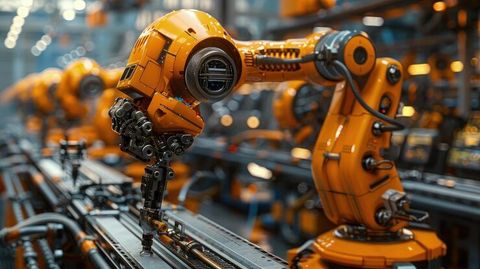
From 2024 through 2026, industrial reactor development has continued to focus on process efficiency, automation, monitoring, emissions management, and improved integration with digital control systems. Modern facilities increasingly combine physical process equipment with sensors, distributed control systems, computerized maintenance records, and analytical technologies.
Digital Monitoring and Automation
Industrial sensors can continuously measure temperature, pressure, flow, liquid level, composition, vibration, and other variables. Data from these instruments can be displayed through control systems, allowing operators to identify changes in process conditions.
Digital technologies are also being applied to process simulation and equipment analysis. Engineers can create models that represent reaction behavior, heat transfer, material movement, and equipment performance before making changes to a physical process.
Energy and Emissions Considerations
Energy management has become an important part of refinery processing and chemical engineering. Reactor systems may require heating, cooling, compression, or other energy-intensive operations, so engineers examine how heat can be transferred between process streams and how operating conditions affect overall energy use.
Another development involves greater attention to emissions monitoring and process integration. Facilities are examining ways to reduce unnecessary energy consumption, improve measurement of process emissions, and integrate reactors with broader environmental control systems.
Advanced Reactor Concepts
Research and industrial development also continue in areas such as intensified reactors, modular processing equipment, advanced catalysts, electrified heating, and digitally assisted process optimization. These approaches vary considerably by industry and application.
The broader trend is toward more measurable and interconnected process equipment. Instead of treating the reactor as an isolated vessel, modern chemical engineering increasingly considers the reactor as one component within an integrated production system.
Laws or Policies
Industrial reactors are generally subject to multiple layers of safety, environmental, pressure-equipment, workplace, and chemical-processing requirements. Exact requirements vary by country, industry, reactor design, operating pressure, materials, and the substances involved.
Process Safety Requirements
Rules governing industrial facilities commonly address hazards associated with pressure, temperature, flammable materials, toxic substances, corrosion, and uncontrolled reactions. Facilities may need documented operating procedures, inspection programs, emergency systems, and risk assessments.
Pressure vessels and related equipment can also be subject to engineering codes or national requirements. These frameworks may establish expectations for vessel construction, inspection, testing, pressure protection, and documentation.
Environmental Controls
Refinery processing and chemical manufacturing can be affected by rules covering air emissions, wastewater, waste handling, chemical releases, and environmental monitoring. Facilities may need permits or approvals depending on their activities and location.
Because regulatory systems differ internationally, a reactor design cannot be assessed using one universal legal framework. Engineers and facility operators normally consider the applicable national and regional requirements during design, construction, operation, modification, and inspection.
Tools and Resources
Several technical resources help readers understand industrial reactors and chemical engineering concepts. Process simulation platforms can model reaction systems, heat transfer, fluid flow, and separation stages. Engineering calculators can help with unit conversions, residence-time calculations, pressure relationships, heat-transfer estimates, and basic material balances.
Useful resources include:
- Process simulation software for representing industrial process flows.
- Reactor design calculators for introductory reaction and residence-time calculations.
- Chemical property databases for understanding material characteristics.
- Engineering standards databases for technical design information.
- Process flow diagrams for understanding how reactor systems connect with other equipment.
- Equipment inspection records for tracking condition and maintenance history.
- Digital control platforms for monitoring process variables.
- Technical textbooks and university learning resources for chemical engineering fundamentals.
For general readers, a process flow diagram is particularly useful because it shows how feed materials move through reactors, heat exchangers, separators, pumps, compressors, and other equipment.
FAQs
What is an industrial reactor?
An industrial reactor is equipment designed to provide controlled conditions for a chemical or physical reaction. It can regulate factors such as temperature, pressure, mixing, residence time, and material flow.
How are industrial reactors used in refinery processing?
Industrial reactors in refinery processing can modify hydrocarbon streams through controlled chemical reactions. They may work with catalysts, hydrogen, heat, pressure, or combinations of these conditions depending on the process.
What is the difference between batch and continuous reactors?
A batch reactor processes a defined quantity of material during a particular operating cycle. A continuous reactor receives feed and removes processed material while operation continues.
Why are catalysts important in chemical engineering?
Catalysts can provide an alternative reaction pathway that changes reaction behavior without being consumed in the overall reaction. Their properties can influence reactor size, operating conditions, selectivity, and process efficiency.
What factors affect industrial reactor design?
Important factors include reaction kinetics, temperature, pressure, feed composition, mixing, heat transfer, residence time, material compatibility, catalyst characteristics, safety requirements, and integration with other process equipment.
Conclusion
Industrial reactors provide controlled environments for chemical and physical transformations across industries, including refinery processing and chemical manufacturing. Their design combines principles such as reaction kinetics, heat transfer, fluid flow, thermodynamics, and process control. Recent developments increasingly emphasize digital monitoring, energy management, automation, and integrated process design. Regulatory requirements also play an important role in reactor safety, environmental protection, inspection, and operation.