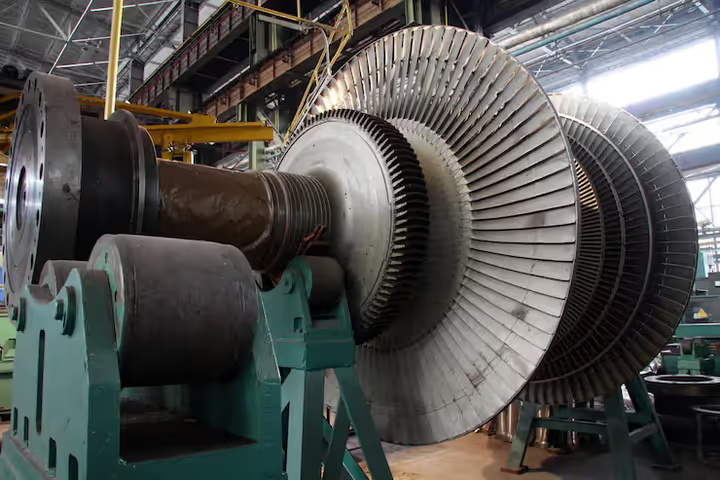
Industrial Gas Turbines: A Guide to Components, Power Generation, Efficiency and Maintenance
Industrial gas turbines are machines that convert the energy of fuel and compressed air into mechanical power. They are widely used in electricity generation, industrial facilities, process plants, and other applications where continuous mechanical or electrical output is required.
Understanding industrial gas turbines involves looking at their operating cycle, major components, applications, efficiency factors, emissions controls, and maintenance practices.
Context
What Are Industrial Gas Turbines?
An industrial gas turbine is a rotating machine that uses combustion gases to produce mechanical energy. Unlike small aircraft engines, industrial gas turbines are designed primarily for stationary applications, although related turbine technologies are also used in marine and other transportation systems.
The basic process involves three main stages: air compression, fuel combustion, and expansion through a turbine. Ambient air enters a compressor, where its pressure increases. Fuel is then introduced into a combustion chamber and mixed with the compressed air before controlled combustion takes place.
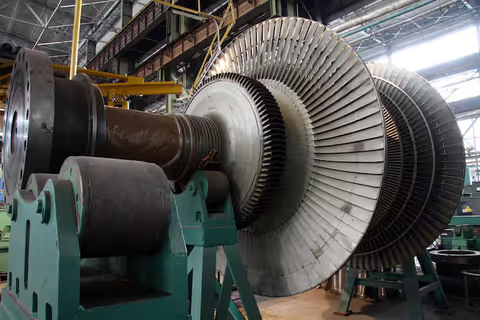
The resulting high-temperature gases expand through turbine blades. This expansion causes the turbine shaft to rotate. Part of the shaft power drives the compressor, while the remaining mechanical power can drive an electrical generator, pump, compressor, or another industrial machine.
Main Components
Several major components work together inside an industrial gas turbine:
Air inlet system: Guides atmospheric air toward the compressor while helping manage particles and environmental conditions.
Compressor: Raises the pressure of incoming air before combustion.
Combustion system: Mixes fuel and compressed air and maintains controlled combustion.
Turbine section: Converts the energy of hot gases into shaft rotation.
Exhaust system: Directs gases away from the turbine and may transfer heat to another process.
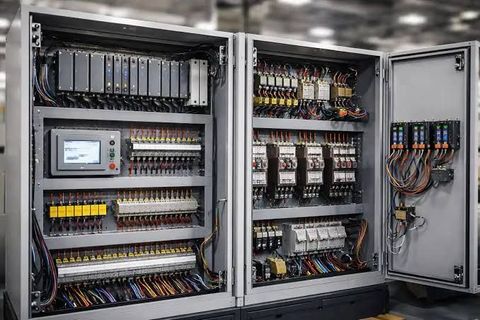
Control system: Monitors operating conditions and regulates fuel flow, temperature, pressure, and rotational speed.
The precise arrangement depends on the turbine design, fuel type, power rating, and intended application.
Basic Operating Cycle
Most industrial gas turbines operate according to the Brayton cycle. In simplified form, air is compressed, heat is added through combustion, the hot gases expand through the turbine, and exhaust gases leave the system.
A simplified sequence can be represented as follows:
| Stage | Main Process | Primary Result |
|---|---|---|
| 1 | Air intake | Atmospheric air enters |
| 2 | Compression | Air pressure increases |
| 3 | Combustion | Chemical energy becomes thermal energy |
| 4 | Expansion | Hot gases rotate turbine blades |
| 5 | Exhaust | Remaining gases leave the system |
This cycle allows gas turbines to produce power continuously while operating at high rotational speeds.
Importance
Role in Industrial Power Generation
Industrial gas turbines are important because they can provide mechanical or electrical power for large facilities. They may be installed in standalone power plants or integrated into larger energy systems.
In combined-cycle plants, the hot exhaust from a gas turbine passes through a heat recovery system. The recovered thermal energy can produce steam, which then drives a steam turbine. This arrangement allows energy from the exhaust stream to be used for another stage of power generation.
Gas turbines can also operate in combined heat and power arrangements. In these systems, heat that would otherwise leave with the exhaust can be used for industrial heating, steam production, or other processes.
Industrial Applications
Industrial gas turbines are used across several sectors. Typical applications include:
Electrical power generation
Mechanical drive for compressors
Pipeline compression
Process industries
Chemical and petrochemical facilities
Refineries
Large industrial plants
Combined heat and power systems
The choice of turbine depends on required output, operating conditions, fuel characteristics, environmental requirements, and expected operating patterns.
Factors Affecting Performance
Gas turbine output and efficiency can change with operating conditions. Ambient temperature, air pressure, humidity, inlet-air quality, turbine loading, and exhaust conditions can all influence performance.
Higher ambient temperatures generally reduce air density. Because the compressor receives less air mass for a given volume, power output can decline under some operating conditions. Inlet filtration, compressor cleanliness, combustion control, and appropriate maintenance practices can therefore influence long-term operation.
Recent Updates
Efficiency and Emissions Trends
From 2024 through 2026, industrial gas turbine development has continued to focus on efficiency, operational flexibility, digital monitoring, and emissions management. Manufacturers and operators have increasingly considered how turbine systems can work alongside changing electricity-generation patterns.
Modern turbine systems may incorporate advanced combustion arrangements designed to reduce nitrogen oxide emissions. These systems require careful control of fuel and air conditions because combustion temperature and mixture characteristics affect both performance and emissions.
Another area of development involves greater compatibility with different fuel compositions. Natural gas remains an important fuel for many gas turbine installations, while research and demonstration activities have examined hydrogen-containing fuels and other lower-carbon pathways.
Digital Monitoring
Digital monitoring has become increasingly important in industrial turbine operation. Sensors can track parameters such as exhaust temperature, vibration, pressure, rotational speed, fuel flow, and bearing conditions.
Data analysis can help identify changes in operating behavior before they become significant equipment problems. Digital systems can also support condition-based maintenance, where maintenance activities are influenced by measured equipment condition rather than relying only on fixed calendar intervals.
Flexible Operation
Electricity systems increasingly include variable renewable generation, which can change the way conventional power equipment operates. Gas turbines may therefore be required to adjust output more frequently in some applications.
This creates engineering considerations involving start-up cycles, load changes, thermal stresses, fuel flexibility, and inspection intervals. Turbine control systems are being developed with greater attention to these changing operational requirements.
Laws or Policies
Environmental Requirements in India
In India, industrial gas turbine installations can be affected by environmental regulations concerning air emissions, fuel use, noise, and industrial operation. The Ministry of Environment, Forest and Climate Change and the Central Pollution Control Board are important national institutions within India's environmental regulatory framework.
Specific requirements can vary according to plant type, location, capacity, fuel, and applicable environmental permissions. Large industrial installations may also be subject to conditions established through environmental clearance or consent procedures administered by relevant authorities.
Emissions Monitoring
Gas turbine operators may need to monitor pollutants associated with combustion. Nitrogen oxides, carbon monoxide, particulate matter, and other emissions can be relevant depending on the installation and applicable regulatory requirements.
Emission limits and monitoring procedures can change as regulations are updated. Industrial facilities therefore need to consider the rules that apply to their specific plant rather than relying on a single general limit.
Workplace and Equipment Safety
Industrial turbine facilities also operate within broader workplace and equipment-safety requirements. High temperatures, rotating machinery, pressurized systems, fuel lines, electrical equipment, and exhaust gases create potential hazards.
Safety procedures generally include controlled access, equipment isolation, inspection routines, emergency shutdown arrangements, fire protection, and appropriate personal protective equipment. Exact requirements depend on the facility and applicable Indian regulations and standards.
Tools and Resources
Technical Documentation
Manufacturer manuals, equipment drawings, maintenance schedules, operating instructions, and component specifications are important resources for understanding a specific industrial gas turbine.
Technical documentation can provide information about turbine configuration, operating limits, inspection intervals, lubrication systems, vibration limits, and control-system parameters.
Monitoring Instruments
Common monitoring tools include:
Vibration sensors for rotating components
Pressure sensors for compressor and combustion systems
Temperature sensors for exhaust and turbine sections
Flow meters for fuel and air systems
Gas analyzers for combustion emissions
Control-system data historians for operating records
The information collected by these instruments can be compared with established operating ranges to identify changes in equipment behavior.
Standards and Reference Materials
Engineering organizations and standards bodies publish technical documents relevant to gas turbine design, testing, safety, emissions, and operation. Examples include ISO standards and publications from organizations involved in power-generation engineering.
Plant operators may also use maintenance logs, inspection records, equipment databases, and condition-monitoring software to organize technical information.
FAQs
What are industrial gas turbines used for?
Industrial gas turbines are used mainly for electricity generation and mechanical drive applications. They can power generators, compressors, pumps, and other industrial equipment.
How does an industrial gas turbine work?
An industrial gas turbine compresses incoming air, mixes it with fuel in a combustion chamber, and expands the resulting hot gases through turbine blades. The rotating turbine shaft produces mechanical power.
What is industrial gas turbine maintenance?
Industrial gas turbine maintenance includes inspection, cleaning, lubrication checks, vibration monitoring, component examination, combustion-system assessment, and other activities intended to keep equipment within its specified operating condition.
How does a combined-cycle gas turbine work?
A combined-cycle gas turbine uses the gas turbine's exhaust heat to generate steam. The steam can then drive a separate steam turbine, allowing additional energy to be extracted from the same fuel input.
What factors affect industrial gas turbine efficiency?
Important factors include ambient temperature, inlet-air pressure, compressor condition, turbine loading, combustion conditions, exhaust temperature, fuel characteristics, and the overall condition of major components.
Conclusion
Industrial gas turbines convert fuel energy into mechanical power through compression, combustion, and gas expansion. They are used in electricity generation, mechanical-drive applications, combined-cycle plants, and industrial processes. Recent developments have focused on emissions control, digital monitoring, operational flexibility, and fuel flexibility. Their operation is also shaped by environmental, workplace, and equipment-safety requirements that vary according to the specific installation and jurisdiction.