Industrial Automation Design Facts About Robotics and Control Systems
Industrial automation design involves planning technologies that control and coordinate manufacturing activities.
It combines mechanical equipment, electrical components, software, sensors, and communication systems to manage industrial processes.
An industrial automation design company typically considers production requirements, equipment capabilities, operational conditions, and technical limitations when developing an automation architecture. The objective is to establish a structured system that supports consistent operations and effective equipment coordination.
Automation can be applied in industries such as automotive manufacturing, food processing, pharmaceuticals, electronics, packaging, and material handling. Each application requires a different combination of hardware, control technologies, and operating procedures.
Main Components of Automation Design
Industrial automation systems generally include several interconnected components:
Sensors: Collect information about temperature, pressure, movement, position, and other operating conditions.
Controllers: Process incoming information and execute programmed instructions.
Actuators: Perform physical actions through motors, valves, cylinders, and other mechanisms.
Communication networks: Transfer information between machines, controllers, and monitoring platforms.
Software: Provides programming, monitoring, data collection, and process management capabilities.
These components work together to coordinate industrial equipment and maintain defined operating sequences.
Importance of Industrial Automation Planning
Automation planning helps organizations understand how different technologies should work together. Without a clear design, equipment compatibility, communication problems, and unexpected operational limitations may affect implementation.
An industrial automation system integrator evaluates the relationship between existing machinery and proposed automation technologies. This assessment helps establish suitable connections between production equipment, control systems, and monitoring platforms.
Operational and Technical Considerations
Several factors influence automation planning:
Production capacity and expected operating cycles.
Equipment compatibility and installation requirements.
Electrical infrastructure and power availability.
Workplace safety and emergency control arrangements.
Communication protocols and data accessibility.
Maintenance requirements and future expansion possibilities.
These considerations help engineers develop an architecture that reflects actual manufacturing conditions rather than relying on generic equipment configurations.
Key Technologies Used in Automation Design
Modern industrial automation combines multiple technologies. Their selection depends on the production environment, process complexity, and required level of control.
Programmable Logic Controllers
Programmable Logic Controllers (PLCs) are widely used to control industrial machines and production sequences. They receive information from sensors, process programmed instructions, and activate connected equipment.
PLC programming company capabilities may involve developing control logic, configuring input and output modules, and establishing communication between different machines. PLC systems are commonly used in conveyors, packaging equipment, assembly lines, and processing machinery.
Supervisory Control and Data Acquisition
Supervisory Control and Data Acquisition (SCADA) systems provide centralized monitoring of industrial processes. Operators can observe equipment conditions, review alarms, examine process information, and monitor production activities.
SCADA system integration connects monitoring software with controllers, industrial networks, and field equipment. This arrangement supports better visibility across manufacturing operations.
Industrial Robotics
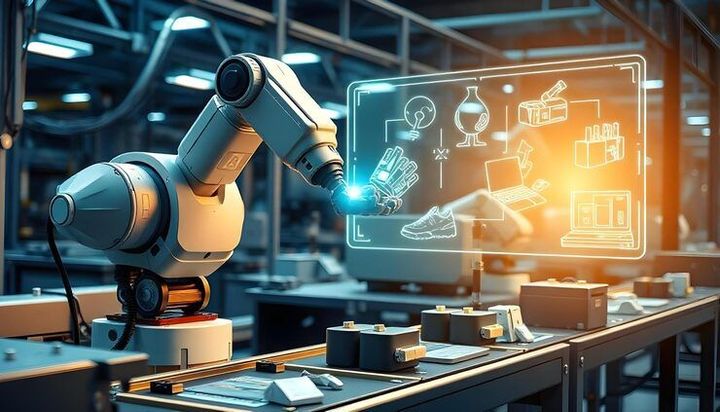
Robotic automation systems perform programmed physical activities such as welding, material handling, assembly, painting, and packaging.
Robot selection depends on payload capacity, working range, movement accuracy, operating speed, and surrounding workplace conditions. Proper integration also considers safety barriers, sensors, and communication with other production equipment.
Industrial Automation Design Process
Developing an automation architecture generally follows a structured engineering process. The exact activities vary according to the complexity and requirements of each project.
Main Development Stages
Requirement assessment: Identify production objectives, existing machinery, operational limitations, and expected system functions.
System architecture: Define equipment connections, control arrangements, communication networks, and software requirements.
Component selection: Identify suitable sensors, controllers, motors, actuators, and industrial computers.
Programming and configuration: Develop control logic, monitoring functions, and communication settings.
Testing and commissioning: Examine system responses, safety functions, operating sequences, and equipment coordination.
Documentation: Prepare technical drawings, operating instructions, configuration records, and maintenance information.
An industrial automation engineering firm may coordinate these activities with mechanical, electrical, and software engineering teams.
Comparison of Industrial Automation Technologies
Different automation technologies support different operational requirements.
Technology | Primary Function | Common Application |
|---|---|---|
PLC | Machine control | Assembly lines |
SCADA | Process monitoring | Industrial plants |
Industrial robots | Automated movement | Welding and packaging |
HMI | Operator interaction | Machine control panels |
Industrial sensors | Data collection | Process monitoring |
The technologies are often combined within custom industrial automation systems to support interconnected production activities.
Safety, Maintenance, and Future Requirements
Industrial automation design must consider workplace safety throughout development and implementation. Emergency stops, protective enclosures, machine interlocks, and appropriate safety controls help address operational hazards.
Industrial control system design should also account for equipment maintenance, electrical protection, and access to essential components. Documentation and regular inspections help identify potential problems before they interrupt normal operations.
Scalability and System Improvements
Manufacturing requirements can change as production processes develop. A scalable architecture allows organizations to evaluate additional machines, sensors, controllers, and communication capabilities.
Factory automation solutions may also incorporate industrial data platforms, remote monitoring, predictive maintenance technologies, and connected manufacturing equipment. However, introducing additional technologies requires consideration of cybersecurity, network reliability, compatibility, and operational requirements.
Frequently Asked Questions
What is industrial automation design?
It is the engineering process of planning equipment, controllers, software, and communication systems to automate industrial operations.
What does an industrial automation system integrator do?
An integrator coordinates different industrial technologies, ensuring that machinery, controllers, software, and communication networks operate together.
What technologies are commonly used in automation?
Common technologies include PLCs, SCADA platforms, industrial robots, sensors, HMIs, and industrial communication networks.
Why is automation system planning important?
Planning helps establish equipment compatibility, operational requirements, safety arrangements, maintenance procedures, and future expansion possibilities.
What is considered during automation design consultation?
Discussions generally cover production objectives, existing equipment, technical requirements, control architecture, workplace safety, and system integration.
Conclusion
Industrial automation design combines engineering principles, control technologies, and digital systems to coordinate manufacturing activities. Its development requires careful consideration of equipment selection, programming, communication, safety, and maintenance.
Understanding these elements helps organizations evaluate automation architectures and identify technologies appropriate for their operational requirements. A structured approach also provides a foundation for future system improvements and changing manufacturing needs.