Industrial Asset Management: Insights Into Monitoring, Reliability and Data Management
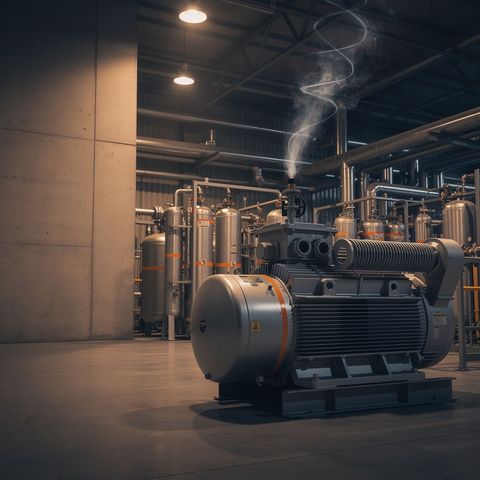
Industrial asset management is the organized approach to managing physical assets throughout their useful life. It covers machinery, production equipment, electrical systems, buildings, utilities, vehicles, tools, and other resources that support industrial operations.
By combining asset records, maintenance planning, condition monitoring, risk assessment, and operational data, industrial asset management helps organizations understand the condition, performance, and lifecycle requirements of their physical infrastructure.
Context
What Is Industrial Asset Management?
Industrial asset management involves planning, operating, maintaining, upgrading, and eventually replacing physical assets. Rather than treating maintenance as a separate activity, the approach considers an asset's entire lifecycle, from initial planning and installation through operation and eventual retirement.
The concept developed as industrial facilities became more complex and dependent on interconnected equipment. A single production process can contain thousands of individual assets, including motors, pumps, compressors, transformers, control systems, pipelines, boilers, conveyors, and safety equipment.
Managing these assets requires accurate information. An asset register can record identification numbers, location, specifications, installation information, maintenance history, inspection results, and operating conditions.
How Industrial Asset Management Works
A structured asset-management program begins by identifying physical assets and understanding their role within the facility. Assets can then be grouped according to function, criticality, operating conditions, and maintenance requirements.
Data from inspections, sensors, maintenance records, production systems, and financial planning can be brought together to support lifecycle decisions. The information can help organizations determine which assets require routine inspection, condition monitoring, refurbishment, or eventual replacement.
A typical process includes:
- Asset identification: Creating a record for each significant physical asset.
- Classification: Grouping assets according to function and importance.
- Condition assessment: Examining physical condition and operating behavior.
- Maintenance planning: Establishing preventive, predictive, or corrective maintenance activities.
- Risk assessment: Considering the consequences of asset failure.
- Lifecycle planning: Reviewing repair, refurbishment, upgrade, and replacement requirements.
- Performance review: Comparing asset condition and operation against defined objectives.
- Retirement planning: Managing assets when they reach the end of their practical operating life.
Major Asset Categories
Industrial facilities manage many different types of assets. Each category has different inspection methods, operating requirements, and failure mechanisms.
| Asset category | Examples | Common management focus |
|---|---|---|
| Rotating equipment | Pumps, motors, compressors | Vibration, lubrication, alignment |
| Electrical assets | Transformers, switchgear, cables | Temperature, insulation, electrical condition |
| Process equipment | Reactors, tanks, heat exchangers | Pressure, corrosion, integrity |
| Material handling | Conveyors, cranes, elevators | Mechanical condition and safety |
| Utilities | Boilers, chillers, air systems | Efficiency and operating condition |
| Buildings | Structures, roofs, facilities | Structural condition and maintenance |
| Instrumentation | Sensors, controllers, meters | Calibration and measurement accuracy |
| Vehicles | Forklifts, industrial vehicles | Mechanical condition and inspection |
Role of Lifecycle Thinking
An asset does not begin its lifecycle when a breakdown occurs. Decisions made during design, procurement, installation, commissioning, and operation can influence later maintenance requirements.
Lifecycle management considers the relationship between initial investment, operating requirements, maintenance, reliability, energy use, upgrades, and eventual retirement. This broader view can help organizations understand an asset beyond its immediate operating function.
Importance
Maintaining Industrial Continuity
Industrial production depends on interconnected equipment. A failure in one machine can affect upstream and downstream processes, particularly when the equipment is a critical part of the production system.
Industrial asset management provides a structured way to identify critical assets and establish appropriate inspection and maintenance strategies. It can also help organizations understand dependencies between different equipment groups.
Managing Equipment Condition
Asset condition changes over time because of mechanical wear, corrosion, electrical stress, temperature, vibration, contamination, operating loads, and other factors.
Condition monitoring tools can provide additional information about these changes. Vibration sensors, thermal cameras, oil analysis, ultrasonic instruments, and electrical testing equipment are examples of methods used to assess selected assets.
Supporting Risk-Based Decisions
Not every asset has the same importance. A failure of a small auxiliary pump may have a different consequence from a failure of a main power transformer or critical process vessel.
Risk-based asset management considers factors such as:
- Safety consequences
- Environmental impact
- Production interruption
- Equipment redundancy
- Regulatory requirements
- Repair complexity
- Asset condition
- Availability of replacement components
This helps organizations prioritize inspection and maintenance activities according to the consequences associated with different assets.
Improving Information Management
Large facilities can generate substantial amounts of equipment information. Paper records and disconnected spreadsheets can make it difficult to maintain a consistent history.
Computerized maintenance management systems and enterprise asset management platforms can connect asset identification, maintenance records, inspection results, spare-component information, and operational data.
Supporting Multiple Industries
Industrial asset management is relevant to many sectors, including:
- Manufacturing
- Power generation
- Oil and gas
- Mining
- Water and wastewater
- Chemical processing
- Food production
- Transportation
- Infrastructure
- Construction materials
Recent Updates
Digital Asset Management
From 2024 through 2026, industrial asset management has continued to move toward connected digital systems. Enterprise asset management platforms can combine equipment records with maintenance schedules, inspection data, sensor measurements, and operational information.
Digital asset records can also be linked to equipment drawings, manuals, photographs, inspection reports, and historical maintenance information.
Internet of Things Sensors
Industrial Internet of Things sensors are increasingly used to collect information from machinery. Sensors can monitor vibration, temperature, pressure, current, flow, humidity, and other variables.
The resulting data can be transmitted through industrial networks or wireless gateways. The value of sensor monitoring depends on appropriate sensor placement, measurement quality, communication reliability, and meaningful interpretation.
Predictive Analytics
Data analysis and machine-learning techniques are increasingly being used to examine asset condition and identify unusual patterns. Predictive models may consider historical failures, sensor readings, operating conditions, and maintenance history.
These models require appropriate data and validation. A statistical indication does not automatically establish that an asset will fail, so technical assessment remains important.
Digital Twins
Digital twin technologies can create digital representations of physical assets or industrial systems. Depending on the implementation, a digital twin may contain equipment specifications, sensor information, operating data, simulations, and maintenance history.
These models can be used to study asset behavior, evaluate operating conditions, and examine potential changes in a controlled digital environment.
Mobile Asset Management
Mobile applications allow maintenance personnel to access asset records, inspection checklists, maintenance instructions, and equipment histories from mobile devices.
Technicians can record inspection results and observations closer to the equipment. Integration with central maintenance databases can reduce delays between field observations and asset records.
Cybersecurity
As asset-management systems become more connected, cybersecurity has become an important consideration. Industrial organizations may need controls covering authentication, user permissions, network segmentation, system updates, backups, and data protection.
The appropriate cybersecurity approach depends on the technology architecture and the operational environment.
Laws or Policies
Asset Management Frameworks in India
India does not have one universal law governing every aspect of industrial asset management. Different assets and industries can be subject to separate requirements covering safety, electrical systems, environmental protection, equipment integrity, and workplace conditions.
Organizations therefore need to identify the regulations and technical standards applicable to their particular facility and asset categories.
Occupational Safety
The Occupational Safety, Health and Working Conditions Code, 2020 forms part of India's national framework for workplace safety and working conditions. Applicable requirements can vary by establishment and sector.
Industrial asset management can support these obligations by incorporating equipment inspections, safety-related maintenance, protective systems, and documented records into asset-management processes.
Electrical Assets
Electrical installations and equipment can be subject to requirements under India's electricity and electrical-safety framework. The Central Electricity Authority publishes regulations concerning safety and electric supply.
Industrial facilities should consider applicable requirements for transformers, switchgear, electrical installations, protection systems, and other electrical assets.
Environmental Requirements
Industrial equipment can also be affected by environmental regulations covering emissions, wastewater, hazardous materials, and industrial waste. The Central Pollution Control Board and State Pollution Control Boards administer or implement various environmental requirements.
Asset-management programs can incorporate environmental equipment such as pollution-control systems, wastewater-treatment equipment, and monitoring instruments into inspection and maintenance records.
Technical Standards
ISO 55000, ISO 55001, and ISO 55002 provide an international framework for asset management. ISO 55001 addresses requirements for an asset-management system, while related standards provide terminology and implementation guidance.
Other standards from ISO, IEC, ASTM, BIS, and sector-specific organizations may apply to particular asset categories.
Tools and Resources
Asset Management Software
Industrial organizations may use enterprise asset management or computerized maintenance management systems to maintain structured asset information. These platforms can include:
- Asset registers
- Maintenance schedules
- Inspection records
- Equipment histories
- Spare-component information
- Work documentation
- Maintenance performance indicators
- Lifecycle planning records
The appropriate platform depends on facility size, asset complexity, existing industrial systems, and information requirements.
Condition Monitoring Tools
Condition assessment can use different technologies depending on the equipment:
- Vibration analyzers
- Infrared cameras
- Ultrasonic inspection devices
- Oil-analysis instruments
- Electrical testing equipment
- Pressure and temperature sensors
- Portable data collectors
- Industrial IoT sensors
These tools provide measurements that can supplement physical inspections and maintenance records.
Planning and Analysis Resources
Asset criticality matrices can help classify equipment according to safety, production, environmental, and operational consequences. Risk registers can document identified risks and associated controls.
Useful technical resources include the Bureau of Indian Standards, Central Electricity Authority, CPCB, State Pollution Control Boards, ISO publications, IEC standards, and industry-specific technical bodies.
Maintenance teams can also use asset registers, inspection templates, lifecycle plans, failure-history databases, equipment manuals, and maintenance procedures as supporting resources.
FAQs
What is industrial asset management?
Industrial asset management is the systematic management of physical equipment and infrastructure throughout its lifecycle. It includes asset identification, operation, maintenance, condition assessment, risk management, upgrades, and retirement planning.
Why is industrial asset management important?
It helps organizations understand the condition and role of physical assets and organize maintenance and lifecycle planning around that information. It can also support safety, operational continuity, regulatory management, and structured decision-making.
What does an industrial asset management system include?
An industrial asset management system can include asset registers, maintenance records, inspection schedules, condition-monitoring data, risk assessments, lifecycle plans, equipment documentation, and performance information.
What technologies are used in industrial asset management?
Common technologies include enterprise asset management software, computerized maintenance management systems, industrial IoT sensors, vibration monitoring, thermal imaging, mobile applications, data analytics, and digital twin platforms.
What is ISO 55001 in industrial asset management?
ISO 55001 is an international standard specifying requirements for an asset-management system. It provides a framework for organizations to establish, implement, maintain, and improve systematic asset-management practices.
Conclusion
Industrial asset management provides a structured approach to managing machinery, infrastructure, utilities, electrical equipment, and other physical assets throughout their lifecycles. It combines asset records, maintenance planning, condition monitoring, risk assessment, and operational information to support organized equipment management. Current developments include connected sensors, digital asset records, predictive analytics, digital twins, mobile tools, and increased attention to cybersecurity. In India, asset-management activities may be influenced by occupational safety, electrical, environmental, industry-specific regulations, and international asset-management standards.