Humidity Controlled Facilities Guide for Stable Environmental Conditions and Operations
Humidity controlled facilities are buildings or enclosed spaces designed to maintain a defined level of moisture in the air. These environments use heating, cooling, ventilation, dehumidification, humidification, sensors, and control systems to keep relative humidity within a selected operating range.
They are used in manufacturing, food processing, electronics, laboratories, storage, museums, agriculture, and other environments where moisture can influence materials or processes.
Humidity is commonly expressed as relative humidity, which describes the amount of water vapor in the air compared with the maximum amount the air can hold at a particular temperature. Because warmer air can hold more water vapor than cooler air, humidity and temperature need to be considered together when planning an environmental control system.
The need for humidity controlled facilities comes from the effects of moisture on materials, equipment, products, and indoor conditions. Excessive humidity can contribute to condensation, corrosion, mold growth, material degradation, and changes in product characteristics. Very dry conditions can increase static electricity, cause certain materials to become brittle, and affect manufacturing processes.
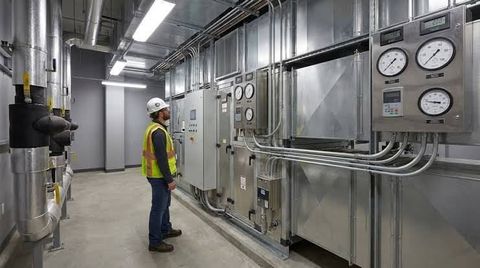
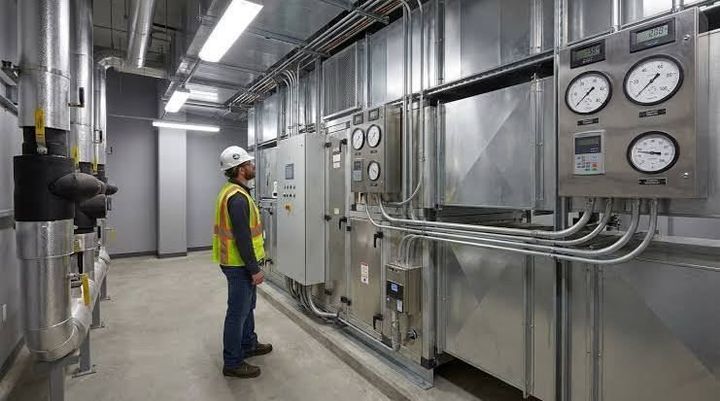
A controlled environment therefore requires more than a single humidifier or dehumidifier. A complete system can include air-handling equipment, sensors, ductwork, filters, heating and cooling equipment, moisture-control devices, insulation, vapor barriers, monitoring software, and automated controls.
How Humidity Control Works
A humidity control system first measures environmental conditions. Sensors can monitor relative humidity, temperature, dew point, and sometimes other air-quality parameters.
The control system compares measured conditions with predefined operating ranges. Depending on the readings, it can activate or adjust humidification, dehumidification, heating, cooling, or ventilation equipment.
Dehumidification can remove moisture from air through refrigeration-based systems, desiccant systems, or other methods. Humidification adds controlled moisture through technologies such as steam, atomized water, or evaporative systems.
Main Components
A humidity controlled facility may contain several interconnected elements:
Humidity sensors for environmental measurement
Temperature sensors for supporting humidity calculations
Dehumidifiers for moisture removal
Humidifiers for controlled moisture addition
Air-handling units for air circulation
Heating and cooling equipment
Filters for particulate control
Ductwork for air distribution
Control panels and automation systems
Data logging equipment
Insulation and vapor-control materials
The combination depends on the facility's purpose, building design, climate, internal heat sources, occupancy, and required environmental range.
Importance
Humidity control matters because moisture levels can affect how materials behave and how certain processes operate. A facility may need stable environmental conditions to protect stored materials, maintain production consistency, or reduce the possibility of condensation and corrosion.
The subject affects manufacturers, warehouse operators, laboratories, food processors, electronics producers, agricultural facilities, museums, archives, and building managers. The appropriate humidity range varies substantially between applications.
Effects of Excessive Humidity
High humidity can increase the amount of water vapor available for condensation when surfaces become cooler than the surrounding air. Persistent moisture can contribute to corrosion on susceptible metals and can create conditions favorable to biological growth.
In storage environments, moisture can also affect paper, wood, textiles, powders, packaging materials, and other products. Some materials absorb moisture from surrounding air, potentially changing their dimensions, strength, weight, or handling characteristics.
Effects of Low Humidity
Low humidity can also create operational challenges. Dry air can increase static electricity, which can be important in electronics manufacturing and environments containing sensitive equipment.
Some materials may lose moisture when exposed to dry air. Paper, wood, textiles, coatings, and certain biological materials can respond to changes in moisture content.
Maintaining a stable range rather than simply targeting either high or low humidity is therefore an important principle in environmental control.
Industries Using Humidity Controlled Facilities
Humidity controlled environments can be found in many sectors, including:
Electronics manufacturing
Pharmaceutical and laboratory environments
Food processing and storage
Textile production
Paper manufacturing
Museums and archives
Precision manufacturing
Warehousing
Agricultural storage
Battery-related manufacturing
Printing facilities
Research environments
Each application can require a different environmental specification. A warehouse for general materials may have considerably different humidity requirements from a precision manufacturing room.
Humidity and Temperature Relationship
Relative humidity changes when temperature changes, even when the amount of moisture in the air remains constant. For this reason, a humidity control system normally monitors temperature at the same time.
Dew point is another useful measurement. It indicates the temperature at which air reaches saturation and water vapor can begin to condense under appropriate conditions.
Understanding the relationship between relative humidity, temperature, and dew point helps facility operators identify potential condensation risks and design suitable environmental controls.
Recent Updates
From 2024 through 2026, humidity controlled facilities have continued to incorporate digital sensors, automated building controls, energy monitoring, improved dehumidification methods, and connected environmental management systems. The general direction is toward more continuous measurement and coordinated control rather than relying only on manual readings.
Digital Environmental Monitoring
Modern humidity control systems can use networked sensors positioned throughout a facility. Instead of relying on a single measurement point, multiple sensors can identify differences between production areas, storage zones, equipment rooms, and other spaces.
Recorded environmental data can be displayed through dashboards or building management platforms. Historical information can help facility teams examine humidity changes over time and identify recurring patterns.
Automated Control
Automation can connect humidity sensors with heating, cooling, ventilation, humidification, and dehumidification equipment. Control algorithms can adjust equipment operation according to measured conditions and predefined ranges.
Some systems can also generate alerts when environmental readings move outside specified limits. This can be particularly useful in facilities where environmental conditions need to remain within documented ranges.
Energy Management
Humidity control can require substantial energy because moisture removal, heating, cooling, and air movement all require equipment operation. Current facility planning increasingly considers humidity management together with overall energy performance.
Variable-speed fans, heat recovery, improved insulation, demand-based ventilation, and coordinated equipment controls can be incorporated where appropriate. The actual energy performance depends on building construction, climate, equipment design, and operating conditions.
Advanced Dehumidification
Desiccant-based dehumidification continues to be used in environments requiring relatively dry conditions. These systems use moisture-absorbing materials to remove water vapor from air.
Refrigeration-based dehumidification is another common approach. It cools air sufficiently for moisture to condense and then reheats or conditions the air as required.
The appropriate technology depends on the target humidity range, temperature, airflow, facility size, and operating conditions.
Laws or Policies
Humidity controlled facilities can be affected by building codes, workplace requirements, environmental regulations, energy-efficiency rules, fire protection requirements, and industry-specific standards. The exact requirements depend on the country, facility type, materials handled, and activities performed.
Building and HVAC Requirements
Heating, ventilation, and air-conditioning systems are generally subject to building and mechanical requirements. These may address ventilation, electrical installation, equipment placement, fire protection, ductwork, drainage, and indoor environmental conditions.
Humidity control equipment also needs suitable drainage where moisture is removed through condensation. Poor drainage can create secondary moisture problems within a building.
Workplace Conditions
Workplace rules may address indoor temperature, ventilation, air quality, equipment noise, and employee exposure to particular environmental conditions. Humidity may be considered alongside these factors rather than as an isolated measurement.
Facilities with specialized production processes may have additional environmental requirements related to contamination control, static electricity, product handling, or process stability.
Energy and Environmental Considerations
Large HVAC and humidity-control installations can fall under energy-management requirements depending on the jurisdiction and building category. Refrigeration and air-conditioning equipment may also be subject to rules concerning refrigerants and environmental impacts.
Facility operators need to consider applicable requirements during system design, installation, operation, inspection, and maintenance.
Tools and Resources
Several tools can support humidity-controlled facility planning and monitoring. Digital hygrometers measure relative humidity, while thermometers provide temperature information. Many modern instruments combine both measurements in a single device.
Dew-point meters can provide additional information about moisture conditions. Data loggers can record humidity and temperature at regular intervals, creating a historical record for analysis.
Useful resources include:
Digital hygrometers
Temperature sensors
Dew-point meters
Humidity data loggers
Psychrometric charts
Humidity conversion calculators
HVAC load calculation tools
Building management platforms
Environmental monitoring dashboards
Airflow measurement instruments
Preventive maintenance schedules
Facility inspection checklists
Psychrometric charts are particularly useful for understanding the relationship between temperature, humidity, dew point, enthalpy, and other air properties.
A simplified planning table is shown below:
| Environmental Parameter | What It Measures | Facility Relevance |
|---|---|---|
| Relative Humidity | Moisture relative to air capacity | General humidity control |
| Temperature | Air thermal condition | Influences relative humidity |
| Dew Point | Saturation temperature | Helps assess condensation |
| Airflow | Movement of conditioned air | Supports distribution |
| Moisture Load | Moisture entering or generated | Helps determine equipment capacity |
| Pressure | Difference between spaces | Supports controlled airflow |
| Data Interval | Frequency of environmental recording | Determines monitoring detail |
Facility Planning
Humidity control should be considered during building design rather than added only after construction. Insulation, vapor barriers, doors, windows, air leakage, drainage, equipment placement, and room separation can all influence moisture conditions.
Internal moisture sources should also be considered. People, open water, washing operations, steam equipment, production processes, and outside air can introduce moisture into a controlled environment.
A facility may therefore divide different activities into separate zones. This can make it easier to maintain different environmental ranges without conditioning the entire building to the same specification.
Maintenance and Calibration
Humidity sensors can gradually develop measurement errors. Calibration and verification procedures can help confirm that monitoring equipment continues to provide useful readings.
Filters, coils, fans, humidifiers, dehumidifiers, drains, and ductwork also require periodic inspection. Maintenance records can document equipment condition and environmental measurements over time.
FAQs
What are humidity controlled facilities?
Humidity controlled facilities are buildings or rooms designed to maintain a defined moisture range in the air. They use sensors, HVAC equipment, humidifiers, dehumidifiers, controls, and air-distribution systems to manage environmental conditions.
Why is humidity control important in industrial facilities?
Humidity control can help manage moisture-related issues such as condensation, corrosion, static electricity, material changes, and process variation. The required humidity range depends on the facility's materials and activities.
How do humidity controlled facilities maintain stable conditions?
Sensors measure humidity and temperature, while automated controls adjust equipment such as humidifiers, dehumidifiers, heating systems, cooling systems, and ventilation equipment. Data logging can provide historical environmental information.
What is the difference between relative humidity and dew point?
Relative humidity describes the amount of water vapor in air relative to its capacity at a particular temperature. Dew point is the temperature at which air reaches saturation under the relevant pressure conditions and condensation can begin.
What tools are used to monitor humidity controlled facilities?
Common tools include hygrometers, temperature sensors, dew-point meters, data loggers, psychrometric charts, airflow instruments, and building management platforms. These tools provide information for environmental monitoring and system analysis.
Conclusion
Humidity controlled facilities use coordinated environmental systems to maintain defined moisture and temperature conditions. Sensors, HVAC equipment, humidifiers, dehumidifiers, airflow systems, insulation, and automated controls can work together to manage environmental stability. Recent developments include connected monitoring, automated control, energy management, and advanced moisture-removal technologies. Facility requirements depend on building design, climate, materials, production processes, and applicable building, workplace, energy, and environmental requirements.