Bamboo Architecture Hotels Guide With Sustainable Design and Travel Insights
Bamboo architecture hotels are hospitality buildings that use bamboo as a visible design element, structural material, interior finish, or combination of these applications. Bamboo has been used in traditional construction across tropical and subtropical regions for centuries because it grows quickly, has a naturally tubular structure, and can be processed into different building components.
Modern bamboo architecture combines traditional construction knowledge with architectural planning, structural engineering, moisture management, and contemporary interior design. A hotel may use whole bamboo poles for structural frames, engineered bamboo panels for walls or ceilings, bamboo flooring, screens, furniture, roofs, or decorative elements.
The term sustainable design generally refers to an approach that considers resource use, energy demand, durability, indoor comfort, water management, and the environmental effects of materials throughout a building's life. Bamboo can contribute to these goals, but its environmental performance depends on cultivation, harvesting, treatment, transportation, processing, construction, and eventual maintenance.
How Bamboo Became Part of Hotel Design
Bamboo architecture hotels developed partly from regional building traditions and partly from growing interest in nature-oriented tourism. Architects began adapting traditional bamboo structures to contemporary hospitality spaces such as guest rooms, restaurants, reception areas, outdoor pavilions, and wellness facilities.
Modern projects may combine bamboo with stone, timber, concrete, glass, steel, or other materials. This mixed-material approach allows designers to use bamboo where its appearance, light weight, flexibility, or structural characteristics are suitable while using other materials where different performance requirements apply.
Importance
Why Sustainable Hotel Design Matters
Hotels use energy and water throughout their operation and require materials for construction, furniture, maintenance, and renovation. Sustainable design attempts to reduce unnecessary resource consumption while maintaining safety, comfort, accessibility, and useful building performance.
Bamboo architecture hotels are relevant because they demonstrate how renewable materials can be incorporated into hospitality environments. Their designs can also create a strong visual relationship between buildings and surrounding landscapes without depending entirely on conventional construction materials.
However, bamboo should not automatically be considered sustainable simply because it is a plant-based material. Proper treatment, responsible cultivation, transportation distance, connection design, fire protection, moisture control, and maintenance all influence the overall environmental profile.
Who Is Interested in Bamboo Architecture Hotels
The concept is relevant to several groups:
- Travelers looking for accommodation connected with nature and local architecture.
- Architects exploring renewable and bio-based construction materials.
- Hotel developers examining alternative building systems.
- Interior designers working with natural materials.
- Environmental researchers studying building material impacts.
- Local communities involved in bamboo cultivation and construction.
- Building authorities evaluating alternative structural materials.
Design Features Travelers May Notice
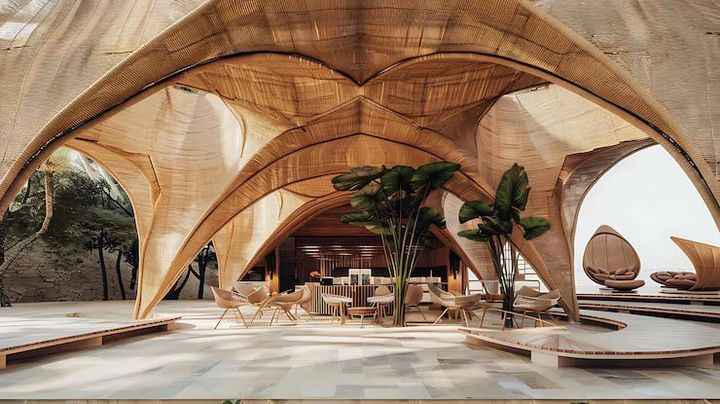
A bamboo architecture hotel can include features such as open-air corridors, shaded verandas, large roof overhangs, screened walls, natural ventilation, raised structures, bamboo ceilings, woven partitions, and locally influenced layouts.
These features can affect the travel experience by changing how guests interact with daylight, airflow, views, outdoor spaces, and surrounding vegetation. The architectural design can therefore become part of the destination experience rather than functioning only as a background to accommodation.
Recent Updates
Greater Interest in Engineered Bamboo
Recent architectural development has expanded beyond traditional bamboo poles. Engineered bamboo products can be manufactured into panels, boards, beams, flooring, and other standardized components.
This development gives designers more options for projects that require consistent dimensions or more conventional construction methods. It also allows bamboo to be integrated into contemporary architectural systems rather than being limited to visibly traditional structures.
More Attention to Structural Standards
Bamboo construction has also received greater attention from engineering and standards organizations. ISO 22156:2021 provides structural design provisions for certain buildings using round bamboo as a primary load-bearing material and includes considerations related to strength, serviceability, durability, connections, and design approaches. The standard is undergoing systematic review in 2026.
The standard does not cover every type of bamboo construction. In particular, it does not apply to several engineered bamboo products such as glue-laminated or cross-laminated bamboo, meaning designers need to identify the relevant technical requirements for the specific material and building system.
Current Sustainable Design Direction
Recent sustainable architecture increasingly considers the whole building rather than focusing on one material. Designers are examining passive cooling, daylight, water efficiency, renewable energy, material durability, waste reduction, and landscape integration alongside material selection.
For bamboo architecture hotels, this means bamboo is increasingly treated as one part of a broader environmental design strategy. A building may combine bamboo construction with efficient lighting, rainwater management, natural ventilation, solar energy, low-impact landscaping, and careful material selection.
Common Bamboo Hotel Design Approaches
| Design approach | Typical application | Main consideration |
|---|---|---|
| Whole bamboo poles | Frames, columns, roof structures | Treatment and structural detailing |
| Engineered bamboo | Panels, floors, beams | Manufacturing and material specification |
| Bamboo screens | Partitions and façades | Shading and ventilation |
| Bamboo interiors | Ceilings, walls, furniture | Moisture and surface protection |
| Hybrid construction | Bamboo with concrete, steel, or timber | Compatibility between materials |
| Passive design | Orientation, shading, ventilation | Local climate and building layout |
Laws or Policies
Building Regulations
Bamboo architecture hotels are generally subject to the building regulations applicable to the location where they are constructed. Requirements can cover structural safety, fire protection, electrical systems, sanitation, accessibility, emergency exits, occupancy, environmental performance, and construction quality.
The exact requirements vary by jurisdiction. A bamboo building that complies with one country's construction framework may still require different engineering documentation or approvals in another location.
Structural Design Requirements
Where bamboo forms part of the primary structure, authorities may require calculations, material testing, structural drawings, engineering review, or evidence that the proposed system meets applicable building requirements.
ISO 22156:2021 is an international reference for structural design involving certain round-bamboo systems, but it should not be treated as a universal replacement for local building regulations. Its stated scope includes certain one- and two-storey buildings and focuses on mechanical resistance, serviceability, and durability.
Fire and Moisture Considerations
Hotels have particular safety requirements because they accommodate sleeping guests and may contain shared spaces with high occupancy. Bamboo structures therefore need appropriate consideration of fire behavior, emergency access, detection systems, compartmentation, and other applicable requirements.
Moisture is another important issue. Bamboo can deteriorate when exposed to persistent damp conditions or poorly controlled water. Design details such as roof protection, drainage, ventilation, raised foundations, appropriate treatment, and inspection access can influence durability.
Tools and Resources
Planning and Design Tools
Several types of tools can help people understand or plan bamboo architecture projects:
- Building information modeling software for developing coordinated architectural and structural designs.
- Energy modeling tools for examining heating, cooling, daylight, and ventilation assumptions.
- Material calculators for estimating quantities of bamboo, timber, concrete, or other components.
- Structural analysis software for evaluating loads and connections.
- Lifecycle assessment tools for comparing environmental impacts across materials and building systems.
- Travel platforms for comparing accommodation locations, room information, accessibility, and nearby attractions.
- Mapping applications for examining transportation options, surrounding landscapes, and geographic context.
Information Resources
Architectural databases, academic publications, construction standards, tourism information platforms, and material research organizations can help readers investigate bamboo architecture in greater depth.
When evaluating a bamboo architecture hotel, useful information includes the building's construction approach, climate, material treatment, accessibility, transportation arrangements, environmental features, and maintenance practices. These details provide more meaningful context than simply describing a building as sustainable.
FAQs
What are bamboo architecture hotels?
Bamboo architecture hotels are accommodation buildings that incorporate bamboo into structural systems, exterior architecture, interior spaces, furniture, landscaping structures, or several of these areas. Some use traditional round bamboo, while others incorporate engineered bamboo products.
Why is bamboo used in sustainable hotel design?
Bamboo is a renewable plant material that can be incorporated into structural and architectural applications. Its environmental contribution depends on responsible cultivation, processing, transportation, durability, maintenance, and the performance of the overall building.
Are bamboo architecture hotels structurally safe?
They can be designed to meet applicable structural requirements when appropriate materials, engineering methods, connections, construction practices, and inspections are used. Safety depends on the complete building system rather than bamboo alone.
What should travelers look for in a bamboo architecture hotel?
Travelers may consider building design, climate suitability, room conditions, accessibility, transportation, ventilation, maintenance, and environmental features. Information about how bamboo is treated and incorporated into the building can also provide useful context.
Is bamboo architecture suitable for modern hotels?
Bamboo can be incorporated into modern hospitality buildings through structural poles, engineered products, interior finishes, screens, ceilings, furniture, and hybrid construction systems. The appropriate application depends on the building design, local climate, regulations, structural requirements, and material characteristics.
Conclusion
Bamboo architecture hotels combine traditional material knowledge with contemporary hospitality and sustainable design principles. Their environmental performance depends on the complete building system, including material sourcing, treatment, construction, energy use, durability, and maintenance. Recent developments have expanded bamboo architecture through engineered products, structural research, and broader interest in whole-building sustainability. For travelers and designers, understanding these factors provides a clearer view of how bamboo can influence both hotel architecture and the surrounding travel experience.