HVAC Services Basics With Heating and Cooling System Care and Maintenance Tips
Heating, ventilation, and air conditioning (HVAC) systems regulate indoor temperature, air movement, humidity, and, in some configurations, airborne particles.
They are used in residential buildings, offices, hospitals, hotels, factories, educational institutions, and commercial facilities. Understanding HVAC services basics helps property owners and facility managers recognize how heating and cooling equipment works and why regular maintenance matters.
An HVAC system may include a furnace, heat pump, air conditioner, ventilation fans, ductwork, filters, thermostats, and air distribution components. Not every building uses all these components. The system configuration depends on the climate, building design, occupancy, and heating or cooling requirements.
Heating equipment raises indoor temperatures when conditions become cold, while cooling equipment removes heat from indoor spaces. Ventilation introduces outdoor air and removes indoor air, supporting indoor air quality when the system is properly designed and operated.
Main Types of Heating and Cooling Systems
Different HVAC technologies suit different buildings and operating conditions.
Split air conditioning systems use indoor and outdoor units connected through refrigerant piping.
Heat pumps transfer heat between indoor and outdoor environments and can provide both heating and cooling.
Central HVAC systems distribute conditioned air through ductwork to multiple rooms.
Ductless mini-split systems provide heating or cooling to individual rooms or selected zones.
Furnaces generate heat using an appropriate energy source and distribute it through a building.
Chillers produce chilled water for cooling systems used in larger buildings and industrial facilities.
Ventilation systems introduce outdoor air and remove indoor air, sometimes operating independently of temperature-control equipment.
System selection depends on building size, climate, energy availability, insulation, operating schedules, and installation requirements.
Essential HVAC Components
Understanding the main components helps explain how heating and cooling equipment operates.
The thermostat measures or receives information about indoor temperature and signals the system when heating or cooling is required. Fans move air through the equipment, while filters capture selected airborne particles. Heat exchangers transfer thermal energy, and refrigerant circuits allow air conditioners and heat pumps to move heat between locations.
Ductwork and vents distribute conditioned air throughout a building. Drainage components remove condensate produced during cooling or dehumidification. Sensors and control boards coordinate equipment operation and may detect certain faults.
Importance
Why HVAC Maintenance Matters
Heating and cooling equipment operates through mechanical, electrical, and thermal processes. Dust accumulation, blocked filters, restricted airflow, damaged insulation, and poorly maintained components can affect performance and increase energy consumption.
Regular HVAC maintenance helps identify developing problems before they cause significant disruption. It can also support indoor comfort, reduce unnecessary equipment strain, and help maintain the intended airflow through occupied spaces.
Maintenance does not eliminate every fault or guarantee a particular energy saving. Its purpose is to keep equipment operating within appropriate conditions and identify issues that require attention.
Common HVAC Problems
Several issues can affect heating and cooling performance.
Restricted airflow may result from clogged filters, obstructed vents, or duct problems.
Uneven temperatures may indicate airflow imbalance, insulation problems, or unsuitable system settings.
Unusual noises can arise from loose components, fan problems, or mechanical wear.
Water leakage may result from blocked condensate drains, damaged connections, or other faults.
Poor cooling can be associated with dirty heat exchangers, incorrect settings, refrigerant problems, or equipment faults.
Frequent cycling may indicate control issues, sizing problems, or restricted airflow.
These symptoms can have several possible causes. Electrical faults, refrigerant handling, and internal mechanical repairs generally require appropriately qualified technicians.
Benefits of Routine System Care
Routine maintenance supports several practical objectives:
Maintaining suitable indoor temperatures.
Keeping filters and airflow paths in appropriate condition.
Identifying worn components and drainage problems.
Monitoring electricity consumption.
Supporting ventilation and indoor air quality.
Reducing avoidable interruptions to building operations.
Maintenance requirements vary by system type, manufacturer guidance, operating hours, and environmental conditions.
Recent Updates
Energy-Efficient HVAC Technology
During 2024–2026, HVAC development continued to emphasize energy efficiency, heat pumps, variable-speed equipment, and more responsive control systems. These technologies can adjust heating or cooling output to changing demand rather than relying exclusively on fixed-capacity operation.
Variable-speed compressors and fans may improve temperature control and reduce unnecessary energy use under suitable conditions. Actual performance depends on equipment selection, climate, installation quality, building insulation, and operating settings.
Smart Thermostats and Connected Monitoring
Smart thermostats and connected HVAC controls can provide scheduling, temperature monitoring, and selected energy-use information. Some systems allow users to adjust settings remotely or receive alerts about unusual operating conditions.
These features can help occupants manage heating and cooling schedules, but they do not automatically correct poor insulation, inadequate ventilation, or equipment faults. Temperature sensors must also be positioned and configured appropriately.
Indoor Air Quality and Filtration
Indoor air quality remains an important consideration in building management. HVAC systems may support air quality through outdoor-air ventilation, filtration, humidity management, and appropriate exhaust arrangements.
Filter selection should match the equipment's design and the required level of particle removal. A filter with excessive airflow resistance can interfere with system performance if the equipment is not designed to accommodate it.
Laws or Policies
Building and Mechanical Safety Requirements
HVAC installations may be subject to building codes, electrical safety rules, fire protection requirements, ventilation standards, and mechanical installation regulations. The applicable requirements depend on the country, building type, equipment, and intended use.
Commercial facilities may have additional requirements concerning ventilation, indoor air conditions, fire dampers, equipment access, and maintenance documentation. Installations should follow relevant local requirements and manufacturer instructions.
Refrigerant Handling and Environmental Rules
Air conditioners, heat pumps, and refrigeration systems may use refrigerants that are subject to environmental regulations. Depending on the jurisdiction and refrigerant type, rules can cover handling, leakage prevention, recovery, transport, and disposal.
Refrigerant circuits should not be opened or refilled by unqualified individuals. Incorrect handling can create safety risks, damage equipment, and contribute to environmental harm.
Electrical Safety and Maintenance
HVAC systems may contain high-voltage components, capacitors, moving fans, hot surfaces, and pressurized refrigerant circuits. Before routine cleaning, users should follow the manufacturer's instructions for safely switching off the equipment.
Internal electrical work, refrigerant repairs, and tasks involving hazardous components should be handled by qualified personnel. Building operators should maintain appropriate inspection records and follow the safety procedures applicable to their installations.
Tools and Resources
Basic HVAC Maintenance Checklist
A maintenance checklist helps occupants and facility managers organize routine observations without attempting repairs beyond their abilities.
Component | Maintenance activity | Typical consideration |
|---|---|---|
Air filter | Inspect and replace when required | Dust levels and manufacturer guidance |
Thermostat | Check settings and operation | Temperature accuracy |
Supply vents | Keep unobstructed | Air distribution |
Outdoor unit | Remove nearby debris safely | Airflow clearance |
Condensate drain | Monitor for leakage or blockage | Water drainage |
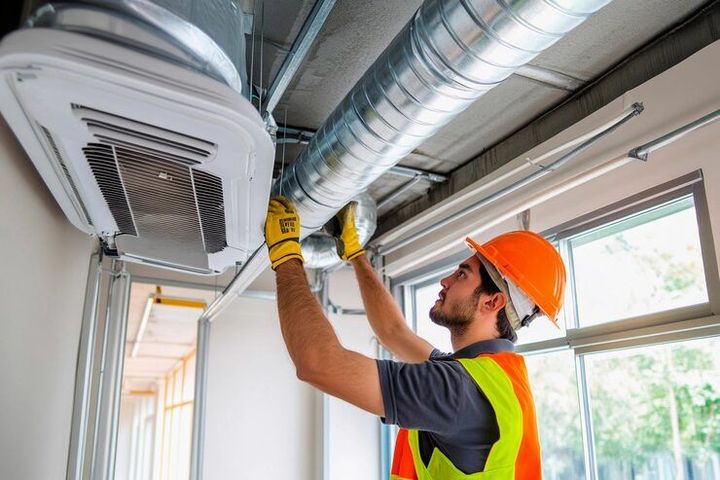
Ductwork | Inspect accessible sections | Leaks and visible damage |
Electrical components | Arrange qualified inspection | Connections and protective devices |
Heat exchangers | Arrange cleaning as required | Dirt accumulation and condition |
The appropriate inspection frequency varies by equipment and usage. Filters may require more frequent attention in dusty environments, while other tasks should follow the manufacturer's maintenance schedule.
HVAC Performance Monitoring
Several tools can help evaluate HVAC operation.
Thermometers measure indoor and supply-air temperatures.
Hygrometers measure relative humidity.
Airflow meters help assess air velocity and distribution.
Energy meters track electricity consumption where appropriately installed.
Pressure instruments help qualified technicians assess selected system conditions.
Digital thermostats record temperature settings and operating schedules.
These measurements provide useful context but do not independently establish the cause of every HVAC problem.
Improving Heating and Cooling Efficiency
Several practical measures can support effective system operation.
Set temperature controls according to occupancy and comfort needs.
Keep supply and return vents unobstructed.
Maintain appropriate door and window seals.
Use suitable window coverings to manage solar heat gain.
Avoid unnecessarily frequent changes to thermostat settings.
Schedule professional inspections according to equipment requirements.
Monitor unusual energy use, noise, odors, or temperature changes.
Building insulation and shading can also influence heating and cooling demand. Their effectiveness depends on the building's construction, climate, and ventilation requirements.
FAQs
What are HVAC services and what do they include?
HVAC services generally refer to activities involving the installation, inspection, maintenance, diagnosis, and repair of heating, ventilation, and air conditioning systems. The specific work depends on the equipment and building requirements.
How often should HVAC systems be maintained?
Maintenance frequency depends on the equipment, operating conditions, and manufacturer instructions. Filters may need more frequent inspection than internal components, which may require scheduled professional maintenance.
How can heating and cooling system efficiency be improved?
Appropriate temperature settings, clean filters, unobstructed airflow, suitable insulation, and well-maintained equipment can support efficient operation. Actual energy use also depends on climate, building design, and occupancy.
What are the signs that an HVAC system needs attention?
Uneven temperatures, unusual noises, water leakage, weak airflow, persistent odors, and unexpected changes in energy consumption may indicate a problem. The cause should be assessed before attempting repairs.
Why is HVAC ventilation important for indoor air quality?
Ventilation helps introduce outdoor air and remove indoor air, depending on the system design. Effective ventilation can help manage indoor pollutants, while filtration and humidity control address other aspects of indoor environmental conditions.
Conclusion
HVAC systems regulate indoor temperature, airflow, and other environmental conditions across residential, commercial, and industrial buildings. Regular heating and cooling system maintenance helps identify developing faults, maintain airflow, and support reliable operation. Energy-efficient equipment, smart controls, and suitable filtration can contribute to effective system management when correctly selected and maintained. Safe operation depends on following manufacturer instructions, observing applicable regulations, and using qualified personnel for specialized repairs.