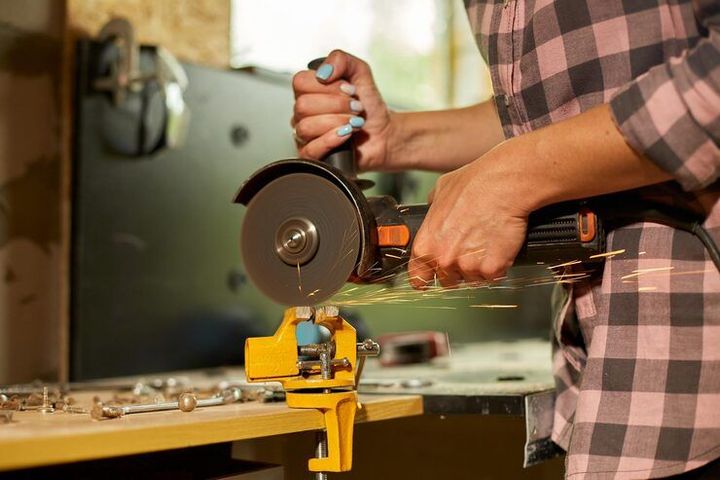
Grinder Machine Guide: Which Type Actually Fits Your Application?
A grinder machine is equipment designed to remove, shape, finish, or sharpen material through controlled abrasive action. Depending on its construction and purpose, a grinder machine can be used for metalworking, woodworking, surface preparation, tool sharpening, manufacturing, and other industrial applications.
Context
Grinding has existed for centuries in basic forms, using abrasive materials to shape harder materials. Modern grinding systems have developed into specialized machines with electric motors, abrasive wheels, belts, discs, tables, workholding systems, and computerized controls.
The term grinder machine covers several different machine categories. An angle grinder, bench grinder, surface grinder, cylindrical grinder, belt grinder, tool and cutter grinder, and centerless grinder can all perform grinding operations, but their working methods and intended applications differ.
Choosing a suitable type therefore begins with understanding the material, required surface condition, workpiece shape, dimensional requirements, production volume, and type of grinding operation. The machine should match the application rather than simply being selected according to its general grinding capability.
How grinding works
Grinding removes material through contact between an abrasive surface and a workpiece. Abrasive grains act as small cutting points that remove very small amounts of material as the abrasive moves across the surface.
The abrasive may be formed into a wheel, belt, disc, stone, or another configuration. Different abrasive materials and grain structures are suited to different workpiece materials and grinding conditions.
The basic process can involve several factors:
- Abrasive type
- Grain size
- Wheel or belt speed
- Workpiece material
- Contact pressure
- Material removal requirement
- Surface-finish requirement
- Cooling method
- Workholding arrangement
These factors influence how a grinding machine performs and how it should be operated.
Importance
The type of grinder machine used in an application can influence material removal, dimensional control, surface finish, operator handling, and production consistency. Using an unsuitable machine may make a task more difficult or create unnecessary variation in the finished workpiece.
Grinding is used across many manufacturing activities because it can process materials that require controlled material removal. It is also commonly used after other processes, such as cutting, machining, casting, or forming.
Matching the machine to the application
Different grinding machines are designed around different workpiece shapes and operating methods.
| Grinder machine type | Typical application | Workpiece characteristics |
|---|---|---|
| Angle grinder | Cutting, grinding and surface preparation | Portable or irregular work |
| Bench grinder | Sharpening and general grinding | Small tools and components |
| Surface grinder | Flat-surface finishing | Flat workpieces |
| Cylindrical grinder | External or internal cylindrical surfaces | Round components |
| Centerless grinder | Continuous cylindrical grinding | Round parts without conventional centers |
| Belt grinder | Material removal and finishing | Flat, curved or irregular surfaces |
| Tool and cutter grinder | Tool sharpening and shaping | Cutting tools |
| Internal grinder | Internal cylindrical surfaces | Holes and internal diameters |
This table provides a general classification. Actual machine capabilities vary according to machine design, abrasive equipment, workholding arrangement, and operating parameters.
Material considerations
The material being processed is one of the first factors to consider. Steel, stainless steel, aluminum, ceramics, composites, plastics, and other materials can respond differently to abrasive processes.
Abrasive selection also matters. Aluminum oxide, silicon carbide, cubic boron nitride, diamond, and other abrasive materials have different characteristics and applications.
The grinding method should therefore be selected alongside the workpiece material rather than independently.
Recent Updates
Grinding technology has continued to develop through automation, improved process monitoring, digital controls, and more precise machine systems. From 2024 through 2026, manufacturing discussions have increasingly focused on connected production equipment, automated inspection, energy management, and data collection.
Automation and digital controls
Modern grinding systems may incorporate computer numerical control, programmable settings, automated workholding, tool measurement, and process monitoring. These functions can reduce the amount of manual adjustment required during repeated production processes.
Digital controls can also help operators establish repeatable operating parameters. However, automation does not remove the need for appropriate machine setup, abrasive selection, inspection, and safe operating procedures.
Measurement and process monitoring
Grinding operations can require close dimensional control, particularly when components must meet defined engineering specifications. Modern equipment may therefore integrate measurement systems that monitor dimensions during or after grinding.
Sensors and digital monitoring can also provide information about spindle behavior, vibration, temperature, abrasive condition, or other process characteristics.
More specialized grinding systems
Manufacturing has also moved toward specialized equipment for particular materials and component geometries. CNC grinding machines, tool grinders, precision surface grinders, and automated cylindrical grinding systems can address applications requiring controlled geometry or repeatable processing.
The increasing use of advanced materials has also encouraged development of grinding methods suitable for ceramics, composites, hardened materials, and other difficult-to-process workpieces.
Laws or Policies
Grinder machines are generally subject to workplace safety requirements, machinery regulations, electrical requirements, and applicable technical standards. The exact legal requirements depend on the jurisdiction, machine category, workplace environment, and intended use.
Because regulations differ between countries and regions, businesses should refer to the current rules issued by the relevant workplace-safety and machinery authorities in their jurisdiction. Technical standards may also establish requirements for machine construction, guarding, abrasive wheels, electrical systems, noise, vibration, and other safety considerations.
Machine safety considerations
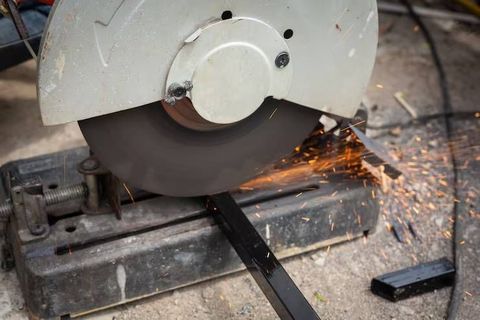
Grinding equipment can involve rotating components, abrasive wheels, sparks, dust, noise, and flying particles. Appropriate safeguards are therefore an important part of machine operation.
Common safety considerations include:
- Suitable machine guarding
- Correct abrasive-wheel installation
- Appropriate personal protective equipment
- Secure workholding
- Inspection of abrasive components
- Proper electrical connections
- Adequate ventilation where required
- Appropriate operator training
- Following the machine manufacturer's operating instructions
Abrasive wheels can be damaged by incorrect handling, excessive force, unsuitable mounting, or operating conditions outside their specified limits. Operators should follow the instructions and safety information supplied for the particular equipment and abrasive component.
Legal compliance should not be inferred from a general description of a machine. The applicable requirements should always be checked against the current rules and standards governing the specific workplace and equipment.
Tools and Resources
Selecting a grinder machine requires more than comparing machine names. Technical documentation, application information, abrasive specifications, measurement equipment, and production records can all contribute to an informed assessment.
Application assessment
An application worksheet can help organize the main requirements before selecting equipment. Useful fields include:
- Workpiece material
- Workpiece dimensions
- Required grinding operation
- Material removal requirement
- Surface-finish requirement
- Dimensional tolerance
- Production quantity
- Workholding method
- Abrasive type
- Cooling requirements
- Available workspace
This information can help distinguish between general-purpose and specialized grinding equipment.
Abrasive selection resources
Abrasive manufacturers and technical organizations publish information about grain types, wheel specifications, bonding systems, hardness, and recommended applications. These references can help explain why one abrasive configuration is suitable for a particular material while another may not be.
Grinding-wheel markings and technical documentation should be read carefully because specifications can relate to dimensions, abrasive composition, operating speed, and intended use.
Measurement equipment
Measurement tools can help verify the results of grinding operations. Depending on the application, these may include calipers, micrometers, surface-finish measurement equipment, gauges, height gauges, or coordinate measurement systems.
The appropriate measurement method depends on the dimensional and surface requirements of the workpiece.
Maintenance and inspection records
Machine records can document abrasive changes, inspections, adjustments, measurements, and operating observations. Such records can help identify recurring process variations and provide useful information when reviewing machine performance.
FAQs
What is a grinder machine used for?
A grinder machine is used to remove small amounts of material, shape surfaces, sharpen tools, prepare edges, or improve surface finish. The specific application depends on the machine type, abrasive, workpiece material, and operating method.
Which grinder machine is suitable for metalworking?
The appropriate grinder machine depends on the metal, workpiece geometry, required material removal, dimensional requirements, and surface finish. Angle grinders and bench grinders are commonly associated with general tasks, while surface, cylindrical, centerless, and CNC grinding machines are designed for more specialized applications.
What is the difference between a surface grinder and a cylindrical grinder?
A surface grinder is primarily designed to process flat surfaces. A cylindrical grinder is designed for cylindrical external or internal surfaces. Their workholding arrangements, abrasive movement, and machine configurations are therefore different.
How do I select an abrasive for a grinder machine?
Abrasive selection depends on the workpiece material, grinding operation, required finish, material removal, machine characteristics, and operating conditions. Technical specifications for the abrasive and machine should be considered together.
What safety precautions are important when using a grinder machine?
Important precautions include using appropriate guards, inspecting abrasive components, securing the workpiece, following specified operating limits, wearing suitable protective equipment, and following the machine's operating instructions. Workplace requirements may add further controls depending on the equipment and environment.
Conclusion
A grinder machine can perform many different material-removal and finishing operations, but individual machine types are designed around particular workpiece shapes, materials, and production requirements. Surface grinders, cylindrical grinders, centerless grinders, belt grinders, bench grinders, and other configurations differ in their operating methods and applications. Recent developments have introduced greater use of automation, digital controls, measurement systems, and process monitoring. Understanding the workpiece, abrasive, machine configuration, dimensional requirements, and applicable safety requirements provides the foundation for evaluating a grinding application.