Furniture Logistics Guide: Planning, Transportation, Warehousing, Delivery and Handling Methods
Furniture logistics is the organized process of planning, storing, transporting, delivering, and handling furniture from one location to another. It applies to household furniture, office furnishings, hospitality items, modular units, and large pieces that require careful movement. Because furniture can be bulky, heavy, fragile, or difficult to package, logistics planning focuses on space, protection, handling methods, routing, documentation, and delivery coordination.
How the process developed
Traditional furniture movement relied heavily on manual planning, paper records, local transport, and direct coordination between warehouses and destinations. As furniture distribution became more geographically spread out, businesses began using centralized warehouses, standardized packaging, route planning software, barcode systems, and digital inventory records.
Today, furniture logistics can involve several stages. A product may move from a manufacturing facility to a regional warehouse, then to a local distribution point, and finally to a residence or commercial building. Each transfer creates another point where accurate records and careful handling matter.
Importance
Why planning matters
Furniture logistics affects manufacturers, distributors, businesses, movers, property owners, and households. Poor planning can create damaged surfaces, missing components, inefficient vehicle space, delayed deliveries, or difficulty moving large items through doors, lifts, stairways, and narrow corridors.
A structured plan normally considers:
- Furniture dimensions and weight
- Packaging requirements
- Pickup and delivery locations
- Vehicle capacity
- Loading sequence
- Warehouse space
- Route conditions
- Access restrictions
- Handling equipment
- Delivery documentation
Transportation and handling challenges
Large furniture may require tail lifts, ramps, dollies, pallet trucks, lifting straps, protective blankets, corner guards, or specialized crates. The correct method depends on the furniture type and the surroundings.
Vehicle loading is another important factor. Heavy pieces are generally positioned so that the load remains stable, while fragile surfaces are separated from hard contact points. Items should be secured against movement during transportation.
Delivery planning also includes building access. Before a large item leaves the warehouse, its dimensions can be compared with doorways, corridors, staircases, elevators, parking areas, and loading zones. This reduces the possibility of an item reaching a destination where physical access is unsuitable.
Warehousing considerations
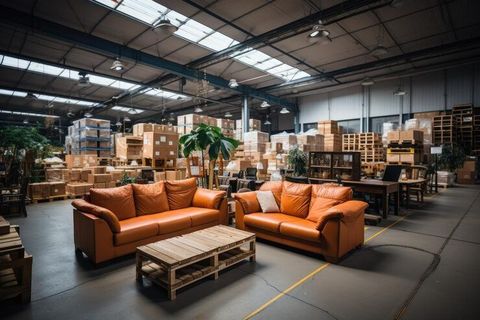
Furniture warehouses require a balance between storage density and safe access. Racks, floor locations, pallets, protective coverings, labels, and location codes can help organize different furniture categories.
A warehouse record can include item identification, quantity, dimensions, storage location, packaging condition, and movement history. Barcode scanning or RFID systems can connect physical inventory with digital records and reduce manual data entry.
Recent Updates
Digital logistics systems
India's logistics sector has continued moving toward integrated digital planning. The National Logistics Policy and PM GatiShakti framework support technology-based coordination, multimodal planning, and digital logistics infrastructure. Government information identifies platforms such as the Unified Logistics Interface Platform and Logistics Data Bank as parts of this broader approach.
For furniture logistics, this trend can mean greater use of digital shipment records, location tracking, electronic documentation, warehouse management systems, and route planning tools. These technologies can help different stages of a shipment share information.
E-way bill system developments
The electronic waybill system continues to receive technical and compliance updates. Official GST documentation records changes during 2024–2026, including API validations, additional validation measures, and other system adjustments. A 2026 update also states that certain proposed changes involving e-way bill closure and mandatory Ship-to GSTIN were placed on hold.
Another notable development has been stronger digital account security. The official e-way bill portal states that two-factor authentication became mandatory for taxpayers and transporters from April 2025.
Sustainability and space planning
Furniture logistics is also increasingly connected with packaging reduction, reusable protective materials, vehicle utilization, and route consolidation. These approaches can reduce unnecessary handling and make better use of warehouse and transport capacity. Their suitability depends on the furniture type, shipment volume, destination, and packaging requirements.
Laws or Policies
GST and e-way bills in India
In India, movement of goods is shaped by the Goods and Services Tax framework. Under Rule 138 of the Central GST Rules, an e-way bill is generally required for movement of a consignment exceeding ₹50,000 in the circumstances specified by the rules, subject to applicable exemptions. The document is generated electronically before movement begins.
The e-way bill normally contains information such as the recipient's GSTIN, delivery location, invoice or challan details, value of goods, HSN code, reason for transportation, transport document information, and vehicle number.
Validity is linked to transportation distance and the applicable movement category. The GST framework also contains specific rules for exemptions, corrections, cancellation, and different transportation circumstances. Businesses and transport operators should check the current official GST rules when preparing a shipment because requirements can change.
National logistics policy
The National Logistics Policy focuses on integrated logistics development, digitization, human-resource development, and coordination across transport systems. PM GatiShakti supports infrastructure planning and multimodal connectivity. These initiatives provide a policy framework for improving the movement of goods across India.
Furniture shipments may also be affected by state-level transport requirements, road restrictions, building access rules, packaging requirements, and tax documentation. The exact obligations depend on the nature and destination of the movement.
Tools and Resources
Planning tools
A simple furniture logistics worksheet can track item dimensions, weight, quantity, packaging type, warehouse location, vehicle assignment, destination, and delivery status. A loading plan can then arrange items according to size, fragility, delivery sequence, and available vehicle space.
Digital route-planning platforms can help map pickup and delivery points. Warehouse management systems can track inventory locations and movement history. Barcode or RFID tools can help identify furniture during receiving, storage, picking, and dispatch.
Government resources
The official GST e-way bill portal provides information about e-way bills, registration, generation procedures, validity, and system updates.
The Department for Promotion of Industry and Internal Trade provides information about PM GatiShakti, the National Logistics Policy, and related digital logistics initiatives.
Useful planning data
| Logistics area | Information to record | Common purpose |
|---|---|---|
| Inventory | Item ID, quantity, dimensions | Shipment identification |
| Packaging | Material, protection level | Damage prevention |
| Warehouse | Location, rack or floor position | Faster retrieval |
| Vehicle | Capacity, dimensions | Load planning |
| Route | Distance, access restrictions | Movement planning |
| Delivery | Address, contact, access details | Arrival coordination |
| Documentation | Invoice, challan, e-way bill | Regulatory records |
FAQs
What is furniture logistics?
Furniture logistics is the planning and management of furniture movement through transportation, warehousing, delivery, and handling stages. It covers both physical movement and the records needed to track each shipment.
How is furniture transportation planned?
Furniture transportation is planned by reviewing item dimensions, weight, packaging, vehicle capacity, route conditions, loading sequence, and destination access. Large or fragile items may require additional protective materials and handling equipment.
What is an e-way bill for furniture logistics in India?
An e-way bill is an electronic document used for specified movement of goods under India's GST framework. For eligible consignments above the applicable threshold, it generally needs to be generated before transportation begins, subject to exemptions and other rules.
Which tools help with furniture warehousing?
Warehouse management systems, barcode scanners, RFID equipment, inventory spreadsheets, location labels, and digital route-planning tools can help organize furniture storage and movement. The appropriate combination depends on warehouse size and shipment volume.
Why are furniture handling methods important?
Furniture handling methods help reduce physical damage and make movement safer. Techniques may include protective wrapping, controlled lifting, stable stacking where appropriate, securing loads, and checking access points before delivery.
Conclusion
Furniture logistics combines planning, transportation, warehousing, delivery, and careful handling to move furniture through several stages. Dimensions, packaging, vehicle capacity, storage layout, route conditions, and destination access all influence the process. In India, GST documentation and e-way bill requirements form an important part of regulated goods movement, while national logistics initiatives are supporting greater digital coordination. Digital inventory, route planning, and shipment records are increasingly used to organize furniture movement.