Four Bin Feeders: A Guide to Aggregate Bins, Material Flow, Feed Rate Control and Asphalt Plant Operation
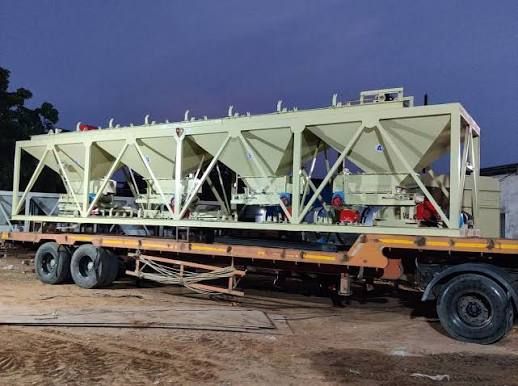
A four bin feeder is an aggregate feeding system used in asphalt and other material-processing plants to store, measure, and continuously feed several different sizes or grades of aggregate into a production process.
The system normally consists of four separate storage compartments, each containing a particular aggregate fraction. Controlled feeders beneath the bins regulate the movement of material toward a common collection conveyor.
The main purpose of a four bin feeder is to keep different aggregate sizes separated until they are required in a specified proportion. This arrangement gives plant operators greater control over the composition of the material entering the next processing stage. Depending on plant design, the system may handle crushed stone, gravel, manufactured sand, or other mineral materials.
Four-bin arrangements developed from the need to manage aggregate mixtures more systematically in continuous production. Instead of placing all incoming material into one storage area, multiple compartments allow individual fractions to be monitored and metered separately. This approach is particularly relevant to asphalt mixing plants, where aggregate grading affects the characteristics of the finished mixture.
Main Components
A typical four bin feeder includes storage bins, discharge gates, feeders, a collection conveyor, drive systems, and control equipment. Each bin may have a separate belt feeder or another metering mechanism underneath it.
The bins are generally arranged above a conveyor. Aggregate leaves each compartment at a controlled rate and falls onto the conveyor, which carries the combined material toward screening, heating, or mixing equipment.
| Component | Main function |
|---|---|
| Storage bins | Hold separate aggregate fractions |
| Feeders | Regulate material discharge |
| Gates | Help control the opening beneath each bin |
| Collection conveyor | Carries combined aggregate forward |
| Drive system | Provides mechanical movement |
| Control panel | Adjusts and monitors feeder operation |
| Sensors | Provide information about operation and material flow |
The exact configuration varies according to plant capacity, aggregate characteristics, and production requirements. Some systems use variable-speed drives so that individual feeder rates can be adjusted during operation.
Importance
Why Aggregate Separation Matters
Aggregate normally contains particles of different sizes. In asphalt production, the relative quantity of each fraction influences the grading of the mixture. A four bin feeder helps maintain separation before controlled feeding takes place.
Accurate feeding is important because a change in the quantity of one fraction can alter the overall mixture. If one aggregate stream becomes too high or too low, the resulting blend may move away from the intended grading range.
This is why four bin feeders are associated with process control rather than simple material storage. Their role is to create a controlled path between aggregate stockpiles and the next stage of production.
Role in Asphalt Plants
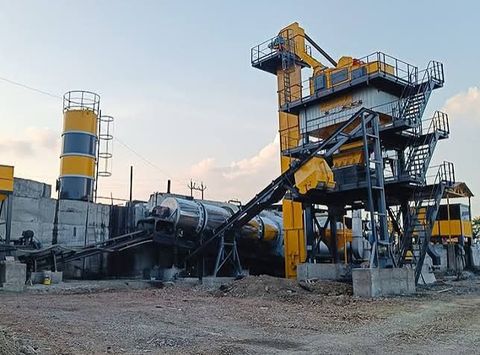
In a typical batch or continuous asphalt plant, aggregates may pass through several stages before becoming part of the final mixture. A simplified sequence can include:
Aggregate storage in separate compartments
Controlled feeding onto a collection conveyor
Screening or further separation where applicable
Heating and drying
Addition of mineral filler and binder
Mixing
Transfer to storage or transportation equipment
The four bin feeder is generally positioned near the beginning of this sequence. Its operation affects the quantity and proportions of aggregate entering subsequent stages.
Factors That Affect Material Flow
Aggregate does not always move through a bin in exactly the same way. Particle shape, moisture, size distribution, temperature, and material buildup can influence flow.
For this reason, feeder design considers both the physical characteristics of the material and the required feeding rate. Bin geometry, outlet dimensions, feeder speed, and gate position all influence how material leaves the storage compartment.
Operators also need to consider segregation. When particles of different sizes separate unintentionally during storage or movement, the material reaching the feeder may not have the same distribution as the original stockpile.
Recent Updates
Automation and Digital Monitoring
From 2024 through 2026, aggregate handling systems have increasingly incorporated electronic controls, variable-frequency drives, sensors, and plant monitoring software. These technologies allow feeder speeds and operating conditions to be observed from a central control system.
Digital monitoring can display information such as feeder speed, motor status, conveyor operation, and alarms. Depending on the plant configuration, data may also be recorded for production analysis and process documentation.
Automation does not remove the need for physical inspection. Material flow can still be affected by moisture, bridging, blockages, worn components, or changes in aggregate characteristics.
Energy and Process Efficiency
Modern plant design increasingly considers energy use across the entire production process. Controlled aggregate feeding can contribute to stable operation because downstream equipment receives a more consistent material stream.
Variable-speed drives are another common development. Instead of operating a feeder at one fixed speed, the drive can adjust rotational speed within its designed operating range. This can help match material movement with changing production requirements.
Improved Control Integration
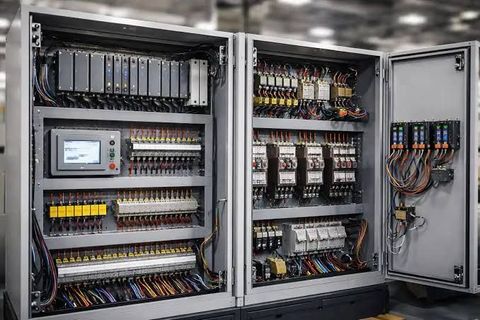
Four bin feeders are increasingly integrated with programmable logic controllers and centralized plant control systems. This allows several feeder drives and conveyor systems to operate according to programmed sequences.
A control system may also include interlocks. For example, a feeder may be prevented from operating when a downstream conveyor is stopped. Such arrangements can reduce the likelihood of material accumulating at unsuitable points in the process.
Laws or Policies
Industrial and Environmental Requirements
The rules governing four bin feeders depend on the country, plant type, location, production capacity, and materials being processed. In India, asphalt and aggregate plants can be subject to environmental requirements relating to particulate emissions, air quality, noise, and industrial operation.
Environmental regulation may involve the Central Pollution Control Board, State Pollution Control Boards, and applicable state-level requirements. Specific permissions and conditions can vary according to the installation and its location.
Workplace Safety
Industrial plants also need to address machinery and workplace safety. Areas around conveyors, feeders, motors, and rotating components can present mechanical hazards. Guarding, emergency stopping arrangements, electrical protection, and controlled access are therefore important considerations.
Operators should follow the applicable occupational safety requirements and plant-specific procedures. Electrical installations may also need to follow relevant Indian standards and regulations governing industrial electrical systems.
Road and Construction Standards
Where the four bin feeder is part of an asphalt production facility supplying road construction materials, aggregate grading and asphalt mixture requirements may be influenced by project specifications and standards issued by organizations such as the Indian Roads Congress and the Ministry of Road Transport and Highways.
The precise requirements depend on the road category, mixture type, project specification, and applicable contract documents.
Tools and Resources
Feeder Capacity Calculations
Basic feeder calculations can help estimate how much material moves through a system over a given period. Important variables can include belt width, belt speed, material density, and loading characteristics.
A simplified relationship can be expressed as:
Mass flow = volumetric flow × bulk density
Actual feeder calculations require equipment-specific information because loading conditions and material characteristics can vary considerably.
Aggregate Testing Resources
Laboratories and plant quality-control teams commonly use tools such as sieve analysis equipment, weighing systems, moisture measurement instruments, and sample collection procedures.
Sieve analysis is particularly relevant because it identifies the distribution of aggregate particle sizes. The resulting grading information can then be compared with the required mixture specification.
Control and Monitoring Systems
Programmable logic controllers, variable-frequency drives, load cells, proximity sensors, belt scales, and human-machine interfaces can form part of an automated aggregate feeding system.
Manufacturers' technical manuals, equipment drawings, electrical diagrams, calibration records, and plant operating procedures are also useful resources for understanding a specific four bin feeder installation.
FAQs
What is a four bin feeder used for?
A four bin feeder is used to store separate aggregate fractions and feed them into a processing system at controlled rates. It is commonly associated with asphalt plants and aggregate handling systems.
How does a four bin feeder work?
Each bin holds a particular aggregate fraction. A feeder beneath each bin regulates discharge, and the individual streams generally fall onto a common conveyor that carries the combined material toward the next production stage.
Why are four bins used in an asphalt plant?
Four bins allow several aggregate fractions to remain separated before controlled blending. This provides greater control over the proportions of different particle sizes entering the production process.
What factors affect four bin feeder accuracy?
Material moisture, particle size, bulk density, feeder speed, gate position, belt loading, and changes in aggregate flow can all influence feeding accuracy. Calibration and routine inspection are therefore important parts of controlled operation.
What equipment is connected to a four bin feeder?
A four bin feeder may be connected to conveyors, screening equipment, aggregate dryers, control panels, sensors, and other asphalt plant equipment. The exact arrangement depends on the plant's process design.
Conclusion
A four bin feeder is a controlled aggregate handling system designed to keep several material fractions separated and regulate their movement into an asphalt or processing plant. Its operation depends on bin design, feeder mechanisms, material characteristics, conveyor movement, and control systems. Recent plant developments increasingly involve automation, digital monitoring, and variable-speed control. Proper operation also depends on applicable environmental, electrical, machinery, and construction requirements.