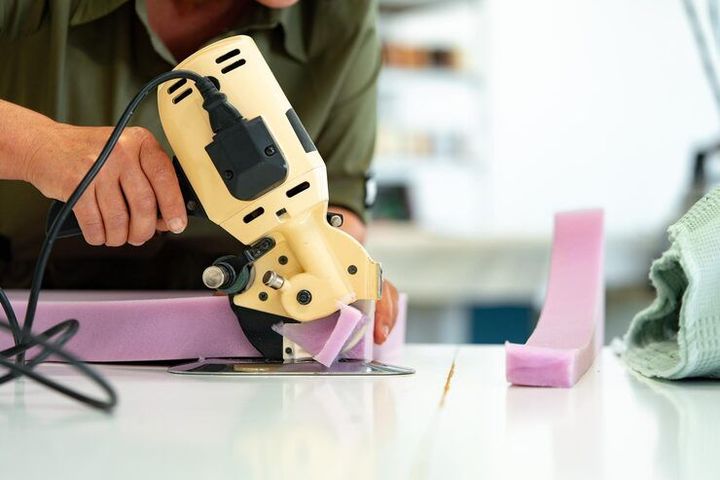
Foam Cutting Machine Information With Automated Cutting Systems and Manufacturing Solutions
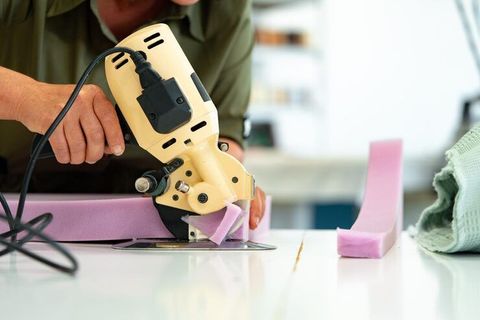
Foam cutting machines are industrial equipment designed to shape, divide, trim, and process foam materials into specific dimensions. These machines are widely used in furniture production, mattress manufacturing, automotive interiors, packaging, insulation, construction, and several other manufacturing industries.
They help transform large foam blocks or sheets into components that match particular product designs.
Foam is available in different forms, including polyurethane foam, polyethylene foam, polystyrene foam, memory foam, and flexible rubber foam. Each material has different physical properties, such as density, thickness, flexibility, and resistance to heat. These differences influence the selection of cutting technology and machine configuration.
Traditional foam cutting often involves manual tools, handheld blades, and basic mechanical equipment. Although these methods remain useful for small production activities, larger manufacturing operations increasingly use automated cutting systems to improve dimensional consistency and manage repeated production tasks.
A modern foam cutting machine can use horizontal blades, vertical blades, oscillating knives, hot wires, or computer-controlled cutting mechanisms. Some systems also integrate digital design software, automatic material positioning, and programmable cutting paths. These technologies allow manufacturers to process different foam shapes while maintaining consistent production requirements.
Importance
Why Foam Cutting Machines Matter in Manufacturing
Foam cutting machines play an important role in industries where accurate material dimensions and repeatable shapes are necessary. Manufacturers use them to prepare foam components for finished products, protective packaging, vehicle interiors, furniture, and building insulation.
Without appropriate cutting equipment, manufacturers may experience uneven edges, inconsistent thicknesses, material damage, and unnecessary production waste. Automated systems help address these challenges by following programmed measurements and controlled cutting movements.
Industries That Use Automated Foam Cutting Systems
Several industries depend on foam processing equipment for different manufacturing requirements.
Furniture manufacturing: Foam sheets are shaped into cushions, sofa components, chair padding, and decorative interior materials.
Mattress production: Cutting systems prepare foam layers with specific thicknesses, dimensions, and profiles.
Automotive manufacturing: Foam components are used in vehicle seating, headrests, interior panels, and sound insulation.
Packaging manufacturing: Protective foam inserts are shaped to hold electronic devices, industrial components, and fragile products.
Construction: Foam insulation boards and other building materials are processed into required shapes.
Healthcare equipment manufacturing: Specialized foam materials are shaped for equipment padding, positioning supports, and protective applications.
Common Manufacturing Challenges
Foam processing involves several practical challenges that affect production quality and material utilization.
Dimensional accuracy: Incorrect measurements can create fitting problems during product assembly.
Material waste: Poor cutting layouts may leave unused foam sections.
Production consistency: Manual cutting can create variations between repeated components.
Material compatibility: Different foam densities and compositions require suitable cutting methods.
Workplace safety: Blades, moving components, heat, and airborne particles require appropriate safety controls.
Automated foam cutting systems address many of these challenges through controlled movement, digital measurements, and repeatable operating procedures.
Types of Foam Cutting Machines
Different machine designs support different materials and manufacturing processes.
Machine Type | Cutting Method | Common Applications |
|---|---|---|
Vertical foam cutter | Straight vertical blade | Foam sheets and blocks |
Horizontal foam cutter | Horizontal blade movement | Mattress layers and foam slabs |
CNC foam cutting machine | Computer-controlled cutting | Accurate shapes and profiles |
Hot wire foam cutter | Heated wire | EPS and polystyrene foam |
Oscillating knife cutter | Rapid blade movement | Flexible foam and packaging |
Contour foam cutter | Programmable profile cutting | Curved and customized components |
3D foam cutting machine | Multi-axis cutting | Complex shapes and molded patterns |
The selection depends on the foam material, required dimensions, production volume, and shape complexity. A machine designed for rigid polystyrene may not be suitable for every flexible polyurethane application.
How Automated Foam Cutting Systems Work
Automated foam cutting systems combine mechanical equipment with digital controls. The operator generally prepares a design, enters measurements, positions the material, and selects the appropriate cutting program.
A typical production process involves the following stages:
Design preparation: A digital drawing defines the dimensions and shape of the required foam component.
Material positioning: Foam blocks or sheets are placed on the cutting table or feeding platform.
Program configuration: Machine settings are adjusted according to material thickness, density, and cutting requirements.
Automated cutting: The cutting head follows programmed movements to create the required shape.
Component inspection: Finished pieces are checked for dimensions, surface quality, and consistency.
Computer numerical control (CNC) technology helps reduce dependence on repeated manual measurements. However, the accuracy of the finished component still depends on machine calibration, blade condition, material characteristics, and correct program settings.
Important Machine Components
A foam cutting machine contains several components that work together during production.
Cutting assembly: Includes the blade, hot wire, knife, or other cutting mechanism.
Control panel: Allows operators to enter measurements and manage machine functions.
Working table: Supports foam materials during processing.
Motion system: Controls the movement of cutting heads and material platforms.
Drive mechanism: Uses motors, belts, guides, or other mechanical arrangements.
Safety equipment: Includes protective covers, emergency stops, sensors, and suitable guarding.
Software interface: Helps prepare designs and convert them into machine instructions.
The configuration varies according to the machine type. Industrial CNC equipment may include additional positioning systems and automated material handling components.
Recent Updates
Developments in Foam Cutting Technology
Recent developments in foam cutting machinery during 2024–2026 have generally focused on automation, digital integration, material efficiency, and production flexibility. Manufacturers are increasingly connecting cutting equipment with computer-aided design (CAD) and computer-aided manufacturing (CAM) systems.
This integration helps translate digital product drawings into machine movements. It can also simplify the preparation of different cutting patterns when production requirements change.
Digital Controls and CNC Integration
Modern CNC foam cutting machines increasingly use programmable controls to process complex shapes. Operators can adjust cutting paths, dimensions, and movement settings through digital interfaces.
Some systems also support multi-axis movements, allowing manufacturers to produce curved profiles and three-dimensional foam components. These capabilities are particularly relevant to furniture, automotive interiors, packaging, and specialized insulation production.
Material Optimization and Automated Handling
Material optimization is another important development. Digital nesting software arranges multiple shapes within a foam sheet or block to improve material utilization.
Automated feeding and positioning systems can also reduce repeated manual handling. Depending on the machine configuration, sensors may help identify material positions and monitor production operations.
Technology Trends Comparison
Development | Main Function | Manufacturing Relevance |
|---|---|---|
CNC programming | Controls cutting movements | Repeatable dimensions |
CAD/CAM integration | Connects design with production | Easier design changes |
Digital nesting | Arranges cutting patterns | Material utilization |
Automated feeding | Moves materials into position | Reduced manual handling |
Multi-axis cutting | Produces complex shapes | Customized components |
Machine monitoring | Tracks operating conditions | Production monitoring |
These developments do not mean every factory requires advanced automation. Smaller manufacturers may continue using manually operated equipment, while larger production facilities may integrate several automated processes into a single manufacturing line.
Laws or Policies
Machinery Safety Requirements
Foam cutting equipment is influenced by workplace safety rules, machinery standards, electrical safety requirements, and environmental guidelines. The exact requirements depend on the country where the machine is manufactured, installed, or operated.
There is no single worldwide regulation covering every foam cutting machine. However, international machinery safety principles provide a useful foundation for evaluating equipment design and workplace risks.
ISO 12100 is an important international standard covering machinery risk assessment and risk reduction. It provides general principles for identifying hazards and selecting appropriate protective measures.
Workplace Protection and Machine Guarding
Industrial facilities generally need to consider hazards associated with exposed blades, moving machine parts, electrical components, and material handling.
Relevant safety measures may include:
Protective guards around hazardous cutting areas.
Emergency stop controls in accessible positions.
Electrical isolation during maintenance.
Operator training and documented operating procedures.
Appropriate eye and hand protection.
Regular inspection of blades, wiring, and mechanical components.
In the United States, Occupational Safety and Health Administration (OSHA) requirements under 29 CFR 1910.212 address general machine guarding. These requirements are relevant to protecting operators from hazardous machine movements and cutting areas.
Environmental and Material Handling Considerations
Foam manufacturing facilities should also consider dust, scrap material, ventilation, and waste handling. Some cutting processes generate particles, while hot-wire systems may produce fumes depending on the material and operating conditions.
Applicable environmental requirements may cover workplace air quality, waste disposal, emissions, and material storage. Manufacturers should identify the relevant national and regional rules before establishing production operations.
Tools and Resources
Software for Foam Cutting Operations
Digital tools help manufacturers plan cutting activities, prepare designs, and manage production measurements. The appropriate software depends on the machine configuration and the complexity of the required foam components.
Commonly used software categories include:
CAD software: Used to create two-dimensional drawings and three-dimensional foam component designs.
CAM software: Converts digital drawings into instructions that compatible cutting machines can follow.
CNC programming software: Helps configure cutting paths, machine movements, and operating parameters.
Nesting software: Arranges multiple component shapes within available foam material.
Production planning software: Helps organize manufacturing schedules, material requirements, and production activities.
Measurement and Production Planning Tools
Accurate measurements are important when preparing foam components. Digital measuring instruments, thickness gauges, cutting templates, and dimensional inspection tools help operators check material specifications.
Manufacturers can also use spreadsheet-based production calculators to estimate foam requirements, calculate material utilization, and compare different cutting layouts. These tools support production planning but do not replace physical inspection or machine calibration.
Equipment Evaluation Resources
Before selecting industrial foam cutting equipment, manufacturers generally examine several technical documents and specifications.
Important resources include:
Machine operation manuals.
Electrical and mechanical specifications.
Cutting capacity documentation.
Material compatibility charts.
Maintenance schedules.
Safety assessment checklists.
CAD/CAM compatibility information.
Operator training documentation.
Reviewing these materials helps establish whether a particular foam cutting machine is suitable for the intended manufacturing process.
FAQs
What Is a Foam Cutting Machine Used For?
A foam cutting machine is used to divide, shape, and trim foam materials into specific dimensions. Applications include mattress manufacturing, furniture production, automotive interiors, protective packaging, and insulation processing.
How Does an Automatic Foam Cutting Machine Work?
An automatic foam cutting machine uses programmed instructions to control cutting movements. Depending on its configuration, it may use CNC technology, oscillating blades, hot wires, or other cutting mechanisms to produce specific shapes.
What Is the Difference Between CNC and Manual Foam Cutting?
Manual foam cutting requires operators to control most cutting movements and measurements. CNC foam cutting uses computer-generated instructions to control machine movements, making repeated patterns and complex shapes easier to reproduce.
Which Foam Materials Can Industrial Cutting Machines Process?
Depending on the machine design, industrial foam cutting equipment can process polyurethane, polyethylene, polystyrene, memory foam, and certain flexible foam materials. Material compatibility should be checked before selecting a cutting method.
What Safety Features Are Important in Automated Foam Cutting Systems?
Important safety features include emergency stop controls, blade guards, electrical protection, machine enclosures, appropriate ventilation, and protective sensors. Operators also need suitable training and maintenance procedures.
Conclusion
Foam cutting machines are important manufacturing tools used across furniture, automotive, packaging, construction, and other industries. Automated cutting systems combine mechanical equipment, CNC controls, and digital design technologies to process different foam materials and shapes. Recent developments emphasize production flexibility, material optimization, and improved machine integration. Equipment selection, workplace safety, material compatibility, and applicable regulations remain important considerations for manufacturing operations.