Explore Welding Manipulators With Positioning Technology and Manufacturing Details
Welding manipulators are industrial systems designed to move, position, and support welding equipment or large workpieces during fabrication. They are commonly used with tanks, pressure vessels, structural assemblies, pipes, steel sections, and other components that are difficult to rotate or reach manually.
Positioning technology allows the welding torch, workpiece, or both to move in controlled directions, helping create a more consistent working position. Understanding welding manipulators, their positioning technology, and manufacturing details helps explain their role in modern production environments.
Context
What Welding Manipulators Are
A welding manipulator is a mechanical positioning system used to place a welding head at a suitable location around a workpiece. Depending on the design, the system may move vertically, horizontally, longitudinally, or through controlled rotation. Some systems carry the welding torch, while others work together with turning equipment that rotates the component.
The main purpose is to maintain a suitable relationship between the welding torch and the joint. Large components can be difficult to move manually because of their weight or unusual dimensions. Controlled mechanical movement reduces repeated repositioning.
How The Technology Developed
Early industrial welding relied heavily on manual torch handling and basic fixtures. As fabrication became more standardized, powered positioners, columns, booms, rails, and rotating systems were introduced to improve access to welding joints.
Modern welding manipulators combine mechanical structures with electric drives, controls, sensors, and positioning systems. This connects welding equipment with broader industrial automation, where repeatable movement is important.
Common Configurations
Welding manipulators can be configured according to the shape, size, and production method of the workpiece. Common arrangements include:
- Column-and-boom manipulators for moving a welding head vertically and horizontally.
- Fixed-base systems for production areas where workpieces are handled in a defined position.
- Travelling manipulators that move along rails or tracks beside large assemblies.
- Rotating positioner combinations that coordinate torch movement with workpiece rotation.
- Customized systems designed around specific dimensions, access requirements, or welding processes.
Configuration depends on reach, load requirements, movement range, welding process, workspace layout, and control requirements.
Importance
Why Positioning Technology Matters
Positioning technology is important because welding quality depends partly on maintaining suitable torch movement, joint access, travel direction, and working distance. When a large component must be repositioned repeatedly, production can become more complicated and movement can interrupt the welding sequence.
A welding manipulator can keep the welding head aligned with a joint while the component remains controlled. This supports repeatable fabrication procedures and easier handling of large assemblies.
Who Uses Welding Manipulators
These systems are relevant to steel fabrication, pressure vessel and tank production, pipeline and pipe fabrication, shipbuilding, heavy equipment, energy-related equipment, industrial machinery, and general metal fabrication.
The equipment is relevant to operators, welding engineers, production planners, maintenance personnel, and quality-control teams. Positioning technology connects large physical components with controlled welding processes.
Practical Problems Addressed
Large workpieces create several practical challenges. Their size can make weld joints difficult to reach, while their weight can make frequent manual movement impractical. Irregular shapes may also require a changing welding position.
Welding manipulators address these challenges through controlled mechanical movement, providing access to different sections of an assembly and reducing unnecessary repositioning.
Key System Components
A typical welding manipulator may contain a structural column, boom, drive mechanism, rails or wheels, welding head interface, electrical controls, and safety devices. Some designs also include cameras, sensors, seam tracking, remote controls, or programmable movement.
| Component | Main function | Typical consideration |
|---|---|---|
| Column | Supports vertical structure | Height and rigidity |
| Boom | Carries welding equipment | Reach and load capacity |
| Drive system | Produces controlled movement | Speed and positioning accuracy |
| Rails or wheels | Enables travel | Track length and alignment |
| Control system | Coordinates movement | Manual or programmable operation |
| Sensors | Detect position or joint conditions | Measurement range and reliability |
| Safety system | Helps control hazardous movement | Interlocks and emergency stopping |
Recent Updates
Automation And Digital Controls
Recent development has focused on automation, programmable controls, and production integration. Digital interfaces can simplify movement settings, while programmable sequences support repeatability.
Manufacturing environments are also using more connected equipment. A manipulator may exchange operating information with welding power sources, positioners, sensors, or factory control systems. This supports coordination between mechanical movement and welding parameters.
Seam Tracking And Sensor Integration
Sensor-based seam tracking is an important area of development. Cameras, laser-based sensors, and other detection methods can help identify the location of a joint or detect changes in its position.
Sensing technology can help compensate for dimensional variation and maintain the relationship between the welding head and the joint. Capabilities depend on the equipment and welding process.
Energy And Manufacturing Efficiency
Manufacturers are also examining energy use and equipment utilization. Variable-speed drives, improved motors, digital controls, and precise movement can align operation with process requirements.
Modular designs are also becoming more common, using standardized mechanical and electrical elements that can be configured for different workpiece sizes and layouts.
Integration With Robotics
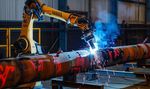
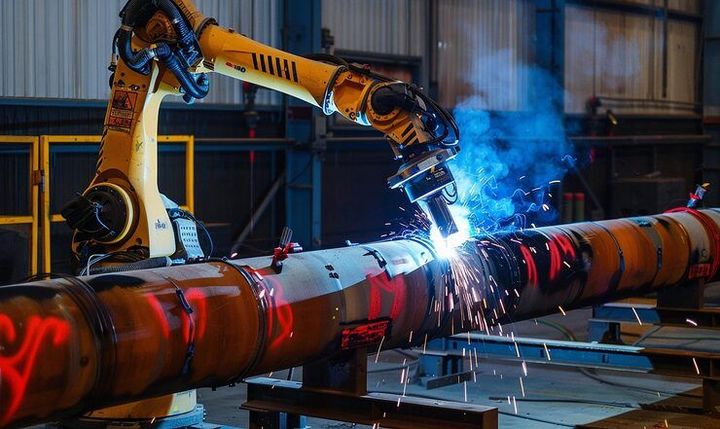
Welding manipulators increasingly exist alongside robotic welding systems rather than as completely separate technologies. A robot may perform torch movement while a positioner or manipulator controls the workpiece orientation.
This combined approach can be useful when a component has multiple welding joints or complex geometry. It also requires coordinated controls, suitable guarding, accurate setup, and careful programming.
Laws or Policies
Workplace Safety Requirements
Welding manipulators are industrial machinery, so their use is generally affected by workplace safety requirements in the country where the equipment operates. Rules commonly address machine guarding, electrical safety, emergency stopping, operator protection, maintenance procedures, and safe movement of heavy components.
Because requirements differ between jurisdictions, manufacturers and facility operators normally need to consult the applicable national workplace safety authority and machinery regulations. Equipment documentation should also identify operating limits, safety precautions, inspection requirements, and electrical specifications.
Welding And Machinery Standards
International and national standards can influence equipment design, welding procedures, electrical systems, and machinery safety. They may address welding quality, risk reduction, protective systems, construction, and inspection.
Government programs related to industrial modernization, manufacturing automation, energy efficiency, or workplace safety can also influence how companies plan equipment upgrades. Specific programs and eligibility conditions depend on the target country and can change over time.
Safe Operating Practices
Regardless of location, safe use generally requires trained personnel, appropriate guarding, inspection of moving components, and adherence to manufacturer instructions. Operators should understand the manipulator's load limits and movement controls before operating the equipment.
Welding involves heat, fumes, electrical energy, ultraviolet radiation, and other hazards. Protective measures should therefore be considered alongside manipulator safety.
Tools and Resources
Planning And Selection Tools
Practical resources can help teams plan a welding manipulator system. Equipment specifications can be reviewed alongside workpiece dimensions, reach, movement range, load capacity, welding process, and floor space.
Useful resources include:
- Load and reach calculation sheets
- Welding procedure documentation templates
- Equipment layout drawings
- CAD software for workspace planning
- Electrical and mechanical inspection checklists
- Welding standards databases
- Manufacturer operation and maintenance manuals
- Training materials for welding automation and positioning
Measurements That Matter
Important measurements include workpiece dimensions, weight, welding position, boom reach, vertical and horizontal travel, rotational range, and movement speed. These values help determine whether the system can reach the intended welding area.
Control requirements also matter. A basic installation may use manual controls, while an automated cell may require programmable movement, sensor feedback, data logging, and equipment integration.
Maintenance Resources
Maintenance planning usually includes inspection of drive systems, rails, bearings, cables, limit switches, control panels, structural components, and safety devices. Documentation can help track inspection intervals and identify changes in machine condition.
Maintenance records help teams understand equipment history and plan downtime.
FAQs
What is a welding manipulator?
A welding manipulator is a mechanical system that positions a welding torch, welding head, or related equipment around a workpiece. It is commonly used for large or complex fabrication where controlled movement is needed.
How does positioning technology work in welding manipulators?
Positioning technology uses mechanical drives, controls, and sometimes sensors to move the welding equipment or workpiece along defined paths. The system can provide vertical, horizontal, longitudinal, or rotational movement depending on its configuration.
What manufacturing details matter when selecting welding manipulators?
Important manufacturing details include structural dimensions, load capacity, boom reach, travel range, movement speed, control method, welding process compatibility, safety systems, and workspace requirements.
Are welding manipulators used with robotic welding?
Yes. Welding manipulators can work alongside robotic welding systems and positioners. Coordinated movement can help present different sections of a workpiece to the welding equipment.
What safety rules apply to welding manipulators?
Safety rules vary by jurisdiction, but commonly cover machine guarding, emergency stopping, electrical protection, load limits, operator training, inspection, and safe handling of moving equipment. Applicable national regulations and manufacturer instructions should be followed.
Conclusion
Welding manipulators combine mechanical movement, positioning technology, and welding equipment to support fabrication of large or difficult-to-position components. Their configurations range from column-and-boom systems to travelling and sensor-integrated equipment. Recent developments emphasize digital controls, sensing, automation, and integration with robotic welding cells. Understanding system structure, manufacturing details, operating limits, and applicable safety requirements provides a clear foundation for understanding their role in modern manufacturing.