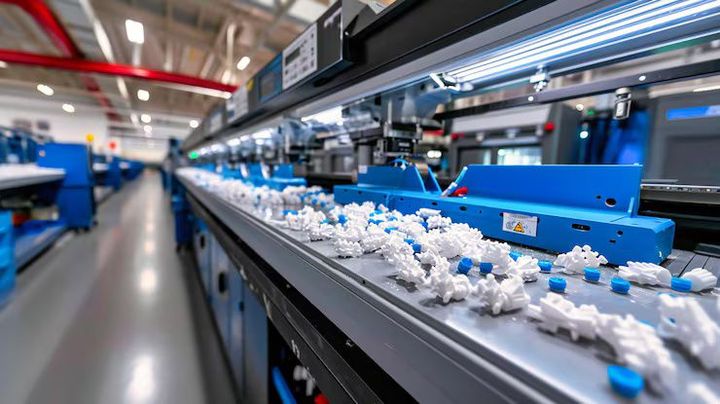
Explore PET Blow Molding Machines With Automated Production and Engineering Details
PET blow molding machines are industrial systems used to produce lightweight plastic containers from polyethylene terephthalate, commonly known as PET. These machines are widely associated with bottles and containers used for beverages, household products, personal care items, food packaging, and other everyday applications.
The development of PET blow molding machines followed the wider growth of plastic packaging and the need for containers that could be produced consistently at high volumes. Instead of forming each container manually, automated equipment controls important stages of production through mechanical systems, sensors, heating units, molds, and programmable controls.
A typical production cycle begins with a PET preform. A preform resembles a small plastic tube with a finished neck section. The machine heats the body of the preform until the material becomes suitable for stretching and forming. It is then transferred into a mold, where compressed air expands the heated PET against the internal mold surface.
How PET Blow Molding Works
The basic process can be understood through several connected stages:
- Preform feeding moves PET preforms into the production system.
- Heating raises the temperature of the preform body in controlled zones.
- Stretching extends the material vertically and helps distribute PET throughout the container.
- Blow molding uses compressed air to expand the heated preform inside a mold.
- Cooling helps the newly formed container retain its shape.
- Ejection removes the finished container for inspection and further handling.
The exact sequence varies according to the machine design, container dimensions, production capacity, and automation level.
Main Machine Components
A PET blow molding machine normally contains several major systems that work together. Heating modules prepare the preform, while the mold determines the external shape of the container. Stretching mechanisms control material distribution, and pneumatic equipment supplies the compressed air needed for forming.
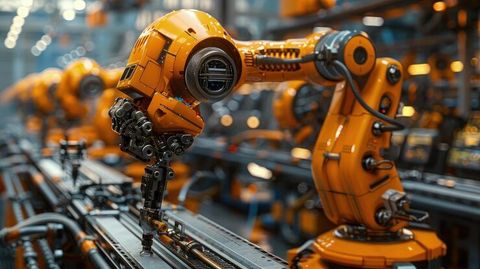
Sensors and programmable control systems monitor operating conditions. Conveyors, robotic mechanisms, or other automated handling equipment can move preforms and finished containers between stages. Some production lines also include inspection equipment that checks dimensions, appearance, or other characteristics.
Importance
PET blow molding machines matter because packaging production requires repeatable shapes, controlled material use, and coordinated manufacturing processes. A container must generally maintain its intended dimensions while remaining light enough for practical handling and transportation.
Automation can reduce the amount of manual handling required during repetitive production stages. It also allows machine settings to be monitored and adjusted through electronic control systems. This is particularly useful where production involves large numbers of similar containers.
Who Uses This Technology
The technology is relevant to manufacturers and packaging operations working with PET containers. Applications can include:
- Beverage container production
- Food packaging
- Household product containers
- Personal care packaging
- Chemical product containers where PET is suitable
- Industrial packaging applications
- Specialty container manufacturing
The suitability of PET depends on the contents, container design, temperature requirements, barrier needs, and applicable packaging rules.
Why Automation Matters
Automated production involves more than simply increasing machine speed. It connects multiple operations so that feeding, heating, forming, cooling, inspection, and material movement can operate as a coordinated system.
Automation can also provide production information through sensors and control software. Operators may monitor temperature zones, pressure levels, cycle conditions, alarms, and equipment status from a central interface.
Another important consideration is consistency. When the same process parameters are repeatedly controlled, variations caused by manual handling can be reduced. However, automation does not eliminate the need for equipment inspection, process monitoring, and appropriate maintenance.
Engineering Factors
Engineering decisions influence how a PET blow molding machine performs. Important factors include:
| Engineering Factor | General Function |
|---|---|
| Heating system | Prepares PET preforms for forming |
| Stretching mechanism | Controls longitudinal material distribution |
| Blow pressure system | Expands PET inside the mold |
| Mold design | Determines container geometry |
| Cooling system | Helps stabilize the formed container |
| Sensors | Monitor operating conditions |
| Control system | Coordinates machine functions |
| Material handling | Moves preforms and containers |
Container shape also affects the forming process. Complex curves, narrow sections, handles, lightweight designs, and unusual neck geometries can require careful mold and process development.
Recent Updates
PET blow molding machines have continued to develop alongside broader trends in industrial automation, energy management, digital monitoring, and lightweight packaging. Current systems increasingly combine mechanical equipment with electronic controls that provide more information about the production process.
Greater Process Automation
Modern equipment can integrate automated preform loading, heating control, mold movement, stretching, blowing, container discharge, and inspection. Centralized control interfaces make it easier for operators to observe multiple production parameters from one location.
Automation is also becoming more connected. Industrial communication systems can allow machine data to move between production equipment and manufacturing software. This can support production tracking, equipment monitoring, and analysis of recurring process conditions.
Energy Management
Heating and compressed-air systems are important energy users in PET bottle production. Machine development has therefore placed greater attention on heating efficiency, air management, insulation, and recovery of usable energy where the system design allows it.
Efficient operation depends on the complete production system rather than one component. Heating settings, preform design, container geometry, compressed-air requirements, and machine configuration can all influence energy consumption.
Lightweight Container Development
Another ongoing trend is lightweighting, which means reducing the amount of PET used while maintaining the required container characteristics. This can involve changes to preform design, wall thickness, stretching conditions, and bottle geometry.
Lightweighting requires careful process control because excessive material reduction can affect rigidity, dimensional stability, handling characteristics, or resistance to pressure and impact.
Digital Monitoring
Sensors and industrial software are increasingly used to collect information from production equipment. Temperature, pressure, cycle behavior, alarms, and machine status can be monitored electronically.
Data analysis can help identify unusual operating patterns and support planned maintenance activities. These systems are most useful when measurements are accurate and interpreted alongside production conditions.
Laws or Policies
PET blow molding machines are influenced by several categories of rules. The exact requirements depend on the intended application, materials used, workplace conditions, and jurisdiction.
Packaging Requirements
Containers intended for food, beverages, cosmetics, or other regulated contents may need to meet material-contact and packaging requirements. These rules can address substances that may migrate from packaging into its contents, material composition, labeling, recycling information, and product safety.
Packaging manufacturers generally need to identify which requirements apply to the specific container and intended use. Requirements can differ between markets and product categories.
Machinery and Workplace Safety
Industrial machinery is commonly subject to workplace safety requirements covering guarding, electrical systems, pneumatic pressure, emergency controls, moving components, noise, and operator access.
PET blow molding equipment contains moving mold assemblies, heating equipment, compressed-air systems, and electrical controls. Appropriate protective measures are therefore important during operation and maintenance.
Environmental Policies
Plastic packaging is also affected by environmental policies concerning waste reduction, recycling, packaging design, and producer responsibilities. PET is widely recognized as a recyclable plastic, but actual recycling outcomes depend on collection, sorting, processing infrastructure, contamination levels, and local waste systems.
Manufacturers may therefore consider recyclability during container and preform design. Policies can also influence labeling, material identification, and packaging formats.
Tools and Resources
Several types of tools can help readers understand or evaluate PET blow molding processes. Technical calculators can estimate container volume, material dimensions, air requirements, or basic production relationships when appropriate input data is available.
CAD platforms are commonly used to develop container and mold geometry. Simulation software can also help engineers study material distribution and forming behavior before physical production trials.
Machine-control documentation, equipment manuals, maintenance checklists, production records, and process parameter sheets are useful for understanding how individual systems operate.
Useful Information Categories
Readers researching PET blow molding machines may encounter:
- PET preform specifications
- Bottle and container design drawings
- Mold design documentation
- Compressed-air calculations
- Heating-zone settings
- Production cycle records
- Quality inspection templates
- Equipment maintenance schedules
- Recycling and packaging guidelines
- Industrial automation documentation
These resources should be interpreted according to the particular machine, material, container design, and applicable requirements.
FAQs
What is a PET blow molding machine?
A PET blow molding machine is equipment that heats PET preforms and expands them inside molds using controlled stretching and compressed air. The process creates hollow containers with predetermined shapes and dimensions.
How does automated PET blow molding work?
Automated PET blow molding coordinates preform feeding, heating, stretching, blowing, cooling, and container discharge through mechanical and electronic control systems. Sensors and programmable controls help maintain process conditions.
What are PET blow molding machines used for?
PET blow molding machines are commonly used to produce bottles and hollow containers for beverages, food products, household applications, personal care products, and other suitable packaging uses.
Why is preform heating important in PET blow molding?
Heating makes the PET suitable for stretching and expansion. Temperature distribution must be controlled because uneven heating can affect material distribution, container dimensions, appearance, and structural characteristics.
What factors affect PET bottle production?
Important factors include preform design, PET material characteristics, heating conditions, stretching ratio, blow pressure, mold geometry, cooling, cycle timing, and machine control settings. The interaction between these factors determines the resulting container characteristics.
Conclusion
PET blow molding machines combine heating, stretching, compressed air, molds, cooling, material handling, and automated controls to produce hollow PET containers. Their importance comes from the need for repeatable packaging production and controlled material distribution. Recent equipment development has focused on automation, energy management, lightweight container designs, and digital monitoring. Packaging, machinery safety, environmental, and material requirements also influence how PET blow molding systems are designed and operated.