Explore Continuous Miners With Automated Mining Technology and Operational Details
Continuous miners are specialized underground machines designed to cut and gather mined material in a continuous sequence. They are widely associated with room-and-pillar mining, particularly in coal operations, where a continuous miner can combine cutting, loading, and material transfer functions.
Modern continuous miners increasingly incorporate automated mining technology, remote control, machine monitoring, and improved operator-assistance systems to support productivity, accuracy, and workplace safety.
Context
What Are Continuous Miners
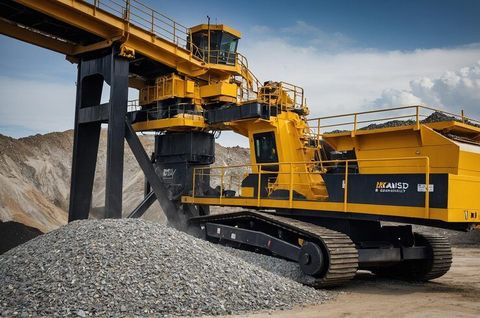
A continuous miner is a large underground mining machine equipped with a rotating cutting head. The cutting head uses cutting tools to break material from the working face, while gathering components collect the broken material and transfer it toward a conveyor or haulage system.
Unlike conventional mining arrangements that may require separate drilling, blasting, loading, and hauling stages, continuous mining equipment is designed to perform several connected activities in a more continuous operating cycle. The exact configuration depends on the mine layout, material being extracted, seam conditions, and production requirements.
Continuous miners became important as underground mining methods developed toward more mechanized extraction. Their use is closely associated with room-and-pillar mining, where material is extracted from designated areas while pillars remain to support the surrounding strata.
Main Components
The structure of a continuous miner generally includes several major systems:
- Cutting head for breaking material at the face
- Gathering arms for collecting fragmented material
- Conveyor system for moving material from the machine
- Hydraulic systems for machine movement and cutting functions
- Electric drive systems for major operating components
- Operator controls for steering and machine functions
- Dust suppression equipment for managing airborne particles
- Monitoring systems for machine condition and operating data
Different continuous miner models can have substantially different dimensions, cutting capabilities, power ratings, and control arrangements.
How Continuous Mining Works
During operation, the machine is positioned at the underground working face. The cutting head rotates against the material, gradually removing it while the gathering system collects the broken material.
The material is then transferred through the machine toward a rear discharge point or connected haulage equipment. After one cutting sequence, the machine can reposition and continue working across the designated face.
The process requires coordination between the continuous miner, conveyor or shuttle-car systems, roof-support activities, ventilation arrangements, and personnel working in the surrounding area.
Importance
Why Continuous Mining Matters
Continuous miners matter because underground extraction involves challenging working conditions, restricted spaces, changing geological conditions, and significant coordination between equipment and people. Mechanized extraction can reduce the need for workers to perform some physically demanding activities directly at the cutting face.
The technology also helps create a more organized production cycle. When cutting, gathering, and material transfer are coordinated effectively, interruptions between individual extraction activities can be reduced.
Who Uses Continuous Mining Equipment
Continuous mining equipment is primarily relevant to underground mining operators, equipment engineers, maintenance teams, mine planners, safety personnel, and machine operators. Manufacturers and technology developers also use operational data to improve machine controls and monitoring systems.
For general readers, understanding continuous miners provides useful insight into how modern underground mining combines mechanical engineering, automation, electrical systems, data monitoring, and workplace safety.
Operational Challenges
Continuous miner operation is influenced by several conditions. These include:
- Geological variation within the working area
- Rock hardness and material characteristics
- Underground space limitations
- Ventilation requirements
- Dust generation
- Ground stability
- Electrical and hydraulic system condition
- Conveyor and haulage coordination
- Operator visibility and machine positioning
A machine may perform differently when underground conditions change. For this reason, mine planning and continuous monitoring remain important parts of the operating process.
Recent Updates
Growth of Automated Mining Technology
From 2024 through 2026, the broader underground mining sector has continued moving toward automation, remote operation, machine monitoring, and data-based decision-making. Continuous miners are part of this wider technological shift.
Modern systems can incorporate cameras, sensors, machine diagnostics, positioning technologies, and control software. These systems can provide information about machine condition and operating conditions while reducing the need for operators to remain directly beside the cutting area in some configurations.
Automation does not necessarily mean that a machine operates without human involvement. Instead, automation can assist with repetitive movements, machine positioning, cutting sequences, data collection, and operating decisions.
Remote and Assisted Operation
Remote-control technology allows certain continuous miners to be operated from a position separated from the immediate cutting face. This arrangement can help place personnel farther away from some hazards associated with active extraction.
Operator-assistance systems can also provide information about machine direction, cutting position, equipment status, and operating parameters. The level of automation varies according to the machine, mine, geological environment, and control system.
Digital Monitoring
Digital monitoring is another important development. Sensors can track equipment parameters such as temperature, electrical load, hydraulic conditions, vibration, and other machine characteristics.
Collected information can support maintenance planning and help technical teams identify unusual equipment behavior. This contributes to a broader shift from relying only on scheduled maintenance toward condition-based maintenance approaches.
Current Technology Direction
The current direction of continuous mining technology can be summarized through several themes:
- Greater use of sensors and machine data
- Increased remote-control capability
- Improved operator-assistance functions
- Integration with mine communication networks
- More detailed equipment diagnostics
- Greater attention to energy efficiency
- Improved dust and environmental monitoring
- Integration with broader mine-management platforms
These developments are generally intended to improve coordination, information availability, equipment reliability, and operational control.
Laws or Policies
Mining Safety Requirements
Mining operations are governed by extensive safety requirements in many countries. Rules commonly address worker protection, electrical equipment, ventilation, ground control, emergency procedures, equipment operation, training, and mine inspections.
Requirements differ between jurisdictions because mining laws are established by national, regional, or state authorities. Underground coal mining can also have additional requirements because of hazards such as methane, coal dust, ground instability, and restricted emergency access.
Equipment and Electrical Controls
Continuous miners use powerful electrical and hydraulic systems, so regulations commonly establish requirements for equipment inspection, electrical protection, grounding, maintenance, and safe operating procedures.
Mines may also need formal procedures covering machine isolation, maintenance access, emergency shutdown systems, and communication between equipment operators and other personnel.
Automation and Worker Protection
As automation becomes more common, safety policies increasingly need to account for remote-control systems and interaction between automated equipment and workers. Mine operators generally need procedures that define operating zones, communication protocols, emergency controls, and access restrictions.
Because rules vary by location, organizations involved in mining must follow the requirements of the jurisdiction where an operation is located rather than relying on a single global standard.
Tools and Resources
Equipment Monitoring Tools
Modern continuous miners can use onboard monitoring systems to collect operational information. These systems may display machine condition, operating parameters, alarms, and diagnostic information.
Mine-management software can combine equipment information with production, maintenance, workforce, and environmental data. The resulting information can help technical teams understand how equipment is performing within the broader mining system.
Planning and Calculation Tools
Mining engineers may use specialized software for mine layout, geological modeling, equipment planning, ventilation analysis, and production scheduling. These tools can help evaluate how continuous mining equipment fits into an underground extraction plan.
Common resource categories include:
- Mine-planning software
- Geological modeling platforms
- Equipment monitoring systems
- Maintenance-management software
- Ventilation calculation tools
- Digital mine dashboards
- Safety training platforms
- Equipment manuals and technical documentation
Operational Data Table
| Area | Typical Function | Importance |
|---|---|---|
| Cutting system | Breaks material at the working face | Core extraction activity |
| Gathering system | Collects broken material | Supports material transfer |
| Conveyor | Moves material from the machine | Connects cutting with haulage |
| Sensors | Monitor equipment conditions | Supports diagnostics |
| Remote control | Enables operation from a separated position | Supports operator protection |
| Dust suppression | Helps control airborne particles | Supports underground environmental control |
| Positioning systems | Assist machine alignment | Supports accurate cutting |
| Diagnostic software | Records equipment conditions | Supports maintenance planning |
FAQs
What are continuous miners used for?
Continuous miners are primarily used for mechanized underground extraction. They cut material from an underground face and gather it for transfer into a haulage system, particularly in room-and-pillar mining operations.
How does automated mining technology work with continuous miners?
Automated mining technology can assist with machine positioning, cutting sequences, remote operation, equipment monitoring, and data collection. The amount of automation depends on the equipment and mine environment.
Are continuous miners operated remotely?
Some continuous miners can be controlled remotely. Remote operation allows the operator to work from a separated location, while cameras, sensors, and control systems provide information needed to operate the machine.
What factors affect continuous miner performance?
Performance can be affected by geological conditions, material hardness, machine configuration, cutting-tool condition, ventilation, haulage coordination, ground conditions, maintenance, and operator control.
What regulations apply to continuous mining equipment?
Requirements vary by jurisdiction but commonly cover mine safety, electrical systems, equipment inspection, ventilation, ground control, worker training, emergency procedures, and machine operation.
Conclusion
Continuous miners combine mechanical cutting, material gathering, electrical systems, hydraulics, and haulage coordination within a single underground mining process. Recent developments have expanded the role of automation, remote operation, sensors, diagnostics, and digital monitoring in continuous mining technology. Safety regulations remain an important part of machine operation, with requirements varying between mining jurisdictions. Understanding these systems helps explain how modern underground extraction is increasingly connected with automation and digital mine management.