Explore Building Materials With Strength, Durability, and Performance Details
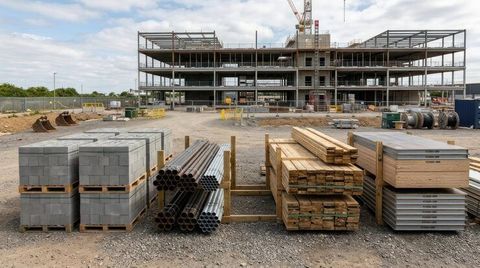
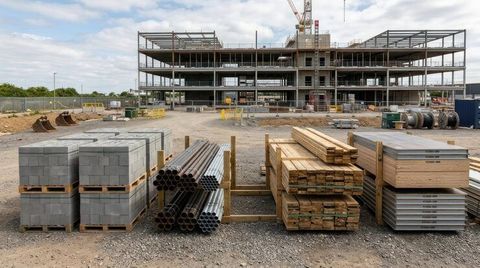
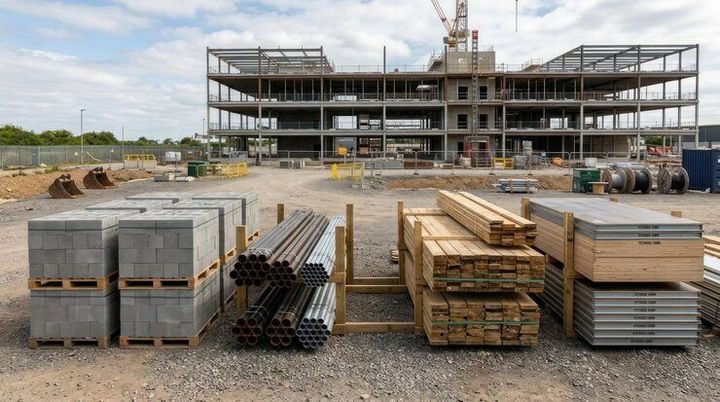
Building materials are the physical substances used to create walls, floors, roofs, foundations, openings, finishes, and structural systems. Common examples include concrete, cement-based products, steel, bricks, blocks, timber, glass, stone, gypsum products, insulation, polymers, and composite materials.
Modern building materials developed from traditional resources such as stone, clay, timber, and lime into engineered products designed for specific construction conditions. Today, material selection considers not only structural performance but also energy use, climate exposure, fire behavior, resource efficiency, and the expected life of a building.
The basic purpose of building materials is to create safe and functional spaces while managing physical forces and environmental conditions. A material that performs well in one application may be unsuitable in another, so its properties need to be considered together rather than viewed in isolation.
Context
What Building Materials Mean
Building materials include both naturally occurring resources and manufactured products. Stone, timber, clay, and sand are examples of natural materials, while concrete blocks, engineered wood, insulation boards, composite panels, and reinforced concrete are manufactured or engineered materials.
Materials are usually selected according to the part of a building where they will be used. Structural elements require appropriate load-bearing characteristics, while roofing and exterior surfaces may require resistance to moisture, temperature changes, ultraviolet exposure, and physical impact.
Main Categories of Building Materials
The construction sector uses many material categories because buildings have different technical requirements.
- Cement and concrete are widely used for foundations, slabs, columns, beams, roads, and other structural applications.
- Bricks and masonry blocks are commonly used for walls and partitions.
- Steel provides tensile and structural capacity in frames, reinforcement, connections, and other components.
- Timber and engineered wood can be used for framing, flooring, doors, roofs, and interior elements.
- Glass is used for windows, facades, partitions, and architectural features.
- Gypsum products are commonly used for interior walls, ceilings, and finishing systems.
- Insulation materials help regulate heat transfer and can contribute to indoor energy performance.
- Stone and ceramic materials are used for structural, exterior, flooring, and decorative applications.
- Polymers and composite materials are used in pipes, membranes, panels, sealants, insulation, and specialized components.
Key Material Properties
Strength describes how a material responds to applied loads without unacceptable failure. Durability describes its ability to maintain useful performance when exposed to moisture, temperature variation, chemicals, abrasion, biological activity, or repeated loading.
Other properties can be equally important. Thermal conductivity affects heat transfer, density influences structural weight, water absorption affects moisture behavior, and fire resistance determines how a material behaves during elevated temperatures.
| Property | What It Indicates | Commonly Relevant Materials |
|---|---|---|
| Compressive strength | Resistance to crushing loads | Concrete, brick, stone |
| Tensile strength | Resistance to pulling forces | Steel, engineered composites |
| Water absorption | Tendency to take in moisture | Brick, concrete, stone |
| Thermal conductivity | Rate of heat transfer | Insulation, concrete, metals |
| Density | Mass per unit volume | Concrete, steel, timber |
| Fire resistance | Performance during fire exposure | Concrete, gypsum, masonry |
| Abrasion resistance | Ability to resist surface wear | Stone, concrete, ceramics |
| Dimensional stability | Ability to retain shape | Steel, masonry, engineered materials |
Importance
Why Material Performance Matters
The performance of building materials influences structural stability, comfort, maintenance requirements, energy use, and the usable life of building components. Poor material selection can create problems such as cracking, moisture penetration, corrosion, deformation, surface deterioration, or premature replacement.
Material selection also affects people involved in different stages of construction and building use. Designers consider technical requirements, construction teams handle materials and installation methods, building owners manage maintenance, and occupants experience the resulting thermal, acoustic, and environmental conditions.
Strength and Structural Performance
Strength is not a single measurement that applies equally to every situation. Concrete generally performs strongly under compression, while steel is widely used where tensile and bending capacity are important. Masonry can provide substantial compressive capacity but depends heavily on design, mortar, workmanship, and loading conditions.
Engineered materials can combine the properties of different substances. Reinforced concrete, for example, combines concrete with reinforcement so that the resulting structural system can handle different types of forces.
Durability and Environmental Exposure
Durability becomes particularly important when materials face repeated exposure to moisture, heat, freezing conditions, salts, chemicals, or heavy use. The surrounding environment can change how quickly a material deteriorates.
Protective coatings, appropriate detailing, drainage, ventilation, and correct installation can influence durability. Material performance therefore depends not only on the material itself but also on design and construction conditions.
Thermal and Energy Performance
Insulation, windows, roofing systems, walls, and other building components influence how heat moves through a building. Materials with low thermal conductivity can reduce heat transfer when incorporated into suitable assemblies.
Modern construction increasingly considers whole-building performance rather than evaluating individual materials separately. Wall thickness, air movement, moisture control, glazing, insulation, and mechanical systems can interact and influence overall building behavior.
Recent Updates
Greater Interest in Low-Impact Materials
From 2024 through 2026, building material development has continued to focus on resource efficiency, lower-emission manufacturing, recycled inputs, and materials that can support longer building lifespans. These developments include alternative cementitious materials, recycled aggregates, engineered timber, stabilized soil products, insulation improvements, and composite systems.
Another trend is greater attention to material documentation. Designers and project teams increasingly examine declared properties, environmental information, durability characteristics, and applicable technical standards when comparing materials.
Advanced Construction Systems
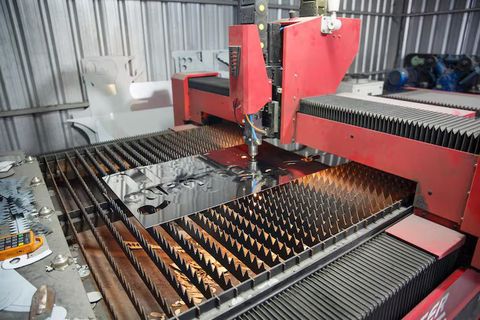
Prefabricated and modular components continue to influence building material selection. Factory-produced wall panels, precast concrete elements, engineered wood components, insulated panels, and other systems can shift some construction activities from the building site to controlled production environments.
Digital tools are also changing how materials are evaluated. Building Information Modeling can connect material information with building geometry, while energy analysis tools can examine thermal performance. Material databases and specification platforms can help organize technical information for different components.
New and Updated Standards
Indian standards continue to be reviewed and updated across building materials and construction practices. BIS records show recent reviews and revisions involving concrete, cement, prefabricated products, testing methods, and related materials. For example, several cement standards have been reviewed or revised in recent years, while additional material categories have been incorporated into technical documentation.
BIS also published a 2025 draft list of standards associated with building materials, covering categories such as bricks and blocks, cement and concrete, glass, gypsum, steel, timber, insulation, waterproofing materials, and polymers.
Laws or Policies
National Building Code
In India, the National Building Code of India 2016 provides a broad framework for building construction. It includes provisions covering building materials, structural design, fire and life safety, construction practices, sustainability, building services, and facility management. The code functions as a model framework for adoption by relevant authorities and agencies.
BIS Standards
The Bureau of Indian Standards develops specifications and test methods for numerous building materials. These standards can address composition, physical properties, chemical requirements, testing, marking, and other technical characteristics.
Cement is one example where conformity requirements are significant. BIS identifies several cement varieties under its compulsory certification framework, including ordinary Portland cement, Portland pozzolana cement, Portland slag cement, and other specified cement categories.
Local Building Requirements
National standards do not represent every requirement applicable to a particular building. Local authorities may apply additional development, planning, fire safety, structural, environmental, or approval requirements depending on the building type and location.
For this reason, construction projects generally need to consider the applicable national standards together with local rules and approved project specifications.
Tools and Resources
Material Data Sheets
Technical data sheets can provide information about density, strength, water absorption, thermal characteristics, fire behavior, dimensions, and recommended applications. These documents help readers understand how a particular product is intended to perform.
Building Material Calculators
Online calculators can assist with estimating quantities for concrete, masonry, flooring, insulation, wall areas, and other construction components. Results depend on dimensions, design assumptions, material specifications, and waste allowances.
Building Information Modeling
BIM platforms allow material information to be connected with three-dimensional building components. This can help organize quantities, specifications, locations, and performance information during design and project coordination.
Testing and Standards Resources
BIS standards, laboratory test reports, technical specifications, and recognized testing procedures are useful resources for understanding material quality and performance. BIS documentation includes standards covering cement, concrete, aggregates, reinforcement, bricks, blocks, timber, innovative materials, and related products.
FAQs
What are the main types of building materials?
Common categories include concrete, cement products, steel, bricks, blocks, timber, stone, glass, gypsum, insulation, polymers, and composite materials. Their suitability depends on structural, environmental, thermal, and architectural requirements.
How is building material strength measured?
Strength is measured through standardized tests that examine properties such as compressive, tensile, flexural, or shear performance. The appropriate test depends on the material and its intended application.
Which building materials provide good durability?
Durability varies according to exposure and application. Concrete, masonry, steel, stone, timber, and composite materials can all provide long-lasting performance when properly specified, protected, installed, and maintained.
How do building materials affect energy performance?
Materials influence heat transfer, air movement, moisture behavior, and indoor temperature stability. Insulation, glazing, roofing, walls, and other building components work together to influence the thermal performance of a building.
What standards apply to building materials in India?
The National Building Code provides broad construction guidance, while BIS develops detailed standards for many individual materials and testing procedures. Local authorities can also apply additional requirements depending on the project.
Conclusion
Building materials combine structural, physical, thermal, environmental, and durability characteristics that influence how buildings perform over time. Concrete, steel, masonry, timber, glass, insulation, and composite materials each have different properties and applications. Recent developments increasingly emphasize resource efficiency, improved documentation, advanced construction systems, and updated technical standards. In India, the National Building Code and BIS standards provide important frameworks for material selection, testing, and construction practices.