Electrical Panel Assembly Tables Explained With Features, Uses, and Assembly Processes
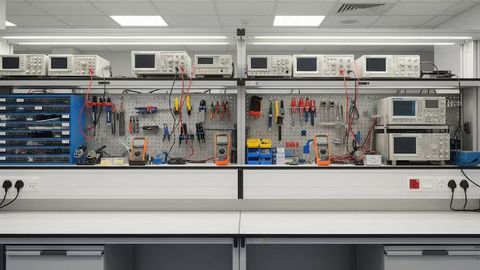
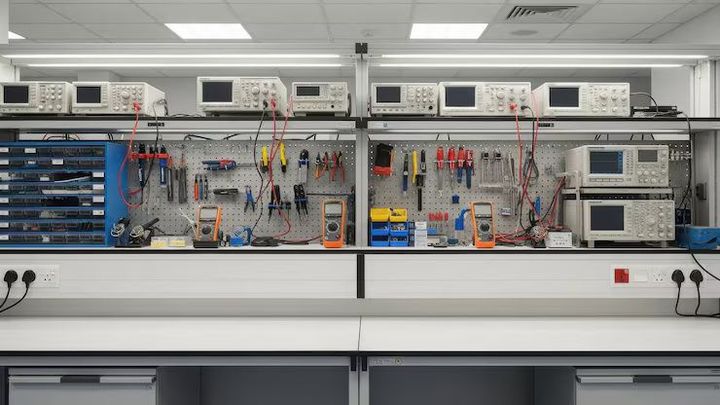
Electrical panel assembly tables are workstations designed to support the organized construction, wiring, inspection, and testing of electrical control panels. An electrical panel assembly table typically provides a stable working surface, accessible storage, cable management, lighting, and areas for tools or components.
As electrical systems have become more organized and complex, these workstations have developed from simple benches into structured assembly environments that support safer handling, repeatable processes, and improved workplace organization.
Context
What Is an Electrical Panel Assembly Table
An electrical panel assembly table is a specialized workstation used while assembling electrical panels, control cabinets, distribution boards, automation panels, and related enclosures. The table supports activities such as component mounting, wire preparation, terminal connection, labeling, inspection, and electrical testing.
Unlike an ordinary workbench, an electrical panel assembly table can be configured around the dimensions and working methods associated with panel construction. Some designs include adjustable heights, equipment rails, storage shelves, tool holders, grounding provisions, lighting systems, and cable-routing features.
Why These Tables Exist
Electrical panel assembly involves many small components and numerous connections. Relays, circuit protection devices, terminal blocks, contactors, controllers, switches, connectors, and wiring must be positioned systematically.
A suitable workstation helps keep these items accessible while reducing unnecessary movement. It can also provide a defined area for drawings, measurement instruments, documentation, and inspection activities.
Typical Electrical Panel Assembly Table Features
Common features include:
- Strong and stable work surfaces for panel enclosures and components
- Adjustable working height for different operators
- Shelves, drawers, and bins for electrical components
- Cable management channels and routing areas
- Tool holders for hand and electrical tools
- Lighting for detailed wiring work
- ESD-compatible surfaces where sensitive electronics require protection
- Grounding arrangements where applicable
- Mounting fixtures for holding panels or subassemblies
- Space for documentation, diagrams, and inspection equipment
The exact configuration depends on the type of electrical panel being assembled and the production environment.
Common Applications
Electrical panel assembly tables can be used in industrial manufacturing, automation workshops, electrical equipment production, maintenance departments, engineering laboratories, and technical training environments.
They are particularly useful when panels must be assembled repeatedly according to documented layouts. A dedicated workstation can help create a consistent physical arrangement for different assembly stages.
Importance
Why Electrical Panel Assembly Workstations Matter
Electrical panels contain circuits that control, distribute, protect, or monitor electrical power and equipment. Errors during assembly can result in incorrect connections, equipment malfunction, overheating, or electrical hazards.
A well-organized workstation does not eliminate these risks, but it can support a more controlled assembly process. Clear component placement and adequate workspace make it easier to follow wiring diagrams and identify individual connections during inspection.
Who Uses Electrical Panel Assembly Tables
These workstations can affect several groups involved with electrical equipment:
- Panel assemblers who install components and wiring
- Electrical engineers who prepare layouts and wiring documentation
- Inspectors who check completed assemblies
- Maintenance personnel who modify or troubleshoot panels
- Manufacturing planners who organize assembly processes
- Training institutions teaching electrical panel construction
The table itself is only one part of the overall process. Proper electrical knowledge, suitable tools, protective equipment, documented procedures, and appropriate inspection methods remain important.
Problems These Tables Address
Electrical panel assembly can involve hundreds of individual operations. Without an organized workstation, components may become mixed together, wires may be difficult to identify, and tools may occupy valuable workspace.
A structured electrical panel assembly table addresses these practical issues by providing defined locations for materials and equipment. It can also support ergonomic working positions, particularly when the table height and panel orientation can be adjusted.
Electrical Panel Assembly Table Types
Different table arrangements are used for different workflows.
| Table Type | Typical Use | Main Characteristics |
|---|---|---|
| Fixed Assembly Table | Repetitive panel assembly | Stable frame and defined workspace |
| Adjustable Table | Different panel sizes and operators | Height or angle adjustment |
| Mobile Workstation | Flexible production areas | Wheels and compact storage |
| ESD Workstation | Electronic control assemblies | Static-control surface and grounding |
| Heavy-Duty Table | Large control cabinets | Reinforced structure and high load capacity |
| Modular Workstation | Changing production layouts | Reconfigurable shelves and accessories |
The appropriate configuration depends on panel dimensions, component weight, assembly sequence, and workspace requirements.
Recent Updates
Modular Workstation Design
From 2024 through 2026, industrial assembly environments have increasingly emphasized modular workstation layouts. Instead of using a single fixed arrangement, manufacturers can configure shelves, lighting, tool storage, and component bins around particular assembly activities.
This approach can make workstation layouts easier to adjust when panel designs or production requirements change.
Ergonomic Adjustments
Adjustable-height electrical panel assembly tables have also received greater attention as workplaces focus on reducing awkward postures during repetitive activities. Height adjustment can allow tasks to be performed while seated or standing, depending on the operation.
Tilting or rotating fixtures can also change the angle of a panel, making internal areas more accessible during wiring and inspection.
Digital Assembly Documentation
Digital drawings and electronic work instructions are increasingly being incorporated into industrial assembly environments. A workstation may include a monitor or tablet holder so workers can view wiring diagrams, component information, revision details, and inspection instructions.
Digital documentation can help reduce dependence on outdated printed information when engineering revisions occur, provided that document-control procedures are maintained.
Tool and Material Organization
Modern workstation layouts increasingly integrate component bins, shadow boards, cable holders, barcode identification, and dedicated storage locations. These arrangements support clearer material identification and can make the assembly sequence easier to follow.
Some facilities also connect workstations with manufacturing information systems for recording assembly progress and inspection results.
Laws or Policies
Electrical Safety Requirements
Electrical panel assembly is influenced by electrical safety regulations, equipment standards, workplace requirements, and inspection procedures. The exact requirements depend on the country, electrical system, installation environment, and type of panel.
Common international frameworks include IEC standards for low-voltage switchgear and controlgear assemblies, while other regions may use national electrical codes and occupational safety requirements.
Panel Construction Standards
IEC 61439 is an important international standard family concerning low-voltage switchgear and controlgear assemblies. It addresses areas such as construction requirements, technical characteristics, verification, and performance considerations for applicable assemblies.
Other standards may apply to specific components, enclosure characteristics, machinery controls, electromagnetic compatibility, or electrical installations.
Workplace Safety
A workstation should be arranged so that electrical assembly activities can be performed with suitable clearance, lighting, ventilation, grounding, and access. Electrical isolation procedures are particularly important when work involves circuits that may contain hazardous energy.
Because regulations differ between jurisdictions, organizations generally need to identify the standards and workplace rules applicable to their specific equipment and installation environment.
Tools and Resources
Assembly Tools
Electrical panel assembly commonly involves a combination of mechanical and electrical tools. Typical equipment includes screwdrivers, torque tools, wire strippers, crimping tools, cable cutters, drills, measuring instruments, and labeling equipment.
Torque-controlled tools can help apply specified tightening forces to applicable connections. The required value should come from the component or assembly documentation rather than being assumed.
Testing Equipment
Inspection and testing can involve instruments such as multimeters, insulation resistance testers, continuity testers, phase-sequence instruments, and other equipment appropriate to the electrical system.
Testing should follow documented procedures and the requirements applicable to the particular panel. Instruments should also be maintained and used according to their intended ratings.
Digital Resources
Useful resources for electrical panel assembly include:
- Electrical schematic and CAD platforms for panel layouts
- Wiring diagram templates
- Component databases
- Digital work-instruction platforms
- Electrical calculation tools
- Cable and terminal identification systems
- Inspection and quality-control checklists
- Manufacturer documentation for electrical components
These resources help connect the physical workstation with the technical information required during assembly.
Basic Assembly Process
The electrical panel assembly process generally follows an organized sequence.
First, the enclosure, panel layout, components, wiring diagrams, and required materials are reviewed. Components are then positioned according to the approved design.
Next, mounting hardware and electrical components are installed. DIN rails, terminal blocks, circuit protection devices, contactors, relays, controllers, and other equipment may be mounted depending on the panel design.
Wiring follows the documented circuit arrangement. Wires are cut to appropriate lengths, stripped, terminated, routed, identified, and connected. Cable ducts or other routing systems can be used to maintain separation and organization.
After wiring, the assembly is inspected for incorrect connections, loose terminals, damaged insulation, missing labels, and other visible issues. Appropriate electrical tests are then performed according to the applicable procedures.
Finally, documentation is checked against the completed panel. Any approved changes should be reflected in the controlled documentation so that the physical assembly and technical records remain consistent.
FAQs
What is an electrical panel assembly table used for?
An electrical panel assembly table provides an organized workstation for mounting components, routing wires, connecting terminals, inspecting assemblies, and performing appropriate testing activities.
What features should an electrical panel assembly table have?
Common features include a stable surface, suitable load capacity, adjustable height, component storage, tool organization, cable management, lighting, and mounting fixtures. ESD provisions may be relevant for electronic equipment.
How does an electrical panel assembly workstation improve organization?
It creates defined areas for tools, components, wiring materials, documents, and completed subassemblies. This can make the assembly sequence easier to follow and reduce unnecessary workspace clutter.
What tools are used with an electrical panel assembly table?
Common tools include wire strippers, crimping tools, screwdrivers, torque tools, cable cutters, drills, labeling equipment, and electrical testing instruments such as multimeters.
What standards apply to electrical panel assembly?
Requirements vary according to the application and jurisdiction. IEC 61439 is one important international standard family for applicable low-voltage switchgear and controlgear assemblies, while additional electrical and workplace requirements may also apply.
Conclusion
Electrical panel assembly tables provide structured workspaces for constructing, wiring, inspecting, and testing electrical panels. Their features can include adjustable surfaces, component storage, cable management, lighting, tool organization, and mounting fixtures. Recent workstation developments emphasize modular layouts, ergonomic adjustment, digital documentation, and organized material handling. Electrical panel assembly must also consider applicable electrical standards, workplace rules, equipment documentation, and documented inspection procedures.