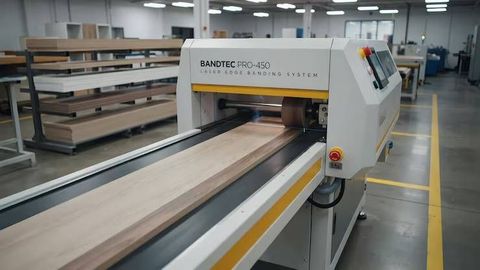
Digital Extrusion Machines Information With Precision Extrusion and Industrial Automation
Digital extrusion machines are advanced manufacturing systems used to transform raw materials into continuous products with controlled shapes, dimensions, and surface characteristics. They are commonly associated with plastics, polymers, rubber compounds, food materials, and selected technical materials.
A conventional extrusion line generally moves material through a heated or processed barrel using a rotating screw. The material becomes suitable for forming and is pushed through a die that determines the profile of the finished product. Digital extrusion machines add electronic monitoring and automated control to this basic process.
What digital extrusion means
Digital extrusion refers to the use of computerized control systems to manage important production variables. These can include temperature, screw speed, pressure, material feed rate, motor performance, cooling conditions, and line speed.
A modern system may use programmable logic controllers, human-machine interfaces, sensors, variable-frequency drives, and data collection software. These components allow operators to observe production conditions from a central interface instead of relying only on manual adjustments.
Precision extrusion focuses on maintaining consistent dimensions and process conditions. This is particularly important when the extruded product must maintain a specific thickness, diameter, profile, or material distribution.
Main components
A typical digital extrusion machine can contain several interconnected sections:
- Material hopper for introducing raw material
- Feeding system for controlling material flow
- Barrel and screw assembly for conveying and processing material
- Heating and cooling zones for temperature management
- Die for shaping the extruded material
- Calibration or sizing equipment for dimensional control
- Cooling system for stabilizing the product
- Puller or haul-off unit for controlled movement
- Cutting, winding, or collection equipment
- Sensors and controllers for monitoring production conditions
The exact configuration depends on the material and product being produced.
Importance
Digital extrusion machines matter because extrusion is used to create many continuous products that appear in everyday environments and industrial applications. Examples include pipes, tubing, sheets, films, profiles, insulation materials, filaments, seals, and various polymer components.
Automation helps address several challenges associated with continuous manufacturing. Manual adjustment can make it difficult to maintain consistent operating conditions when material characteristics or production requirements change. Digital controls can continuously measure selected parameters and provide information that helps operators respond to process variation.
Who uses extrusion technology
Extrusion systems are used across different manufacturing sectors. Their applications include:
- Plastic product manufacturing
- Packaging material production
- Construction material processing
- Automotive component production
- Electrical and cable applications
- Medical and laboratory product manufacturing
- Consumer product manufacturing
- Recycling and material reprocessing
- Technical polymer processing
The growing use of industrial automation also changes the role of operators. Instead of manually controlling every machine function, personnel may increasingly supervise automated processes, review data, adjust approved parameters, and investigate abnormal conditions.
Why precision matters
Small changes in temperature, pressure, screw speed, or material feed can affect extrusion output. For products with narrow dimensional requirements, process stability is particularly important.
Precision extrusion systems therefore combine mechanical design with measurement and control. A sensor may detect temperature changes, while a controller compares the measurement with a programmed target. The system can then adjust an appropriate control element according to its programmed logic.
| Machine Function | Common Digital Control | Production Purpose |
|---|---|---|
| Material feeding | Feed-rate monitoring | Maintain consistent material flow |
| Barrel heating | Temperature sensors and controllers | Maintain processing conditions |
| Screw operation | Motor and speed control | Regulate material movement |
| Die operation | Pressure and temperature monitoring | Support profile consistency |
| Cooling | Automated temperature control | Stabilize the product |
| Haul-off | Speed control | Manage product movement |
| Production monitoring | HMI and data logging | Track operating conditions |
Recent Updates
From 2024 through 2026, the general direction of extrusion technology has continued toward greater automation, digital monitoring, energy awareness, and integration with broader manufacturing systems. Modern extrusion equipment increasingly uses connected sensors and computerized interfaces to provide more detailed process information.
Smart monitoring and automation
One significant development is the wider use of Industry 4.0 concepts. Digital extrusion machines can connect process sensors with control software, allowing production information to be displayed through dashboards or stored for later analysis.
Manufacturers are also exploring predictive maintenance approaches. Instead of relying only on fixed maintenance intervals, machine data can be examined for unusual temperature, vibration, motor, pressure, or energy patterns.
Another development is integration between extrusion equipment and plant-level automation. Production information can potentially move between machine controllers, manufacturing execution systems, quality systems, and other digital platforms.
Energy and material efficiency
Energy management has become an important consideration in modern extrusion. Heating zones, motors, cooling systems, and auxiliary equipment all contribute to total energy use.
Digital controls can help operators understand how process conditions relate to energy consumption. This information can support process optimization without changing the fundamental extrusion principle.
Material recycling is another significant trend. Extrusion systems are increasingly used for processing reprocessed polymers and recycled feedstocks. However, recycled materials can have variable characteristics, so monitoring and process control become particularly important.
Updated machinery safety standards
Machinery safety standards are also evolving. BIS information includes standards related to machinery risk assessment, electrical equipment, emergency-stop functions, guarding, and safety-related control systems. Recent standards activity has included updated or revised machinery safety documents aligned with international standards.
BIS also identifies specific certification guidance for machinery used for working rubber and plastics, which can be relevant to extrusion equipment depending on its classification and regulatory application.
Laws or Policies
For readers in India, digital extrusion machines can be affected by several areas of industrial, machinery, workplace, electrical, and environmental regulation. Requirements depend on the machine type, material being processed, factory characteristics, and intended application.
Machinery safety
India's machinery safety framework includes requirements and standards addressing risk reduction, guarding, emergency stopping, electrical safety, and safe integration of machinery. BIS lists IS 16819, based on ISO 12100, for general machinery safety principles involving risk assessment and risk reduction.
Electrical equipment used with machinery can also fall under relevant Indian Standards. For example, IS 16504 Part 1 addresses electrical equipment of machines and general requirements.
Workplace safety
The Occupational Safety, Health and Working Conditions framework addresses machinery safeguarding and workplace safety. Provisions include attention to moving machinery parts, electrical hazards, ventilation, lifting equipment, and other workplace risks.
Factories using extrusion equipment may therefore need appropriate guarding, operating procedures, worker training, emergency arrangements, and risk controls according to applicable requirements.
Plastic waste management
Where extrusion involves plastic materials, environmental requirements can also become relevant. India's Plastic Waste Management Rules have been amended over time, including amendments issued in 2024. These rules address areas such as plastic packaging, materials, recycling-related responsibilities, and environmental management.
The exact regulatory requirements depend on the materials and activities involved, so organizations should consult the applicable authorities and current regulations before establishing or modifying industrial operations.
Tools and Resources
Several digital and technical resources can help readers understand extrusion systems and their operation.
Machine monitoring platforms
Industrial monitoring platforms can display temperature, pressure, motor speed, production rates, alarms, and other machine information. These interfaces are often connected to programmable logic controllers and industrial communication systems.
Engineering calculators
Extrusion-related calculators can help estimate parameters such as throughput, screw speed relationships, material flow, residence time, cooling requirements, and dimensional changes. Results should be treated as engineering estimates because actual performance depends on machine design and material properties.
Digital manuals and technical documentation
Machine manuals, electrical diagrams, maintenance schedules, process specifications, and safety documentation are important resources for understanding a particular extrusion system. Manufacturer documentation normally provides machine-specific operating ranges and component information.
Standards databases
BIS standards databases can help users identify applicable Indian Standards for machinery safety, electrical equipment, and related engineering areas. International standards databases can also provide information about safety and automation principles used across different manufacturing environments.
FAQs
What are digital extrusion machines?
Digital extrusion machines are extrusion systems that use computerized controls, sensors, and automated equipment to manage process variables such as temperature, pressure, feeding, screw speed, and product movement.
How does precision extrusion work?
Precision extrusion combines controlled material feeding, temperature management, screw operation, die design, cooling, and dimensional monitoring. Digital sensors and controllers help maintain selected process parameters during continuous production.
What materials can digital extrusion machines process?
Depending on their design, extrusion machines can process thermoplastic polymers, rubber compounds, recycled materials, food materials, and other suitable feedstocks. Each material requires an appropriate machine configuration and processing range.
Why is industrial automation important in extrusion?
Industrial automation can reduce the amount of manual adjustment required during continuous production. It also provides process information that can help operators identify changes in temperature, pressure, speed, or other operating conditions.
What safety standards apply to extrusion equipment in India?
Applicable requirements can include machinery risk assessment, guarding, emergency stopping, electrical safety, workplace protection, and environmental rules. The specific requirements depend on the machine, materials, facility, and intended operation.
Conclusion
Digital extrusion machines combine traditional extrusion principles with sensors, computerized controls, and industrial automation. Precision extrusion depends on coordinated control of material flow, temperature, pressure, speed, cooling, and product movement. Recent developments have emphasized connected monitoring, predictive maintenance concepts, energy awareness, recycled-material processing, and updated machinery safety practices. In India, applicable machinery, workplace, electrical, and environmental requirements should be considered according to the specific extrusion application.