Diamond Jewellery A Complete Guide to Popular Designs, Types, Quality Factors and Care Tips
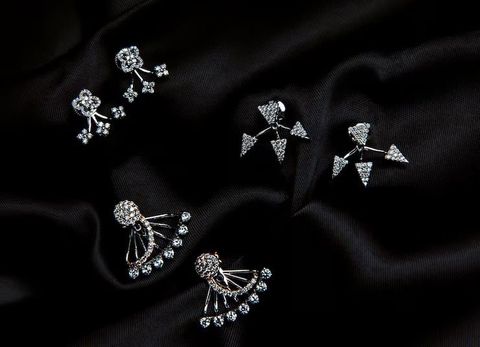
Diamond jewellery combines diamonds with precious-metal settings to create items such as rings, earrings, necklaces, bracelets, and pendants. Diamonds have been used as gemstones for centuries, while modern jewellery manufacturing has introduced a wide range of cutting styles, settings, metals, and design approaches.
Context
A diamond is a crystalline form of carbon with physical properties that make it suitable for jewellery. Its hardness, optical characteristics, and ability to reflect and disperse light contribute to its appearance and durability.
Today, diamond jewellery can contain natural diamonds or laboratory-grown diamonds. Natural diamonds form through geological processes, while laboratory-grown diamonds are produced using technologies such as chemical vapor deposition (CVD) and high-pressure, high-temperature (HPHT). Laboratory-grown diamonds can have physical and chemical properties similar to natural diamonds, but their origin is different.
Popular diamond jewellery designs
Diamond jewellery is available in many forms, with the design influenced by the position, shape, number, and size of the stones. Common categories include:
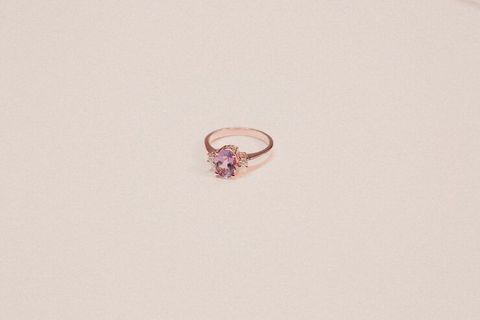
- Engagement and wedding rings
- Stud and drop earrings
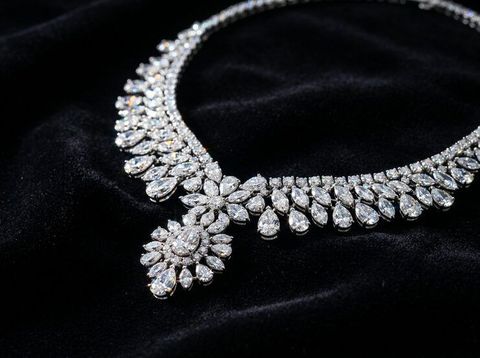
- Diamond pendants and necklaces
- Tennis-style bracelets
- Diamond bands
- Cluster and halo designs
- Three-stone jewellery
- Solitaire designs
The setting also influences how a diamond appears and how securely it is held. Prong, bezel, pavé, channel, and halo settings are among the commonly encountered styles.
Importance
Understanding diamond jewellery matters because several characteristics can affect its appearance, durability, identification, and maintenance. A piece can look significantly different depending on its diamond shape, cutting proportions, metal, setting arrangement, and surrounding stones.
Diamond jewellery can also have personal, cultural, decorative, or ceremonial significance. Because jewellery may be worn regularly for long periods, practical considerations such as setting security, cleaning, storage, and metal compatibility are relevant alongside appearance.
Understanding diamond types
The word "diamond" does not by itself explain the origin of a stone. Natural and laboratory-grown diamonds are distinct categories, and imitation materials are different from both.
Laboratory-grown diamonds are created through controlled technological processes. CVD uses a carbon-containing gas in a controlled environment, while HPHT recreates conditions involving high pressure and high temperature. GIA research has documented substantial improvements in the size and quality of laboratory-grown diamonds over recent years.
The 4Cs and other quality factors
The traditional 4Cs—carat weight, color, clarity, and cut—provide a framework for describing many diamond characteristics.
| Factor | What it describes | Why it matters |
|---|---|---|
| Carat weight | Diamond weight | Relates to physical size and weight |
| Color | Degree of body color | Influences the diamond's visual appearance |
| Clarity | Internal and external characteristics | Describes visible inclusions and blemishes |
| Cut | Proportions, symmetry and finish | Influences light performance and appearance |
| Shape | Outline of the polished stone | Determines the overall design character |
| Fluorescence | Reaction to ultraviolet light | Can influence appearance under certain lighting |
Carat weight should not be confused with visual size. Two diamonds with the same carat weight can have different dimensions because their proportions and shapes differ.
Cut is also different from shape. Round, oval, pear, emerald, cushion, princess, and marquise describe shapes, while cut refers to how a diamond has been proportioned and finished.
Metal and setting considerations
The surrounding metal is another important part of diamond jewellery. Common jewellery metals include gold, platinum, and silver, although the exact alloy composition varies.
The setting determines how the diamond is held. Prong settings use small metal supports around the stone, while bezel settings surround the outer edge with metal. Pavé settings place multiple small diamonds closely together, creating a continuous decorative surface.
The choice of setting can affect cleaning, durability, visibility of the stone, and the overall appearance of the jewellery.
Recent Updates
One significant development in diamond jewellery has been the growing presence and technological development of laboratory-grown diamonds. GIA research published in 2024 documented increases in the quantity, size, and quality of laboratory-grown diamonds and identified CVD and HPHT as the principal growth methods.
Another notable development has involved how laboratory-grown diamonds are assessed and described. GIA announced changes to its evaluation approach in 2025, moving toward descriptive quality categories for D-to-Z laboratory-grown diamonds rather than applying the same nomenclature developed for natural diamonds.
Changing jewellery preferences
Diamond jewellery design has also become more varied. Consumers encounter traditional solitaire pieces alongside geometric designs, mixed-metal arrangements, vintage-inspired patterns, colored gemstones combined with diamonds, and laboratory-grown diamond jewellery.
Digital tools have also changed how people examine jewellery before making decisions. High-resolution images, videos, virtual design tools, digital certificates, and online report verification can provide additional information about a piece or stone.
These developments make terminology more important. A description should clearly distinguish natural diamonds, laboratory-grown diamonds, and imitation materials.
Laws or Policies
Diamond jewellery is affected by consumer-protection, advertising, product-description, precious-metal, gemstone-disclosure, and import regulations. The exact requirements vary by jurisdiction, so businesses and consumers need to consider the rules applicable to the transaction.
A central regulatory principle in many markets is truthful representation. Product descriptions should accurately communicate characteristics such as diamond type, weight, treatment, metal content, and other material information.
For example, the U.S. Federal Trade Commission's Jewelry Guides state that marketers should accurately represent the type, grade, quality, quantity, size, weight, cut, color, treatment, and other relevant characteristics of jewellery. The guidance also distinguishes laboratory-created diamonds from mined diamonds and imitation materials.
Diamond identification and documentation
Independent gemological reports can provide information about a diamond's characteristics and, where applicable, its laboratory-grown or natural origin. GIA has issued reports for laboratory-grown diamonds since 2007 and identifies growth methods such as CVD and HPHT in its applicable reporting systems.
Documentation should be examined alongside the physical jewellery. A report can describe a particular stone, while the jewellery itself may contain additional diamonds or other materials that are not covered by that report.
Tools and Resources
Several resources can help readers understand diamond jewellery terminology and evaluate technical information.
Diamond grading reports
A recognized gemological laboratory report can provide structured information about a diamond's characteristics. Report numbers can also provide a way to verify whether the document corresponds with information held by the issuing laboratory.
GIA provides report-verification resources and educational material explaining diamond characteristics, laboratory-grown diamonds, and jewellery care.
Diamond measurement and comparison tools
Online diamond calculators can estimate relationships between carat weight, dimensions, and proportions. These tools are useful for learning, but calculated results should not be treated as substitutes for an independent gemological assessment.
Comparison tables can also help organize information about shape, carat weight, color, clarity, cut, fluorescence, metal, and setting.
Jewellery care resources
Basic care information can help reduce exposure to substances and situations that may affect jewellery. GIA recommends warm water, mild soap, and a soft toothbrush as one approach for cleaning diamond jewellery, while also noting that treatments and sudden temperature changes can require additional consideration.
Practical care habits
Diamond jewellery can generally be maintained through simple habits:
- Keep pieces separated during storage to reduce scratching between items.
- Check settings periodically for loose or damaged components.
- Remove jewellery when activities may expose it to strong impacts or harsh chemicals.
- Clean according to the materials and treatments involved.
- Keep documentation associated with individual pieces in an organized location.
Ultrasonic or steam cleaning is not appropriate for every gemstone or treated stone, so the composition and treatment history should be considered before using specialized cleaning equipment.
FAQs
What are the main types of diamond jewellery?
Common types include rings, earrings, necklaces, pendants, bracelets, bands, and sets. Within these categories, designs can include solitaire, halo, cluster, three-stone, pavé, and channel settings.
How do the 4Cs affect diamond jewellery?
The 4Cs describe carat weight, color, clarity, and cut. Together, these characteristics provide a standardized way to describe many aspects of a diamond, although shape, fluorescence, proportions, treatments, and the jewellery setting can also affect its appearance.
What is the difference between natural and laboratory-grown diamonds?
Natural diamonds form through geological processes, while laboratory-grown diamonds are produced using controlled technological methods such as CVD or HPHT. Laboratory-grown diamonds can have similar physical and chemical properties to natural diamonds, but their origins are different.
How should diamond jewellery be cleaned?
Cleaning methods depend on the diamond, metal, setting, and any treatments involved. For suitable diamond jewellery, GIA describes warm water, mild soap, and a toothbrush as one basic cleaning approach.
Does a diamond grading report prove that a diamond is natural?
A report can identify the characteristics and, depending on the laboratory and report type, the origin category of a diamond. Documentation should be checked carefully because natural, laboratory-grown, and imitation materials are distinct categories.
Conclusion
Diamond jewellery combines gemstone characteristics, cutting techniques, metalwork, and design to create many different forms of wearable jewellery. Understanding diamond type, the 4Cs, shape, setting, metal, and documentation provides useful context when examining a piece. Recent developments in laboratory-grown diamonds and their assessment have added further terminology and identification considerations. Proper cleaning, careful storage, and attention to the setting can help maintain diamond jewellery over time.