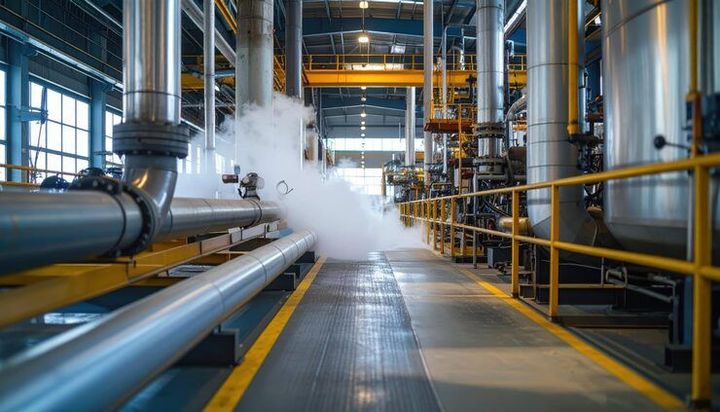
CO₂ Dosing Systems Overview With Gas Control Technology and Technical Insights
CO₂ dosing systems are engineered arrangements used to introduce controlled amounts of carbon dioxide into an enclosed or managed environment. A CO₂ dosing system can combine a gas source, pressure-control equipment, valves, sensors, controllers, tubing, and safety components to regulate how carbon dioxide enters a process.
Gas control technology has developed alongside industries that require accurate atmospheric conditions, including controlled-environment agriculture, water treatment, food processing, laboratories, and industrial production. Understanding the basic operation of CO₂ dosing systems helps non-technical readers recognize how gas concentration is measured, adjusted, and maintained.
Context
What CO₂ Dosing Means
Carbon dioxide, commonly written as CO₂, is a naturally occurring gas present in the atmosphere. It is also generated by combustion, biological activity, fermentation, and several industrial processes. Because its concentration can influence specific environments, controlled CO₂ introduction is used when a process requires a particular gas level.
A CO₂ dosing system does not simply release gas continuously. Instead, it normally uses measurement and control components to determine when and how much gas should enter a designated area or process. The objective is controlled dosing rather than unrestricted gas release.
Where CO₂ Dosing Systems Come From
The development of CO₂ dosing systems is connected with the broader development of industrial gas handling and automated process control. Earlier arrangements often relied on manual valves and basic pressure gauges, while modern systems can incorporate electronic sensors, programmable controllers, proportional valves, and automated monitoring.
Different applications require different configurations. A small controlled environment may use a compact regulator and sensor, while a larger industrial installation can include multiple gas zones, centralized controls, pressure monitoring, and automated safety functions.
Main Components
A typical CO₂ dosing system may contain several interconnected components:
- CO₂ source: Provides the carbon dioxide used during the process.
- Pressure regulator: Reduces and manages pressure from the gas source.
- Flow-control device: Determines how quickly gas moves into the application area.
- Solenoid or control valve: Opens or closes gas flow according to system instructions.
- CO₂ sensor: Measures the concentration of carbon dioxide in the monitored environment.
- Controller: Processes sensor information and determines when dosing should occur.
- Distribution tubing: Transfers gas from the source or regulator toward the intended location.
- Safety equipment: Helps control pressure, detect abnormal conditions, or stop gas flow when required.
The exact combination depends on the application, operating conditions, required concentration range, and level of automation.
Importance
Why Gas Control Technology Matters
Gas concentration can affect an environment in different ways. In controlled agricultural environments, carbon dioxide is associated with photosynthesis and plant growth. In industrial processes, CO₂ may be used as part of a controlled atmosphere or a specific production step. In water treatment, carbon dioxide can participate in pH adjustment processes.
Accurate measurement is important because the concentration of a gas cannot always be determined by appearance or smell. Carbon dioxide is colorless and odorless at ordinary concentrations, making electronic or calibrated measurement particularly relevant in enclosed environments.
Who Uses CO₂ Dosing Systems
CO₂ dosing systems can appear across several fields. Their applications include:
- Controlled-environment agriculture
- Food and beverage processing
- Water and wastewater treatment
- Laboratories and research facilities
- Industrial processing
- Controlled-atmosphere environments
- Certain fermentation processes
The operating principle remains similar across many applications: a gas source is connected to control equipment, the gas is distributed to a designated area, and measurements are used to manage the dosing process.
Safety and Environmental Considerations
Carbon dioxide is useful in controlled processes but can become hazardous when it accumulates in poorly ventilated areas. Higher concentrations can reduce the amount of oxygen available for normal breathing and may cause health effects. For this reason, gas control technology should account for ventilation, monitoring, pressure management, and emergency shutdown procedures.
A practical CO₂ dosing system may therefore include alarms or automatic interruption functions. Sensor placement is also important because carbon dioxide can accumulate differently depending on room layout, airflow, temperature, and the position of the gas release point.
Basic System Parameters
Several technical factors influence how a CO₂ dosing system operates.
| Parameter | General Function | Why It Matters |
|---|---|---|
| Gas concentration | Measures CO₂ level | Determines whether additional dosing is needed |
| Flow rate | Measures gas movement | Helps control dosing speed |
| Pressure | Indicates gas pressure | Supports stable equipment operation |
| Temperature | Records environmental temperature | Can affect sensor behavior and gas characteristics |
| Ventilation | Controls air exchange | Influences CO₂ concentration |
| Sensor position | Defines measurement location | Affects the accuracy of environmental readings |
| Control interval | Determines response frequency | Influences how quickly the system reacts |
These parameters should be considered together rather than independently. For example, a sensor may detect a concentration change caused by ventilation rather than a change in the dosing equipment itself.
Recent Updates
More Automated Monitoring
Recent developments in CO₂ dosing systems have generally focused on automation and improved monitoring. Digital sensors, electronic controllers, programmable settings, and data recording can reduce reliance on manual observation.
Modern systems can monitor concentration continuously and compare measured values with a predefined operating range. When the measured level changes, the controller can adjust the gas flow according to its programmed logic.
Sensor Technology
CO₂ sensor technology has also developed toward more consistent digital measurement. Many systems use infrared-based sensing principles, particularly non-dispersive infrared technology, because carbon dioxide absorbs infrared radiation at specific wavelengths.
Sensor performance depends on calibration, environmental conditions, installation, and maintenance. A technically sophisticated controller cannot compensate for an incorrectly positioned or poorly maintained sensor.
Connected Monitoring
Another current trend is the integration of gas control technology with digital monitoring platforms. Depending on the installation, measured information may be stored for later analysis or displayed through a centralized interface.
Connected monitoring can help operators examine concentration patterns, identify unusual changes, and review how the system responds to environmental conditions. Data availability is particularly useful when processes operate for extended periods.
Energy and Resource Awareness
Current engineering approaches also place greater attention on efficient gas use and controlled ventilation. Instead of maintaining continuous gas flow, automated systems can respond to measured conditions and operating requirements.
The underlying principle is straightforward: measurement provides information, control equipment responds to that information, and the dosing process is adjusted according to the defined operating parameters.
Laws or Policies
General Regulatory Framework
Rules governing CO₂ dosing systems vary according to the application, facility type, gas quantity, equipment configuration, and local jurisdiction. There is no single worldwide regulation that applies identically to every CO₂ installation.
Regulatory requirements can involve workplace exposure, pressure equipment, gas-cylinder handling, ventilation, electrical safety, environmental controls, and building requirements. Facilities may also have internal operating procedures for gas monitoring and emergency response.
Workplace Safety
Where people can be exposed to elevated carbon dioxide concentrations, ventilation and atmospheric monitoring can become important safety considerations. Occupational safety frameworks in many jurisdictions establish exposure limits or guidance for carbon dioxide in workplace environments.
The applicable limit depends on the jurisdiction and the type of exposure being assessed. Operators should therefore use the rules applicable to their specific facility rather than assuming that one numerical threshold applies everywhere.
Pressure and Gas Storage
CO₂ is commonly stored under pressure, which means storage containers, regulators, valves, and related equipment must be appropriate for the operating conditions. Pressure-related requirements can include equipment inspection, handling procedures, labeling, storage arrangements, and emergency controls.
Electrical components may also need to comply with applicable safety requirements, particularly in industrial environments where other gases, vapors, or specialized equipment are present.
Environmental Considerations
Carbon dioxide is also a greenhouse gas, so broader environmental policies can influence industrial gas management and emissions reporting. The relevance of such requirements depends on the quantity of gas involved and the nature of the facility.
For general readers, the key point is that a CO₂ dosing system is both a process-control arrangement and a gas-handling installation. Its design and operation can therefore be influenced by several different regulatory areas.
Tools and Resources
Measurement and Calculation Tools
Several tools can help users understand or evaluate CO₂ dosing arrangements. CO₂ concentration calculators can help convert measurement units, while flow-rate calculations can help relate gas movement to operating conditions.
Digital data loggers are also useful for recording concentration, temperature, and related environmental measurements. Historical records can make it easier to identify recurring patterns or unusual changes.
Technical Documentation
Manufacturer manuals, equipment datasheets, calibration instructions, safety documentation, and engineering diagrams are important resources for understanding individual components. These documents normally describe operating ranges, connection requirements, sensor limitations, and maintenance procedures.
Standards databases and occupational safety resources can also help readers understand the regulatory concepts surrounding compressed gases, atmospheric monitoring, and workplace exposure.
System Planning Resources
A basic planning worksheet for a CO₂ dosing system can include:
- Required concentration range
- Target application area
- Gas source type
- Expected flow range
- Operating pressure
- Sensor locations
- Ventilation characteristics
- Alarm requirements
- Emergency shutdown arrangement
- Inspection and calibration schedule
These factors provide a practical framework for understanding how the major parts of a gas control system fit together.
FAQs
What is a CO₂ dosing system?
A CO₂ dosing system is an arrangement that introduces controlled quantities of carbon dioxide into a defined environment or process. It commonly combines a gas source, regulator, flow-control equipment, sensor, controller, and safety components.
How does gas control technology regulate CO₂?
Gas control technology uses measurements from a CO₂ sensor and control instructions to manage gas flow. Depending on the system design, a valve can open, close, or adjust flow when the measured concentration moves outside a defined range.
Where are CO₂ dosing systems used?
CO₂ dosing systems are used in controlled agriculture, water treatment, food processing, laboratories, fermentation, and various industrial processes. The required configuration depends on the application and operating environment.
Are CO₂ dosing systems safe?
They can be used safely when appropriate equipment, ventilation, monitoring, pressure controls, and operating procedures are applied. Carbon dioxide can become hazardous at elevated concentrations, particularly in enclosed or poorly ventilated spaces.
Why are CO₂ sensors important in a dosing system?
CO₂ sensors provide measurements that help determine the concentration within the monitored area. Accurate sensor placement, calibration, and maintenance are important because incorrect measurements can affect the operation of the control system.
Conclusion
CO₂ dosing systems combine gas sources, measurement equipment, flow controls, and automated technology to manage carbon dioxide concentrations in defined environments. Gas control technology has increasingly incorporated digital sensors, automated controllers, data monitoring, and safety functions. Regulations can address workplace exposure, pressure equipment, storage, ventilation, and environmental considerations depending on the application and jurisdiction. Understanding these fundamentals provides a clearer view of how CO₂ dosing systems operate and why accurate measurement and controlled gas handling are important.