Complete Guide to Airless Bottle Filling Systems for Modern Product Packaging
Airless bottle filling systems are packaging technologies designed to place creams, lotions, gels, serums, and other viscous products into containers that dispense material without relying on traditional air intake.
The airless bottle filling process combines controlled product dosing with specialized containers that use a piston, diaphragm, or flexible mechanism to move the contents toward the dispensing opening. As personal care, cosmetic, pharmaceutical, and household product manufacturers continue to use precise packaging formats, airless systems have become an important part of modern filling operations.
Context
What Are Airless Bottle Filling Systems
An airless bottle filling system is equipment designed to transfer a measured quantity of product into airless containers. Unlike conventional bottles that allow air to enter as product leaves, an airless package generally uses an internal piston or similar mechanism to push the product upward.
The filling equipment must account for both the characteristics of the product and the construction of the container. A thick cream requires different handling from a lightweight lotion, while a foaming formulation may require additional control during filling.
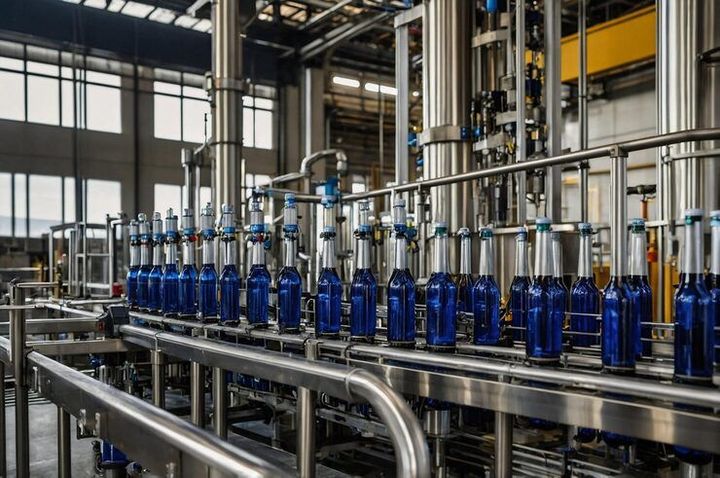
Airless bottle filling systems can range from compact semi-automatic machines to automated production lines. Equipment configuration commonly depends on container size, filling volume, product viscosity, production speed, and the level of process automation required.
How the Technology Developed
Traditional liquid filling equipment was initially designed around relatively simple containers and easily flowing products. As manufacturers introduced thicker formulations and packaging that reduced product exposure to air, filling technology evolved to accommodate more specialized containers.
The development of airless packaging was particularly relevant to products where controlled dispensing and reduced exposure to external air were important design considerations. Modern equipment combines filling nozzles, pumps, sensors, container handling systems, and programmable controls to achieve consistent filling results.
Main Components
An airless bottle filling line can contain several interconnected components:
- Product hopper or tank for holding the formulation
- Pump for moving product through the filling circuit
- Filling nozzle for controlled product transfer
- Container positioning mechanism
- Sensors for detecting bottles and filling positions
- Control panel for adjusting operating parameters
- Conveyor for transferring containers between stages
- Piston or pressure-control mechanism where required
- Cleaning and changeover components
The exact configuration varies according to the product and packaging design.
Importance
Why Airless Packaging Matters
Airless packaging can help limit direct contact between the product and surrounding air during dispensing. This packaging format is therefore used for various formulations where controlled product delivery and reduced exposure are relevant considerations.
For consumers, the main visible advantage is usually the dispensing experience. An airless bottle can continue pushing product toward the outlet as the internal mechanism moves, allowing the container to function without the conventional dipping or pouring action associated with some traditional packaging.
For manufacturers, the filling process must maintain consistent volume while avoiding excessive product residue, trapped air, leakage, and container damage.
Industries Using Airless Bottle Filling
Airless bottle filling systems are used across several product categories, including:
- Skincare creams and lotions
- Cosmetic formulations
- Facial and body care products
- Hair care formulations
- Liquid gels
- Household formulations
- Certain pharmaceutical preparations where permitted by applicable regulations
Each category can have different filling requirements. Viscosity, sensitivity to contamination, container geometry, and dispensing mechanism all influence equipment selection and operation.
Common Filling Challenges
Several practical issues can affect airless filling operations. Product viscosity can change with temperature, making the formulation easier or harder to transfer through the filling system.
Air bubbles are another consideration. Entrapped air can affect fill consistency and may interfere with the operation of the airless dispensing mechanism. Nozzle design, filling speed, pump selection, and product preparation can all influence this issue.
Container alignment also matters. If a bottle is not positioned correctly beneath the filling nozzle, product can enter the wrong location or create contamination around the container opening.
Filling System Types
Airless bottle filling equipment can generally be grouped by its level of automation.
| System Type | Typical Characteristics | Common Application |
|---|---|---|
| Manual | Operator controls most filling activities | Small production batches |
| Semi-automatic | Machine performs filling while operators handle containers | Medium-scale production |
| Automatic | Filling and container movement are integrated | Continuous production |
| Multi-nozzle | Several containers can be filled during one cycle | Higher throughput requirements |
| Servo-controlled | Electronic controls regulate movement and dosing | Precise automated filling |
The appropriate configuration depends on production requirements rather than simply the machine's speed.
Recent Updates
Greater Automation
From 2024 through 2026, packaging equipment development has increasingly focused on automation, electronic controls, and data monitoring. Modern airless bottle filling systems may integrate programmable logic controllers, touchscreen interfaces, sensors, and automated container handling.
These features can reduce the number of manual adjustments required during routine production. They can also make it easier to record operating parameters and identify process deviations.
More Flexible Packaging Formats
Packaging manufacturers continue to develop airless containers in different shapes, sizes, materials, and dispensing configurations. Filling equipment consequently needs greater flexibility to handle different container dimensions and product characteristics.
Quick-change components and adjustable filling parameters are becoming increasingly relevant where production facilities handle multiple packaging formats.
Improved Process Monitoring
Sensors and digital control systems are increasingly used to monitor filling operations. Depending on the equipment configuration, monitoring can include container presence, filling position, pump movement, product level, and operating conditions.
This shift toward connected equipment supports more structured production monitoring and can provide useful information for quality-control processes.
Material and Packaging Considerations
Packaging development is also placing greater attention on material use, recyclability, and container design. Airless packaging can involve multiple components, so designers and manufacturers increasingly consider how container construction affects material recovery and disposal.
The sustainability profile of a package depends on its materials, manufacturing process, product protection requirements, transportation, and end-of-life handling rather than on the airless mechanism alone.
Laws or Policies
Packaging Requirements
Airless bottle filling systems are influenced by the regulations that apply to the products being packaged. Cosmetic, household, food-related, and pharmaceutical products can be subject to different requirements depending on the market in which they are distributed.
Packaging rules may address product labeling, container integrity, material safety, contamination control, measurement accuracy, and consumer information. Manufacturers must identify the requirements applicable to their specific product category and intended market.
Product Safety and Quality Controls
Filling operations generally need documented procedures for sanitation, equipment maintenance, batch control, and quality inspection when these are required by the applicable regulatory framework.
For products subject to stricter manufacturing controls, filling equipment may also need to support traceability and documented process parameters. The precise requirements vary according to product classification and jurisdiction.
Environmental Considerations
Packaging policies in many regions increasingly address material efficiency, waste reduction, recycling, and producer responsibilities. Airless containers may require particular attention because they can contain multiple components made from different materials.
Companies developing packaging formats therefore need to consider both functional requirements and applicable environmental rules.
Tools and Resources
Equipment Selection Tools
A basic equipment assessment can begin with several product and packaging parameters:
- Product viscosity
- Filling volume
- Container dimensions
- Container material
- Required filling accuracy
- Number of containers per production cycle
- Product temperature
- Cleaning requirements
- Desired automation level
A filling-volume calculator can help determine how much product is required for a specific batch. Production-capacity calculations can also estimate the number of containers processed during a defined operating period.
Packaging Specifications
Container drawings, product specifications, nozzle dimensions, and filling-volume information are useful when evaluating compatibility between an airless bottle and filling equipment.
Technical manuals and equipment documentation can explain pump characteristics, filling ranges, control settings, cleaning procedures, and compatible container formats.
Digital Monitoring Resources
Production-management platforms, programmable control systems, electronic batch records, and equipment-monitoring software can help organize operational information. These tools are particularly useful when multiple products or packaging formats are processed on the same equipment.
Standard operating procedure templates can also provide a structured format for documenting setup, cleaning, inspection, filling, and changeover activities.
FAQs
What are airless bottle filling systems used for?
Airless bottle filling systems are used to place controlled quantities of creams, lotions, gels, serums, and other formulations into airless containers. They are particularly relevant to products that require controlled dispensing and specialized packaging.
How does an airless bottle filling machine work?
The machine transfers a measured quantity of product into an airless container through a filling nozzle. The container's internal piston, diaphragm, or flexible mechanism is then used during dispensing to move product toward the outlet without depending on conventional air intake.
What products can be filled using airless bottle filling systems?
Airless bottle filling systems can handle various cosmetic, personal care, household, and other suitable formulations. The equipment must be matched to the product's viscosity, formulation characteristics, filling volume, and container design.
What affects airless bottle filling accuracy?
Filling accuracy can be influenced by pump type, product viscosity, temperature, nozzle design, filling speed, container positioning, and control settings. Regular calibration and process checks can help maintain consistent filling performance.
Are airless bottles suitable for every product?
No. Airless packaging is not appropriate for every formulation or application. Product compatibility, dispensing behavior, container materials, chemical stability, regulatory requirements, and packaging design all need to be evaluated before selecting an airless format.
Conclusion
Airless bottle filling systems combine controlled product dosing with specialized containers designed for airless dispensing. Their use spans cosmetics, personal care, household formulations, and other products where packaging performance and controlled delivery are important. Recent equipment development has emphasized automation, flexible packaging formats, digital monitoring, and more efficient process control. Understanding the product, container, filling requirements, and applicable packaging rules is essential for selecting and operating an appropriate system.