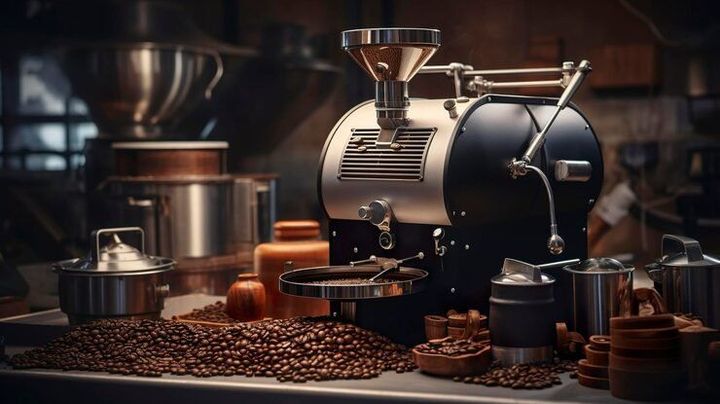
Coffee Roasting Machines Guide: Designs, Capacity, Controls, Applications and Key Features
Coffee roasting machines are equipment designed to heat green coffee beans until they develop the color, aroma, texture, and flavor associated with roasted coffee. Coffee roasting machines range from compact batch roasters for small quantities to larger commercial systems designed for repeated production. Their designs, capacity, controls, applications, and key features influence how roasting is managed and how consistently a batch can be processed.
Context
What Coffee Roasting Machines Do
Green coffee beans contain moisture and many natural compounds that change when heat is applied. During roasting, beans gradually change from green to yellow, brown, and darker shades while producing gases and aromatic compounds. The process also causes the beans to expand and become more brittle, making them suitable for grinding and brewing.
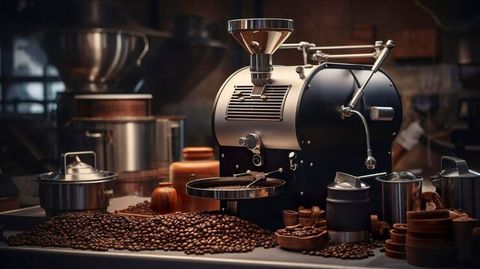
A coffee roaster normally combines a heat source, roasting chamber, airflow path, temperature monitoring system, and cooling arrangement. Depending on the design, beans may be moved by a rotating drum, hot air, or another controlled heating method.
How Coffee Roasting Developed
Early coffee roasting was often carried out with simple pans, pots, or rotating containers placed over a heat source. As coffee consumption expanded, purpose-built roasting equipment appeared, allowing greater control over heating and batch handling. Modern coffee roasting machines use sensors, programmable controls, airflow adjustments, and cooling systems to make the roasting process more measurable.
Importance
Why Capacity Matters
Capacity describes how much green coffee a machine can process in one batch or within a defined operating period. A small roaster may be appropriate for testing or limited production, while a larger system can handle repeated batches.
Capacity should be considered together with batch duration, loading method, cooling time, available floor space, and expected operating schedule. A machine with a large chamber is not automatically suitable for every application because the surrounding workflow also affects practical output.
Why Controls Matter
Roasting involves changes in temperature and airflow over time. Controls help an operator observe these variables and repeat a chosen roasting profile. Common controls include temperature displays, timers, burner adjustments, airflow controls, and digital monitoring systems.
Some coffee roasting machines use programmable profiles that record stages of a roast. This can make it easier to compare batches and identify changes caused by bean moisture, ambient conditions, or loading differences.
Common Applications
Coffee roasting machines are used in several settings, including:
- Small-batch roasting for cafes and specialty coffee operations
- Production roasting for packaged coffee
- Training and educational environments
- Product development and sample testing
- Research activities involving roast profiles
- Larger food-processing facilities
The suitable design depends on the quantity being processed, available utilities, ventilation arrangements, operator controls, and the intended roasting method.
Recent Updates
Automation and Digital Monitoring
From 2024 through 2026, the general direction of coffee roasting equipment has continued toward more measurable and automated operation. Digital temperature displays, data logging, programmable roast profiles, and electronic controls are increasingly associated with modern equipment. These functions can help operators record roast conditions and compare batches.
Automation does not remove the need for observation. Green coffee can vary in moisture, density, screen size, origin, and processing method, so the same programmed settings may not produce identical results under every condition.
Energy and Airflow Management
Equipment design has also placed attention on heat transfer, airflow, insulation, and exhaust management. Roasters may use different heating arrangements, including gas, electric, or hybrid configurations. Airflow controls can influence how heat and smoke move through the roasting chamber and exhaust system.
Compact and Flexible Designs
Another current trend is the availability of equipment for different production scales. Compact machines can fit smaller roasting areas, while larger systems are designed around higher batch capacities and continuous workflow. Some systems also emphasize modular controls, easier data recording, and integration with other stages such as grinding, conveying, or packaging.
Laws or Policies
Food Safety Rules in India
For this policy overview, India is used as the reference country. Food businesses operating in India are generally subject to the Food Safety and Standards Authority of India, or FSSAI. FSSAI states that food business operators must obtain the applicable registration or license under the Food Safety and Standards Act framework, with requirements depending on the nature and scale of the food activity.
Coffee products are covered by Indian food standards, including provisions relating to coffee and coffee-chicory mixtures. FSSAI maintains the relevant food-product regulations and amendments, so operators should use the current regulatory text rather than relying on older summaries.
Hygiene and Product Standards
Roasting equipment forms part of a food-processing environment, so cleanliness, material suitability, contamination control, storage, handling, and packaging practices are relevant. The Bureau of Indian Standards lists food-hygiene standards and standards related to roasted coffee, including methods for determining moisture content in roasted ground coffee.
Requirements can also vary according to facility size, local permissions, building conditions, fuel type, emissions, and the exact food activity. Operators should verify applicable national, state, and local requirements before establishing or modifying a roasting facility.
Tools and Resources
Roast Profile Tools
Roast profile software and digital logging tools can record temperature changes, time intervals, and other operating information. These records can help compare batches and document process changes.
Temperature Measurement
Temperature probes, data loggers, and calibrated measurement instruments are useful for monitoring roasting conditions. Measurement equipment should be appropriate for the operating range and maintained according to its instructions.
Capacity Planning
A simple capacity worksheet can compare batch size, roasting duration, cooling duration, loading time, and planned operating hours. For example, a planning table may look like this:
| Roaster Type | Typical Batch Range | Common Use | Control Approach |
|---|---|---|---|
| Sample roaster | 50–500 g | Testing and training | Manual or digital |
| Small batch | 1–5 kg | Cafes and small production | Manual or programmable |
| Medium batch | 5–30 kg | Regular production | Digital and automated options |
| Large batch | 30 kg and above | Industrial production | Automated process controls |
These ranges are illustrative rather than fixed industry classifications. Actual capacities differ among machine designs and manufacturers.
Reference Platforms
Useful resources include FSSAI regulatory pages for food-business requirements, the Bureau of Indian Standards portal for applicable Indian Standards, and technical documentation supplied with a particular roasting machine. The BIS “Know Your Standard” portal can be used to search standards by number or product keyword.
FAQs
What are coffee roasting machines used for?
Coffee roasting machines heat green coffee beans under controlled conditions so they develop the physical and sensory characteristics associated with roasted coffee. They are used in small-batch, commercial, educational, testing, and larger production environments.
How does coffee roasting machine capacity affect operation?
Capacity determines the approximate quantity of green coffee that can be processed in a batch. It should be considered alongside roasting time, cooling time, workflow, available space, and the expected operating schedule.
What controls are found on coffee roasting machines?
Common controls include temperature monitoring, timers, burner or heating adjustments, airflow controls, cooling controls, and digital roast-profile systems. The exact control arrangement depends on the machine design.
What key features should be considered in a coffee roasting machine?
Important features include heating method, batch capacity, temperature measurement, airflow control, cooling arrangement, loading and unloading design, exhaust configuration, control interface, and ease of cleaning.
Are coffee roasting machines covered by food regulations in India?
The equipment itself is part of a food-processing environment, while the food business and resulting coffee products are subject to applicable Indian food-safety requirements. FSSAI licensing or registration requirements generally apply to food business operators, with the applicable category depending on the activity and scale.
Conclusion
Coffee roasting machines use controlled heat, airflow, timing, and cooling to transform green coffee beans into roasted coffee. Designs vary from compact sample roasters to larger systems, while capacity and control features influence how the equipment fits into a roasting workflow. Current equipment trends include digital monitoring, programmable profiles, airflow management, and different heating configurations. In India, food businesses handling roasted coffee need to consider applicable FSSAI requirements and relevant food and hygiene standards.