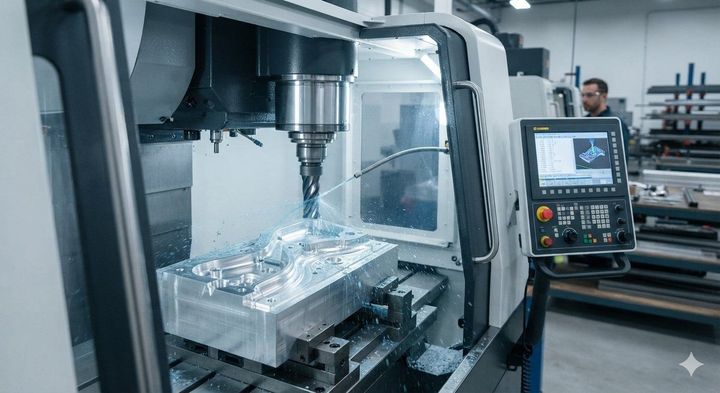
CNC Machining Machines Guide With Precision Manufacturing and Engineering Insights
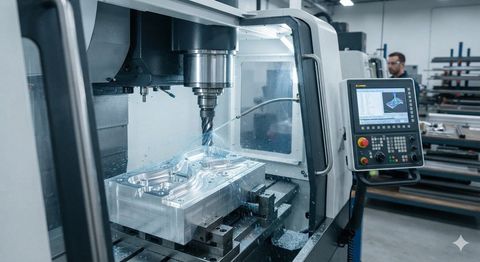
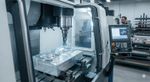
CNC machining machines are computer-controlled manufacturing systems used to shape materials into precise components. CNC stands for Computer Numerical Control, meaning that programmed instructions guide movements such as cutting, drilling, milling, turning, and other machining operations.
The development of CNC machining came from the need for more consistent and repeatable manufacturing. Earlier machine tools depended heavily on manual controls and operator judgment. Numerical control introduced programmed movement, while modern CNC systems added computers, digital interfaces, sensors, automatic tool changers, and increasingly connected production systems.
Today, CNC machining machines are used across aerospace, automotive, electronics, medical equipment, energy, industrial machinery, construction equipment, and general component manufacturing. Common categories include CNC milling machines, CNC turning machines, CNC machining centres, CNC routers, CNC grinders, and multi-axis machining systems.
How CNC Machining Works
A CNC machining process normally begins with a digital part design. Computer-aided design software creates the geometry, while computer-aided manufacturing software can convert the design into machining instructions.
The resulting program controls machine movements according to programmed coordinates and parameters. Depending on the equipment, several axes may move simultaneously to create complex surfaces.
Important components include:
- CNC controller for interpreting programmed instructions
- Spindle for rotating cutting tools or workpieces
- Linear and rotary axes for controlled movement
- Tool holders and cutting tools for material removal
- Workholding equipment for securing the material
- Sensors for monitoring machine conditions
- Automatic tool changers on many modern systems
The actual machining process depends on the material, component geometry, cutting tool, machine configuration, and programmed parameters.
Main Types of CNC Machining Machines
Different CNC machining machines are designed around particular manufacturing operations.
| Machine Type | Main Operation | Typical Applications |
|---|---|---|
| CNC Milling Machine | Cutting with rotating tools | Housings, brackets, mechanical parts |
| CNC Turning Machine | Rotating workpiece cutting | Shafts, bushings, cylindrical parts |
| CNC Machining Centre | Multiple automated operations | Complex precision components |
| CNC Router | Cutting and profiling | Wood, plastics, composites, sheet materials |
| CNC Grinder | Precision abrasive finishing | Hard materials and close-tolerance surfaces |
| Multi-Axis CNC Machine | Simultaneous movement across multiple axes | Complex three-dimensional components |
The choice between these systems depends on geometry, material, required dimensional accuracy, production quantity, and process requirements.
Importance
CNC machining matters because modern products often require dimensions and shapes that are difficult to reproduce consistently through manual machining alone. Computer-controlled movement allows manufacturers to repeat programmed operations while maintaining defined machining parameters.
The technology also affects product development. Engineers can create a digital design, simulate manufacturing operations, identify potential interference, and adjust toolpaths before physical machining begins.
Precision Manufacturing
Precision manufacturing involves controlling dimensions, surface characteristics, alignment, and repeatability within defined specifications. CNC systems support this process through programmable movement and coordinated control of machine axes.
Precision does not depend on the CNC controller alone. Tool condition, machine rigidity, thermal changes, workholding, material properties, measurement methods, and programming quality can all influence the final component.
Industries Using CNC Technology
CNC machining machines are found in many industries because the underlying technology can be adapted to different materials and component shapes.
Examples include:
- Automotive components and powertrain parts
- Aerospace structures and mechanical components
- Electronic equipment housings
- Medical equipment components
- Industrial pumps and machinery parts
- Energy equipment
- Construction machinery components
- Consumer and commercial products
For general users, the main significance is that CNC machining supports the production of many components found inside everyday equipment, vehicles, appliances, tools, and industrial systems.
Key Factors Affecting Machining Results
Several variables influence machining performance. Material hardness affects cutting conditions and tool selection. Tool geometry influences chip formation and surface quality. Machine rigidity affects vibration, while temperature changes can influence dimensional stability.
Measurement is equally important. Coordinate measuring machines, optical systems, probes, micrometers, and other inspection equipment can be used to compare finished components with engineering specifications.
Recent Updates
CNC machining has increasingly become connected with automation, digital manufacturing, simulation, data collection, and artificial intelligence. The general trend from 2024 through 2026 has been toward integrating traditional machine tools with broader digital production systems.
Digital Twins and Simulation
Digital twin technology is receiving greater attention in CNC manufacturing. A digital twin represents a physical machine or process in a digital environment and can combine machine information, models, measurements, and process data.
NIST published research on building a digital twin of a CNC machine tool, describing how standards, system modelling, machining data, and communication methods can support such implementations.
Digital simulation can also help identify toolpath problems, machine collisions, cycle issues, and process limitations before machining begins.
Automation and Intelligent Monitoring
Modern CNC machining systems increasingly integrate robotic loading, automatic tool changing, in-process measurement, machine monitoring, and production data collection. Sensors can track conditions such as vibration, temperature, spindle behavior, and tool status.
Artificial intelligence and machine learning are also being explored for process monitoring, anomaly detection, predictive analysis, and quality inspection. These applications remain dependent on data quality, machine integration, and appropriate validation.
Connected Manufacturing
Connected CNC machines can exchange information with production management platforms and industrial networks. This creates opportunities for centralized monitoring and production analysis but also introduces cybersecurity considerations.
NIST's 2025 draft Manufacturing Profile for Cybersecurity Framework 2.0 added guidance covering areas including supply-chain risk management, platform security, and technology infrastructure resilience for manufacturing environments.
Laws or Policies
CNC machining machines are affected by machinery safety rules, workplace requirements, electrical standards, environmental requirements, and product-specific regulations. The exact legal requirements depend on the jurisdiction, machine type, workplace, material, and intended application.
Machinery Safety
ISO 16090-1:2022 provides safety requirements and protective measures for milling machines, machining centres, and transfer machines. Its scope includes numerically controlled milling machines and machining centres as well as associated equipment such as tool changers, workpiece handling systems, powered clamping systems, and chip conveyors.
This international standard is an important technical reference, but applicable legal obligations are established by the relevant jurisdiction and regulatory authorities.
European Machinery Requirements
The European Union has adopted Regulation (EU) 2023/1230 concerning machinery. The regulation includes requirements covering machinery safety and related conformity processes, with the main application date scheduled for January 2027. Some provisions apply earlier.
For organizations operating in other jurisdictions, different machinery, workplace, electrical, or conformity requirements may apply.
Workplace Considerations
CNC machining environments generally require controls for moving components, rotating tools, electrical hazards, chips, noise, coolant exposure, and unexpected machine movement. Operators and maintenance personnel should follow applicable workplace safety procedures and manufacturer instructions.
Tools and Resources
CNC machining involves several categories of digital and physical tools. CAD software is commonly used to create three-dimensional component designs, while CAM software converts designs into machining strategies and toolpaths.
Programming and Verification Tools
Common resources include:
- CAD software for component modelling
- CAM software for toolpath generation
- CNC simulation platforms for process verification
- G-code editors for reviewing machine instructions
- Toolpath verification systems for collision checking
- Coordinate measuring systems for dimensional inspection
- Digital maintenance records for machine history
- Manufacturing execution platforms for production information
CNC controllers may also provide built-in diagnostics, tool management, program editing, probing functions, and machine monitoring features.
Selecting a CNC Machine
Technical selection usually considers several factors rather than a single specification. Relevant characteristics include the number of axes, work envelope, spindle speed, spindle power, table capacity, tool capacity, positioning performance, control system, automation compatibility, and material requirements.
For precision applications, inspection capability and thermal stability can be as important as the machine's nominal specifications.
FAQs
What are CNC machining machines used for?
CNC machining machines are used to cut, drill, mill, turn, grind, and shape materials according to programmed instructions. They are commonly used for producing mechanical and industrial components with defined dimensions.
What is the difference between CNC milling and CNC turning?
CNC milling generally uses a rotating cutting tool that moves around a stationary workpiece. CNC turning normally rotates the workpiece while a cutting tool moves against it. Milling is commonly associated with prismatic shapes, while turning is widely used for cylindrical components.
How does a CNC machining machine improve precision manufacturing?
A CNC system can repeat programmed movements and machining sequences with controlled parameters. However, final dimensional results also depend on tooling, machine condition, material behavior, workholding, temperature, programming, and measurement methods.
What is a CNC machining centre?
A CNC machining centre is a computer-controlled machine capable of performing multiple machining operations. Many machining centres include automatic tool changers and can perform operations such as milling, drilling, tapping, and boring within a programmed sequence.
Are CNC machining machines becoming more automated?
Yes. Modern CNC systems increasingly incorporate automatic tool changing, robotic material handling, probing, machine monitoring, digital simulation, connected production systems, and data analysis. The level of automation varies considerably between machines and manufacturing environments.
Conclusion
CNC machining machines combine computer control, machine tools, cutting technology, and digital manufacturing methods to produce accurately defined components. CNC milling, turning, machining centres, grinding, routing, and multi-axis systems serve different manufacturing requirements. Recent developments are connecting CNC equipment with digital twins, automation, data analysis, and cybersecurity practices. Safety standards and machinery regulations also remain important parts of modern CNC manufacturing environments.