Circular Saw Machines Knowledge: Cutting Systems, Blade Options, Applications and Performance
Circular saw machines are cutting tools that use a rotating circular blade to divide materials into controlled sections. They are widely used with wood, plywood, plastics, composite boards, metals, and other materials, depending on the machine design and blade. Understanding circular saw machines knowledge involves learning about cutting systems, blade options, machine types, applications, operating factors, and safety features. These machines range from compact handheld tools to stationary industrial equipment designed for repeated and dimensionally consistent cutting.
What Are Circular Saw Machines?
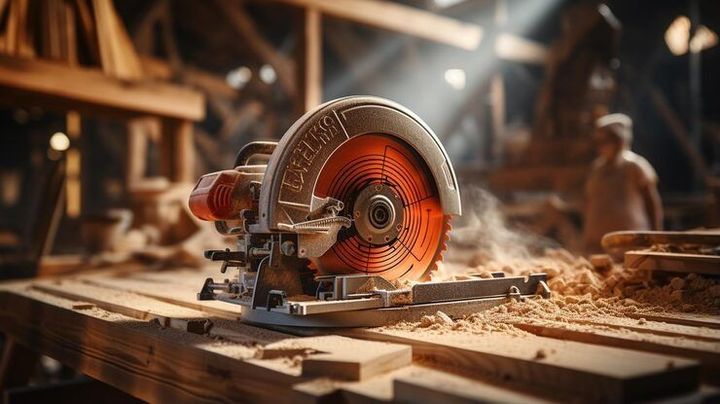
A circular saw machine uses a toothed or abrasive circular blade that rotates around an axle, sometimes called an arbor or spindle. As the blade moves through a workpiece, its teeth remove material and create a cut known as a kerf.
The basic concept has existed for a long time, but modern circular saw machines have developed into many configurations. Portable saws are commonly used for construction and workshop tasks, while stationary machines are used where controlled positioning, repeatability, and larger workpieces are required.
The machine's cutting system generally consists of a motor, blade, arbor, base or table, adjustment mechanism, guard, and control system. Depending on the design, the blade may move through the material or the material may be guided toward a fixed blade.
How the Cutting System Works
A motor provides rotational energy to the blade. The blade's diameter, tooth design, rotation speed, material, and cutting depth all influence how the machine interacts with a workpiece.
A cutting system can be evaluated through several factors:
- Blade diameter determines the approximate cutting capacity.
- Cutting depth describes how deeply the blade can enter the material.
- Tooth geometry affects the type and character of the cut.
- Rotation speed influences cutting behavior and heat generation.
- Feed rate describes how quickly the workpiece moves through the blade.
- Material properties affect resistance, vibration, dust, and blade wear.
These factors work together rather than independently. A blade designed for one material may not produce the same result when used with another material.
Importance
Why Circular Saw Machines Matter
Circular saw machines are important because many construction, woodworking, fabrication, and manufacturing activities require materials to be divided into predictable dimensions. Straight cuts are needed for boards, panels, pipes, profiles, sheet materials, and various manufactured components.
For everyday users, the machine can reduce the physical effort associated with manual cutting. In workshops and manufacturing environments, controlled cutting systems can also help maintain repeatable dimensions when the equipment is correctly configured.
Problems Addressed by Modern Cutting Systems
Different circular saw designs address different cutting requirements. A portable machine provides mobility, while a table or panel saw provides a more controlled cutting surface. Industrial machines can incorporate automated positioning, multiple cutting stages, sensors, or computer-controlled movement.
Performance is affected by more than motor power. A suitable blade, stable workpiece, correct alignment, adequate guarding, and an appropriate feed rate can all influence the cutting process.
Circular Saw Machine Types
Common configurations include:
- Handheld circular saws for portable straight cutting.
- Table saws with a blade extending through a work surface.
- Panel saws designed for large boards and sheet materials.
- Miter saws designed primarily for crosscuts and angled cuts.
- Cold saws used for certain metal-cutting applications.
- Industrial circular saw machines designed for repeated or specialized cutting operations.
Each configuration has a different operating method and is intended for particular material and cutting requirements.
Cutting Systems and Blade Options
Blade Diameter and Cutting Depth
Blade diameter is an important specification because it influences the maximum cutting depth available from a particular machine. However, the actual depth also depends on the machine's adjustment range and the angle of the cut.
Larger blades can provide greater cutting capacity, while smaller blades can make compact machines easier to handle. The appropriate size depends on the machine design and material being processed.
Tooth Count and Tooth Geometry
Circular saw blades are available with different numbers and shapes of teeth. A blade with fewer teeth generally creates a more aggressive cutting action and can remove material quickly. A blade with more teeth can produce a finer cutting pattern in applications where surface finish is important.
Tooth geometry also varies. Common designs include flat-top, alternate-top-bevel, and combination arrangements. The appropriate configuration depends on the material and the desired cutting result.
Blade Materials
Blade construction can influence durability and cutting behavior. Common blade categories include:
- High-speed steel blades for particular cutting applications.
- Carbide-tipped blades used widely for wood and composite materials.
- Abrasive cutting discs used for certain metal and masonry applications.
- Specialized blades designed for plastics, laminates, aluminum, or other materials.
The blade must be compatible with the machine's speed, arbor dimensions, and intended material.
General Blade Comparison
| Blade characteristic | Typical purpose | Main consideration |
|---|---|---|
| Fewer teeth | Faster material removal | Surface finish may be rougher |
| More teeth | Finer cuts | Feed requirements can differ |
| Carbide-tipped | Wood and composite materials | Tooth geometry matters |
| Abrasive disc | Selected metal or masonry tasks | Heat and dust management |
| Specialized tooth design | Specific materials | Compatibility is important |
Blade selection should follow the machine manufacturer's specifications and the blade manufacturer's stated application range.
Applications and Performance
Woodworking
Woodworking is one of the most familiar applications for circular saw machines. They can be used for boards, plywood, panels, timber, laminates, and similar materials.
Different woodworking tasks may require different tooth configurations. Crosscutting, ripping, trimming, and panel cutting can place different demands on a blade.
Construction
Construction work commonly involves cutting timber, boards, panels, and selected building materials. Portable circular saws are useful when materials cannot easily be moved to a stationary machine.
Dust collection, stable support, appropriate guarding, and correct blade selection are important considerations when cutting construction materials.
Metal Cutting
Certain circular saw machines are designed for metal. Metal-cutting systems may use specialized tooth blades or abrasive discs, depending on the material and machine design.
Metal cutting can generate heat, sparks, chips, and noise. The machine, blade, workpiece, and protective equipment therefore need to be appropriate for the particular application.
Plastics and Composite Materials
Plastic sheets, composite panels, and laminated materials can require carefully selected blades. Incorrect tooth geometry or excessive heat can affect the cut and may produce melting, chipping, or deformation.
Performance Factors
Circular saw performance is influenced by several measurable and practical factors:
- Motor output
- Blade speed
- Blade diameter
- Cutting depth
- Tooth count
- Tooth geometry
- Material thickness
- Material hardness
- Feed rate
- Workpiece stability
- Blade condition
- Dust extraction
A machine with high motor output does not automatically produce better results in every application. The cutting system needs to match the material and operating conditions.
Recent Updates
Cordless Technology
From 2024 through 2026, cordless circular saw development has continued to focus on battery systems, motor efficiency, portability, electronic controls, and safety features. Manufacturers have introduced larger cordless models intended for applications that previously relied more heavily on corded equipment. For example, Makita announced a 40V Max XGT circular saw with a 16-5/16-inch blade in 2025, illustrating the expansion of high-capacity cordless designs.
Industry research has also identified battery development, brushless motors, compact designs, electronic braking, and connected tool features as continuing areas of development. These trends are relevant to both portable woodworking tools and professional construction equipment.
Dust and User-Control Features
Recent designs increasingly incorporate features intended to improve handling and control. Examples include electronic brakes, improved blade guards, dust extraction connections, battery indicators, and electronic monitoring systems.
These features do not remove the need for safe operating procedures. They are components of a broader machine design that still depends on correct setup and operation.
Development of Safety Standards
India has also continued developing and maintaining standards related to machine safety. BIS documentation lists Indian standards covering several woodworking machine categories, including circular saw benches, vertical panel circular sawing machines, and building-site or contractor saws.
Laws or Policies
Indian Machine Safety Framework
In India, circular saw machine safety can involve several layers of requirements depending on the machine category, workplace, and intended use. The Bureau of Indian Standards maintains Indian Standards covering machine safety and specific woodworking equipment.
For example, IS 18057 includes dedicated parts addressing vertical panel circular sawing machines, circular saw benches with or without sliding tables, and building-site saws.
BIS also describes machine-safety principles involving risk assessment, risk reduction, guarding, emergency-stop systems, and appropriate control systems.
Workplace Safety
India's Occupational Safety, Health and Working Conditions Code, 2020 establishes a broader legal framework concerning occupational safety, health, and working conditions. The appropriate government for factories can depend on the establishment and jurisdiction.
Specific requirements can depend on the workplace, state rules, machine category, and applicable notifications. Therefore, a circular saw used in a small workshop and a machine installed in an industrial facility may be subject to different compliance considerations.
Recent Regulatory Changes
India's Machinery and Electrical Equipment Safety framework has undergone changes during the 2024–2026 period. The 2024 Machinery and Electrical Equipment Safety (Omnibus Technical Regulation) Order was amended in 2025, including changes to its implementation timing. A January 2026 government order subsequently rescinded the 2024 order.
Because machinery regulations can change through notifications and amendments, manufacturers and industrial users should verify the current BIS and government requirements applicable to their specific machine category rather than relying only on older regulatory summaries.
Tools and Resources
BIS Standards Resources
The BIS “Know Your Standard” portal allows users to search standards using an Indian Standard number or a product-related keyword. It can provide information about standards, amendments, testing arrangements, and related documentation.
Machine Documentation
A machine manual is another important resource. It normally provides information about compatible blades, maximum blade diameter, arbor dimensions, rotation direction, cutting capacity, adjustment procedures, and safety features.
Blade Selection Charts
Blade manufacturers commonly provide specification tables showing tooth count, diameter, kerf, arbor size, and intended material. These tables can help users understand whether a particular blade is technically compatible with a machine.
Measurement and Setup Tools
Common workshop resources include:
- Digital calipers for checking dimensions.
- Straightedges for alignment checks.
- Angle gauges for setting cutting angles.
- Depth gauges for checking blade settings.
- Dust extraction systems for controlling airborne particles.
- Work supports and clamps for stabilizing suitable workpieces.
These tools support measurement and setup but do not replace the machine's built-in protective systems or the instructions supplied for its operation.
FAQs
What are circular saw machines used for?
Circular saw machines are used to make straight or controlled cuts in materials such as wood, plywood, panels, plastics, composites, and selected metals. The appropriate machine and blade depend on the material and application.
How do circular saw blade options affect performance?
Circular saw blade options differ in diameter, tooth count, tooth geometry, material, and kerf. These characteristics influence cutting speed, surface finish, heat generation, material removal, and compatibility with the machine.
What should be considered when selecting a circular saw machine?
Important factors include the material, required cutting depth, blade diameter, motor system, cutting angle, portability, workpiece size, dust control, and available safety features. Machine and blade specifications should also be compatible.
Are there Indian standards for circular saw machines?
Yes. BIS maintains Indian Standards related to woodworking machinery, including standards covering circular saw benches, vertical panel circular sawing machines, and building-site saws. The specific standard applicable to a machine depends on its category and design.
What safety features are associated with circular saw machines?
Common safety features include blade guards, riving knives or splitters on applicable machines, emergency-stop systems, protective covers, stable work surfaces, and controlled operating systems. Indian machine-safety guidance also emphasizes guards and emergency-stop arrangements for applicable equipment.
Conclusion
Circular saw machines use rotating blades to create controlled cuts across a wide range of materials and applications. Their performance depends on the interaction between the machine, blade, workpiece, cutting speed, feed rate, and operating setup. Recent developments have expanded cordless systems, electronic controls, battery technology, and machine-safety features, while Indian standards continue to address different categories of woodworking and industrial machinery. Understanding these factors provides a clearer foundation for interpreting circular saw machine specifications, applications, blade options, and performance characteristics.