Chemical Reactors Guide With Industrial Processing and Engineering Insights
Chemical reactors are important equipment used to control chemical reactions in manufacturing, research, energy production, food processing, materials development, and environmental applications.
A chemical reactor provides a controlled space where selected materials can react under conditions such as specific temperature, pressure, mixing intensity, and reaction time. Understanding chemical reactors helps explain how industrial processing turns raw materials into useful products while maintaining controlled operating conditions.
Context
What Is a Chemical Reactor
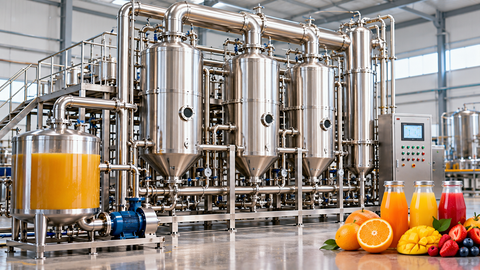
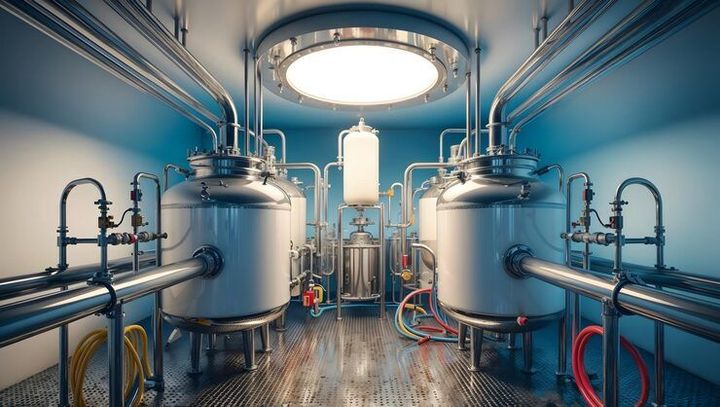
A chemical reactor is a vessel or processing unit designed to support and control a chemical reaction. Depending on the application, it may be a small laboratory vessel, a medium-scale processing unit, or a large industrial reactor connected to several other production stages.
The main purpose is to create suitable conditions for a reaction. Temperature, pressure, concentration, mixing, residence time, and material compatibility can all influence how a reaction behaves inside the equipment.
Chemical reactors developed alongside modern chemical engineering. Early chemical production relied heavily on simple vessels and manual control, while industrial chemical processing gradually introduced specialized reactors with mechanical mixing, heating, cooling, pressure control, instrumentation, and automated monitoring.
How Chemical Reactors Work
Although reactor designs differ considerably, most systems follow a basic sequence. Raw materials enter the reactor, the reaction takes place under controlled conditions, and the resulting mixture leaves the reactor or remains inside until the required reaction stage is complete.
Important operating factors include:
- Temperature control, which influences reaction speed and product characteristics.
- Pressure control, which can affect gases, liquids, and reactions involving phase changes.
- Mixing, which helps distribute heat and materials throughout the vessel.
- Residence time, which describes how long materials remain inside a continuous reactor.
- Material selection, which helps the reactor withstand chemical exposure and operating conditions.
- Monitoring, which allows operators and control systems to track important process variables.
Common Chemical Reactor Types
Different chemical processes require different reactor arrangements. Common categories include batch reactors, continuous stirred-tank reactors, plug flow reactors, and specialized reactors designed for particular chemical or physical conditions.
| Reactor Type | General Operation | Common Application Area |
|---|---|---|
| Batch Reactor | Materials are processed for a defined period | Specialty chemicals and research |
| Continuous Stirred-Tank Reactor | Materials continuously enter and leave | Large-scale chemical processing |
| Plug Flow Reactor | Materials move through a reaction path | Continuous chemical production |
| Fixed-Bed Reactor | Materials pass through a solid catalyst bed | Catalytic processing |
| Fluidized-Bed Reactor | Solid particles are suspended by flowing material | Chemical and energy processes |
The choice depends on reaction characteristics, production scale, heat transfer requirements, pressure conditions, material properties, and process objectives.
Importance
Why Chemical Reactors Matter
Chemical reactors influence how efficiently and consistently chemical reactions can be controlled. They are used in industries that manufacture polymers, coatings, fertilizers, specialty materials, industrial chemicals, fuels, food ingredients, and many other products.
For the general public, chemical reactors may seem distant from everyday life, but their influence is widespread. Many materials found in buildings, packaging, electronics, household products, transportation equipment, and industrial components depend on chemical processing.
Process Control and Safety
Industrial reactors may operate under elevated temperatures, pressures, or chemically reactive conditions. Proper engineering therefore plays an important role in managing operating conditions and reducing unwanted reactions.
Modern systems can use sensors and automated controls to monitor variables such as temperature, pressure, liquid level, flow, and composition. Alarm systems and protective equipment may respond when operating conditions move outside defined limits.
Safety planning can also include:
- Pressure relief equipment
- Temperature monitoring
- Emergency shutdown systems
- Containment arrangements
- Ventilation systems
- Equipment inspection programs
- Operator training
- Process hazard analysis
These measures are normally designed around the specific reactor, chemicals, operating conditions, and facility environment.
Energy and Resource Considerations
Chemical processing can require substantial heat removal or heat input. Reactor engineering therefore considers how energy moves through the system and how heat can be managed effectively.
Heat exchangers, cooling jackets, internal coils, insulation, and other thermal-control arrangements may be incorporated into reactor systems. Better process control can also help reduce unnecessary material and energy use, although actual performance depends on the complete process design.
Recent Updates
Automation and Digital Monitoring
Recent chemical reactor development has increasingly focused on automation, digital monitoring, and data-based process control. Industrial facilities are integrating sensors, programmable control systems, distributed control platforms, and analytical instruments to obtain more detailed information about reactor conditions.
Digital systems can collect operating data continuously. Engineers can use this information to identify process variations, examine equipment behavior, and support maintenance planning.
Advanced Reactor Engineering
Reactor engineering is also evolving through improved computational modeling and simulation. Digital models can represent temperature distribution, fluid movement, reaction behavior, and heat transfer before or alongside physical testing.
Computational fluid dynamics and process simulation tools are particularly useful for examining complex flow patterns and identifying areas where mixing or heat transfer may require additional engineering attention.
Sustainability and Process Efficiency
Environmental considerations have become increasingly important in industrial processing. Reactor development is being influenced by efforts to reduce energy consumption, material waste, emissions, and unnecessary processing steps.
Continuous processing, improved heat integration, catalytic technologies, and more precise process controls are among the approaches being studied and implemented across different industrial applications. The suitability of each approach depends on the reaction and overall production system.
Laws or Policies
Regulatory Frameworks
Chemical reactor facilities are generally affected by several categories of laws and technical requirements. The exact requirements depend on the country, facility type, chemicals involved, reactor pressure and temperature, and surrounding environmental conditions.
Common regulatory areas include:
- Workplace health and safety
- Pressure equipment and vessel requirements
- Chemical handling and storage
- Environmental emissions
- Waste management
- Fire prevention
- Industrial facility permits
- Emergency preparedness
Because regulations differ between jurisdictions, reactor operators must follow the rules applicable to their specific location and process.
Pressure Equipment Requirements
Many industrial reactors function as pressure vessels. Such equipment may be subject to design, fabrication, inspection, testing, and documentation requirements.
Technical standards can specify requirements for vessel materials, welding, pressure testing, relief systems, inspection intervals, and documentation. Engineers generally consider applicable national regulations and recognized technical standards during reactor design and operation.
Environmental Controls
Chemical processing facilities may also need to manage air emissions, wastewater, solid residues, and other environmental impacts. Regulatory programs can establish limits or monitoring requirements for particular industrial activities.
The precise requirements vary significantly between countries and regions. For this reason, general chemical reactor information should not be treated as a substitute for local regulatory or engineering review.
Tools and Resources
Reactor Design Calculators
Engineering calculators can help estimate basic reactor parameters such as volume, residence time, flow rate, heat transfer requirements, and material balances. These calculations are normally used together with detailed process information.
Process Simulation Platforms
Process simulation platforms allow engineers to model chemical flows, energy balances, reaction systems, and equipment interactions. Such software can be useful when evaluating different process configurations before physical implementation.
Engineering Standards and Technical References
Technical standards provide structured guidance for equipment design, materials, pressure systems, testing, inspection, and process safety. Industry reference materials can also explain reactor operation, thermodynamics, fluid mechanics, heat transfer, and chemical reaction engineering.
Process Monitoring Systems
Modern industrial control platforms combine sensors, controllers, data collection, alarms, and operator interfaces. These systems help facilities observe reactor conditions and maintain operating parameters within established process limits.
FAQs
What is a chemical reactor used for?
A chemical reactor is used to provide controlled conditions for a chemical reaction. It manages factors such as temperature, pressure, mixing, concentration, and reaction time according to the process requirements.
What are the main types of chemical reactors?
Common chemical reactor types include batch reactors, continuous stirred-tank reactors, plug flow reactors, fixed-bed reactors, and fluidized-bed reactors. Each design has different operating characteristics and applications.
How does industrial processing use chemical reactors?
Industrial processing uses chemical reactors to transform raw materials through controlled chemical reactions. Reactors can be integrated with pumps, heat exchangers, separators, sensors, control systems, and other process equipment.
What factors affect chemical reactor design?
Chemical reactor design can depend on reaction kinetics, temperature, pressure, mixing, heat transfer, material compatibility, residence time, production scale, and safety requirements. Engineers evaluate these factors together rather than selecting a reactor based on one parameter.
Are chemical reactors regulated?
Yes. Chemical reactors can be subject to regulations involving pressure equipment, workplace safety, chemical handling, environmental protection, fire prevention, and emergency planning. Requirements vary according to location and the specific industrial process.
Conclusion
Chemical reactors provide controlled environments for chemical reactions across many industrial and research applications. Their design involves factors such as reaction behavior, temperature, pressure, mixing, heat transfer, materials, monitoring, and safety. Recent developments are emphasizing automation, digital process monitoring, simulation, and more efficient industrial processing. Regulatory requirements also play an important role in reactor design, operation, inspection, and environmental management.