Best Car Washing Machines: High-Pressure Washer Buying Guide
Keeping your vehicle spotless requires the right equipment, and investing in a dedicated car washing machine saves both time and money compared to frequent trips to a professional detailing center. Whether you need a compact portable car washer for weekend driveway cleaning or heavy-duty commercial car wash equipment, understanding water pressure, motor durability, and nozzle attachments will help you make a smart purchase.
A car washing machine operates by taking standard low-pressure water from a garden hose or storage tank and accelerating it through an internal pump driven by an electric or petrol motor. This pressurized water stream blasts away stubborn mud, road salt, grease, and dried insects from your vehicle’s exterior and undercarriage without requiring harsh physical scrubbing. Because the concentrated water stream does the heavy lifting, you drastically reduce the risk of creating micro-scratches or swirl marks on delicate automotive clear coats.
Modern units are engineered to balance water conservation with maximum cleaning efficiency. A standard garden hose uses significantly more water per minute than an electric pressure washer, meaning a dedicated machine cleans faster while lowering your monthly water bill. Many contemporary models also include self-priming capabilities, allowing them to draw water directly from a bucket or rainwater barrel if an outdoor tap is unavailable.
Key Specifications to Check Before Buying
Selecting the right machine depends on matching its technical specifications to your specific cleaning routine. Focusing on pressure ratings, water volume, and internal pump construction ensures you do not under-buy for tough grime or over-buy and risk damaging your vehicle's paintwork.
Optimal PSI and Water Flow Rate
Pressure is measured in pounds per square inch (PSI) or bar, while water volume is measured in liters per minute (LPM) or gallons per minute (GPM). For safe and effective automotive detailing, look for a machine delivering between 1,300 PSI and 2,000 PSI (roughly 90 to 135 bar) paired with a flow rate of at least 6 to 8 LPM. Exceeding 2,200 PSI can peel decals, strip wax, or damage rubber window seals if the nozzle is held too close to the body panels.
Induction Motor vs. Universal Motor
The motor is the heart of any electric pressure washer, dictating both its lifespan and noise level. Universal motors use carbon brushes, making them lightweight, compact, and budget-friendly for occasional home use, though they tend to run louder and wear out faster under continuous operation. Induction motors operate without brushes using electromagnetic fields, resulting in whisper-quiet performance, superior heat dissipation, and an extended service life ideal for frequent washing or small commercial setups.
Pump Material and Build Quality
Inside the housing, the pump endures immense mechanical stress every time you pull the trigger. Entry-level machines often utilize composite or plastic axial pumps, which are suitable for light, infrequent rinsing. For long-term reliability, prioritize models equipped with aluminum or brass pump heads, as these metals resist thermal expansion, prevent internal cracking, and handle extended cleaning sessions effortlessly.
Essential Accessories for Safe Auto Detailing
A bare pressure washer only provides raw rinsing power; pairing it with specialized auto detailing tools transforms it into a complete contactless wash system.
Foam Cannon and Detergent Compatibility
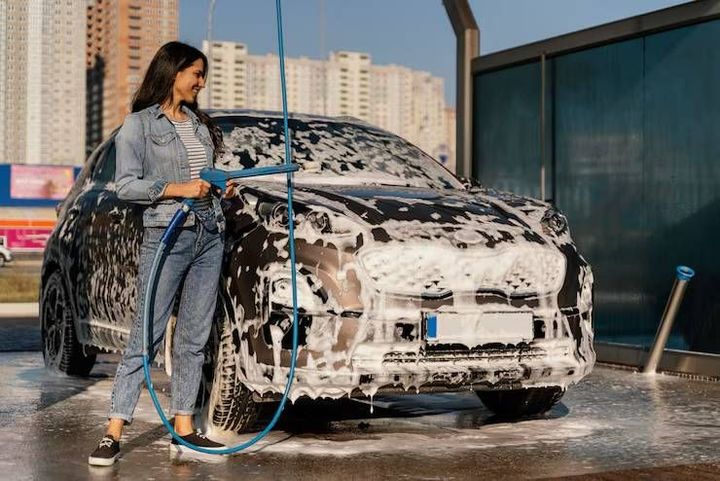
A dedicated snow foam cannon attaches directly to the spray gun and mixes concentrated car shampoo with pressurized air and water. This produces a thick, clinging lather that encapsulates dirt particles and pulls them safely off the paint surface before you ever touch the car with a microfiber wash mitt. Avoid pouring thick automotive soaps directly into the machine’s built-in detergent tank unless the manufacturer explicitly states the internal pump can handle viscous chemicals.
Nozzle Angles and Spray Patterns
Different spray angles control how concentrated the water jet becomes upon exiting the wand. A zero-degree red nozzle delivers a pinpoint jet that should never be used on painted automotive surfaces. Instead, rely on a 25-degree green nozzle for general body rinsing and a wide 40-degree white nozzle for delicate areas, glass, and final rinses. Variable rotary nozzles are also useful for blasting caked-on mud from wheel wells and tires.
Home vs. Commercial Car Wash Equipment
Choosing between a residential unit and commercial car wash equipment comes down to duty cycle and portability. A portable car washer designed for home garages typically features a compact frame, onboard hose reels, and a 1,400-watt to 2,000-watt motor that plugs easily into standard household wall outlets. These units are designed to run for 30 to 45 minutes at a time, which is plenty to wash one or two family vehicles.
Commercial-grade units, on the other hand, are built for continuous daily operation in busy service bays and fleet yards. They feature heavy-duty steel roll cages, oversized induction motors, triplex plunger pumps, and high-pressure braided steel hoses that resist kinking and abrasion. While the initial car pressure washer price for commercial machinery is noticeably higher, the ability to run for hours without overheating makes them essential for business owners.
Maintenance Tips to Extend Machine Lifespan
Proper care after every wash prevents internal corrosion and costly pump failures. Always turn off the power supply and squeeze the spray gun trigger to release trapped water pressure before disconnecting the hoses. If you live in a region with hard water, periodically flush the system to prevent mineral scale from clogging the brass valves and spray nozzles.
Storing your machine in a dry, sheltered area protects electrical components and rubber O-rings from moisture and extreme temperatures. Never run the motor dry without a steady water supply, as water acts as both a coolant and a lubricant for the internal pump seals; even thirty seconds of dry running can permanently damage the unit.
Disclaimer
The information provided in this article is for general educational and informational purposes only. Specifications, pressure ratings, and safety guidelines vary by manufacturer and vehicle finish. Always consult your machine's user manual and test spray pressure on an inconspicuous area before washing your vehicle. We do not endorse specific machinery, nor do we assume responsibility for property damage or personal injury resulting from improper equipment operation.